
- Home
- Articles
Refine by
Environmental Industry Articles & Analysis
68,149 articles found
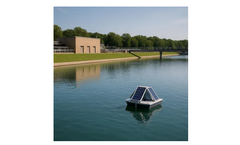
In June 2026 a peer-reviewed article in AWWA Opflow documents sedimentation-basin algae control using an LG Sonic ultrasonic system at Central Alabama Water's Shades Mountain Filter Plant in Birmingham, Alabama. The system was installed in April 2024. After roughly one year, the seasonal filamentous algae along the basin perimeter largely disappeared. The authors characterize the technology as ...
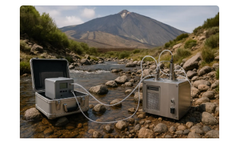
Dissolved gas analysis is a critical component of volcanic groundwater monitoring. By evaluating gas, liquid and soil samples on-site or in the laboratory, operators can identify volatile signatures tied to active systems. Beyond the principal volcanic gases and sulfur species, dissolved-gas measurements capture rare gases and isotope information such as helium (He), neon (Ne) and argon (Ar), ...

Perception-driven fullness leads to unnecessary hauls and higher waste handling costs. In many operations, containers are deemed full when the lid appears near capacity or material is visible at the top. However, uneven loading, trapped air, or material bridging can create the impression of capacity even when significant usable volume remains. Distinctions between perceived and actual fullness ...
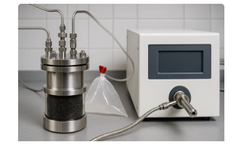
The rising generation of glycerol as a biodiesel byproduct motivates its conversion to industrial chemicals. This study shifts focus from noble metals to low-cost, abundant elements by employing a Cu-Ni bimetal catalyst supported on coconut shell activated carbon for the aqueous-phase reforming of glycerol. The catalyst was synthesized by the wet impregnation method and characterized for surface ...
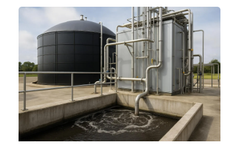
High-rate anaerobic systems provide a compact, energy-efficient pretreatment option for industrial wastewaters with high organic load and relatively low solids. Fluence's externally forced circulation (EFC) approach enhances process stability and biomass retention, enabling reliable pretreatment before discharge to POTWs and improving overall compliance performance.The Shift from Traditional ...
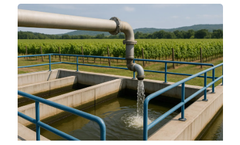
As sustainability goals tighten and water resources become more constrained, recovering nitrogen and phosphorus offers beverage and winery operators a practical path to reduce environmental impact while creating recoverable value.Resource recovery as an asset for your beverage operationWineries and other beverage producers generate wastewater streams rich in organic matter and nutrients such as ...
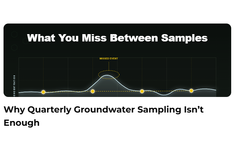
Groundwater contamination doesn’t move in neat, predictable intervals. Yet for decades, environmental monitoring programs have relied on quarterly or annual sampling as the standard approach to understanding subsurface conditions. While this method has been widely accepted, it introduces a critical challenge: it captures only snapshots in time,not the full story. As regulatory ...
ByLiORA
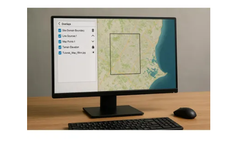
In Lakes Environmental Software, the drawing area displays all objects and layers. The Overlays tab in the Tree View provides control over which objects are displayed, layer order, and graphically editing for specific layers or objects. Checked layers are shown in the drawing area, in the order they appear in the Overlays tab. For example, Site Domain Boundary placed on top, Tutorial_Map_15km.jpg ...
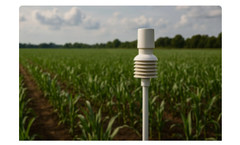
Humidity sensors measure atmospheric water vapor concentration to forecast crop water loss and optimize irrigation timing. As relative humidity declines, vapor pressure deficit rises, increasing crop transpiration and irrigation requirements. When combined with temperature, wind speed, and solar radiation, humidity data underpin ET0-based irrigation scheduling—the FAO Penman-Monteith method for ...
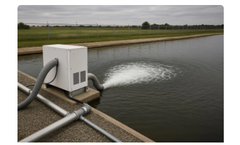
Water treatment technology is continually evolving, and efficient oxygen transfer is central to water quality, sustainability, and performance. Advanced nanobubble technology provides a smarter solution to elevate dissolved oxygen levels while reducing chemical and energy use.The nanobubble system has transformed the water environment in industrial contexts by generating ultra-fine, highly stable ...
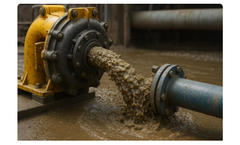
Mining slurry presents one of the most challenging transport media in industrial pumping systems due to abrasive solids that wear internal components and create unstable flow. Slurry characteristics such as particle size, solids concentration, density, viscosity, and material composition affect pump performance, wear rates, and system reliability.Standard water pumps are not designed for abrasive ...
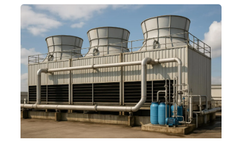
Industrial cooling towers require reliable water treatment to maintain operation and energy efficiency. Effective management of cooling tower water reduces unplanned downtime and supports maximum production throughput. Temperature and system performance Summer heat increases thermal and mechanical loads within facilities. Heat absorbed by process water is circulated to cooling towers, where ...
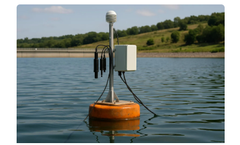
Real-time water quality monitoring enables drinking water utilities to detect contamination risks before they impact treatment operations. Using continuous sensors, automated alerts, and predictive analytics, utilities monitor algae, cyanobacteria, dissolved oxygen, pH, and temperature at 15-minute intervals, capturing issues that weekly or monthly grab sampling would miss. The safety of drinking ...

Effective backroom layout is a system-wide issue that directly impacts labor, throughput, and safety. While waste and recycling equipment are critical, the efficiency of material flow through the space determines overall performance. When material is staged, moved, and re-handled before it reaches the processing equipment, labor increases and throughput slows. In many operations the issue is ...

Particulate matter (PM) pollution remains a major air quality challenge worldwide. Source apportionment links measured PM to contributing sources such as traffic, biomass burning, or industrial emissions, enabling targeted control strategies and assessment of policy effectiveness.For policymakers, source apportionment supports targeted emission reductions, evaluation of current controls, and ...

Cubic Instruments, a leading manufacturer of gas analyzers, has leveraged Cubic mature technology platform of Laser Raman spectroscopy technology to provide advancing solutions for multiple gas concentration measurements. To achieve high levels of accuracy and reliability in measuring different gas components, Cubic Instruments has innovatively developed rapid online gas analyzer, LRGA-3100, ...
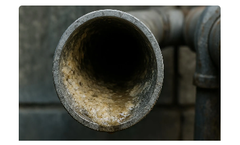
Biofilm is increasingly recognized as one of the most persistent and costly operational challenges across industrial water systems, wastewater infrastructure, agriculture, cooling towers, and food processing environments.Unlike loose contamination, biofilm forms structured microbial communities that attach directly to surfaces within pipelines, tanks, drains, irrigation systems, and processing ...

Fenceline monitoring has shifted from a best practice to a regulatory and operational prerequisite. Continuous emission monitoring at the facility boundary is essential to capture fugitive releases that fixed-stack monitoring may miss, providing a complete view of off-site impact and enabling proactive risk management. Notably, fugitive emissions can constitute a substantial share of total VOCs ...
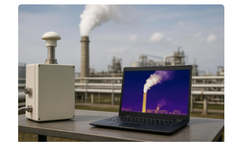
The webinar recording examines driven emission monitoring and the role of around-the-clock data collection in turning reporting into actionable outcomes on site and in the enterprise risk-management framework.Key themes include the benefits of continuous data quality and traceability, how 24/7 surveillance supports regulatory alignment, and the workflow changes necessary to translate detection ...
ByOPGAL
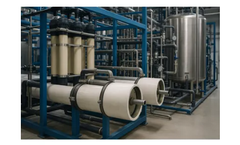
Water is a critical process input in high-tech facilities, including AI data centers and chip fabrication. High-purity and ultrapure water are required for manufacturing, while large volumes of consistently treated water sustain cooling for high-density compute resources. Even with advances in supply security and treatment technologies, reuse systems themselves influence the pace of ...