

Surface Treatment
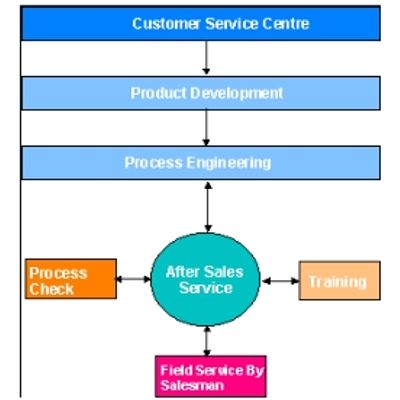
Wigol W. Stache GmbH is a chemical plant in Worms/Rhine, specialising for more than 50 years in the production of concentrated liquid cleansers and their application. Our technical support far exceeds usual product development, production and distribution. Together with our technical field staff we offer solutions for particular problems regarding the cleansing of items and define custom made cleansing systems for industrial manufacture. The solution of a problem regarding the cleaning of a special items starts with the selection of a cleansing mechanism in our modern service centre. For that purpose, a small number of sample items with typical item geometry and soiling are submitted to trial cleansing. This allows us to determine the best possible process such as dipp, spray or ultrasonic cleansing, or a combination thereof. Only when the process is defined, a material compatible but efficient concentrated cleansing agent is selected.
The final step is the optimisation of the cleansing parameters allowing an economically profitable cleansing system.
With the assistance of special system manufacturers the new cleansing system will be integrated into the production process. Upon successful start-up the Wigol laboratory will assume monitoring of the chemical cleansing parameters such as determination of the concentration, adjustment of automatic additional dosage, control of the dirt load and definition of the longest life time of the cleansing bath. Transfer of the process know-how developed to the customer`s staff completes our technical support package and ensures a safe process complying with the requirements of all current quality standards.
In former times, mainly organic solvents were used to remove grease and oil from components during the manufacturing process. Today, profitability as well as issues regarding environmental protection and safety at work have resulted in the almost exclusive use of aqueous cleansing systems always composed of several phases, but with the minimum three steps cleansing-rinsing-drying. A custom made concentrated degreasing agent and modern system technology achieve cleansing results similar or even superior to the solvent cleansing process, in particular with regard to the removal of particles.
With the General Basic Waste Water Management Regulation of September 1988 and Appendix 40 public authorities have imposed on each user of production equipment further requirements regarding avoidance, reduction and recovery of substances, which can only be fulfilled with the installation of closed cleansing loops with suitable cleansing bath care.

Permanent cleansing bath care allows the continuous removal of impurities such as solids and oils resulting from the processing bath and to extend its life cycle. Mechanical separators such as sieves, static filters, settling basins, oil traps, and decanters help to achieve a first separation of the three phases. Modern high efficiency filtration systems such as micro, ultra and nano filtration are able to remove even emulsified oils and other dissolved impurities from the processing bath used. The recycled processed water still contains unused cleansing components and has to be "readjusted" with concentrated degreasing agents by means of an automatic dosage system before being returned into the processing bath.
The aim of the rinsing process is to remove by means of water, the liquid layer containing chemical agents from the processing bath and from the surface of the treated parts. This process is a dilution which has to be made to such an extent that a production relevant rinsing criterion is achieved. The rinsing criterion is the dilution ratio of the concentration in the processing bath and the last rinsing bath.

The rinsing criterion is defined in accordance with the requirements of the subsequent processes. For normal degreasing processes a rinsing criterion of approx. 500 to 1,000 is sufficient. Pickling and metallisation processes usually require a rinsing criterion of 1,000 to 5,000, and galvanic processes such as bright chrome even up to 10,000.
The rinsing baths are permanently contaminated with entrained dirt, oil, cleansing solutions, and salts. Therefore, the rinsing process should be achieved in several rinsing baths in order to increase the dilution effect. A rinsing cascade is obtained by leading the tap water (losses due to evaporation) from the last bath through all zones towards the processing bath. The result is a water flow in the opposite direction to the flow of material carried over. Concentration of this water flow takes place in the cleansing bath. A cascade system of three rinsing steps corresponds to the generally accepted state of the art (aaRdT).
Example: For a part throughput of 100 m²/h and a target rinsing criterion of 1000, approx. 10 l/h of contaminated material will be carried over thus requiring nearly 10,000 l of tap water to reach the rinsing criterion. In a rinsing cascade with 3 rinsing steps, however, only approx. 22 l/h of tap water will be necessary.