


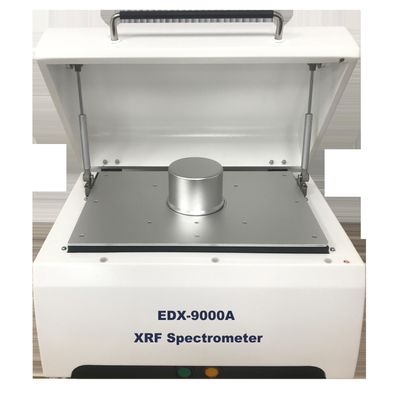
Vacuum-Type Copper Alloy Analyzer Spectrometer EDX9000A - Metal
Copper alloys possess excellent electrical conductivity and are essential metallic materials in industry. In recent years, the substantial increase in global copper prices has further driven up the cost of copper alloy components. With the rapid advancement of science and technology, improving the performance of copper alloy materials has become of vital importance. Under high thermal conductivity or high heat conduction conditions, it is necessary to enhance their hardness, wear resistance, and anti-arc erosion properties. Hence, surface modification is an effective approach to prolong the service life of copper alloy parts and reduce costs. The copper alloy analyzer EDX9000A, also known as the X-ray fluorescence spectrometer, is a physical alloy element analyzer. It is a detection device with special technical advantages such as rapid analysis, non-destructiveness, simultaneous analysis of multiple elements, and low analysis cost.The vacuum-type XRF alloy analyzer EDX9000A used for scrap sorting can reliably identify the grades of most alloys and pure metals within 5 to 10 seconds. The body of these analyzers is designed to be sturdy and durable, enabling normal operation in harsh environments. It can quickly and reliably perform alloy sorting and analysis on various ferrous and non-ferrous metal materials within a few seconds.
The EDX9000A alloy analyzer is equipped with a standard software package containing at least 35 elements and is equipped with a vacuum system, which effectively improves the detection effect of light elements. It can generate the chemical composition information of alloys and determine the ID grades of alloys within a few seconds. From simple sorting to challenging grade distinctions, the alloy analyzer EDX9000A will provide extremely detailed chemical composition information of materials, thus enabling rapid and accurate identification of the grades of pure metals and alloys.
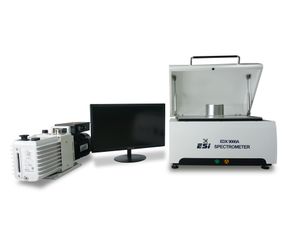
Rapid Analysis:It conducts non - destructive analysis throughout the process, providing results within just 1 - 3 minutes. The results are updated in real - time, facilitating quick decision - making.
Exceptionally High Precision:Powered by Windows - based FP software, it effectively overcomes the absorption and enhancement effects of matrix elements, achieving a high level of test accuracy.
Strong Stability:Equipped with the latest silicon drift detector (SDD), it ensures excellent test stability and long - term repeatability. It can handle high counting rates and has an excellent spectral resolution.
Cost - saving:It eliminates the need for expensive argon or helium gas, reducing both usage and maintenance costs.
Simple Sample Preparation:In most cases, only a simple polish of the sample surface is required, reducing preparation time and the risk of sample contamination.
Quick Startup:It is ready to test as soon as it is powered on, without the need for daily calibration. This improves production efficiency and reduces dependence on standard samples.
Robust Protection and Real - time Monitoring:It is equipped with multiple hardware protection systems, and the software can monitor the analysis process in real - time.
Sensitive Detection of Light Elements:The special optical path and vacuum system increase the test sensitivity of light elements by a factor of 3 - 5.
User - friendly Interface and Customizable Reports:The operation is simple, and the analysis reports are highly customizable. With a single click, you can print comprehensive reports containing various information.
Adaptive Optical Path and Intelligent Sampling:Eight optical path collimation systems can automatically adapt to different sample sizes. It can also test multiple positions on a sample and calculate the average value.
Built - in HD Camera Assistance:The built - in high - definition camera clearly shows the sample analysis area, helping with sample placement and alignment and enhancing test confidence.
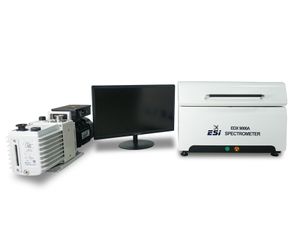
Instrument Dimensions: 560mm × 380mm × 410mm
Extra-large Sample Chamber: 460mm × 310mm × 95mm
Semi-enclosed Sample Chamber (when evacuated): Φ150mm × Height 75mm
Instrument Weight: 45Kg
Element Analysis Range: From Na11 to U92 (from sodium to uranium)
Analyzable Content Range: 1ppm - 99.99%
Detector: AmpTek High-resolution Electrically-cooled SDD (Silicon Drift Detector)
Multi-channel Analyzer: 4096-channel DPP analyzer
X-ray Tube: 50W High-power Beryllium-window Tube
High-voltage Generator: Maximum output voltage of 50kV, with built-in voltage overload protection
Voltage: 220ACV 50/60HZ
Ambient Temperature: -10 °C to 35 °C
Instrument Configuration
Standard Configuration
Optional Configuration
Pure Ag Initialization Standard Sample
AC Purified and Regulated Power Supply
Vacuum Pump
Alloy Standard Samples
Sample Cups
USB Data Cable
Power Cable
Test Film
Instrument Factory and Calibration Reports
Warranty Card
The interface is designed with clarity and user-friendliness. It allows for one-click testing, streamlining the operation process by eliminating the necessity of manual working curve selection. The software is equipped with an intelligent automatic sample matrix matching function, which empowers even non-professional technicians to swiftly become proficient in operating the instrument.
The seamless integration of the powerful Fundamental Parameter (FP) method and the Empirical Coefficient (EC) method not only facilitates the analysis of high-purity alloys but also enables qualitative and quantitative analysis of multi-impurity samples with complex matrices. The application of the FP parameter algorithm significantly mitigates the instrument's reliance on standard samples.
The instrument features one-click initialization along with automatic matrix matching. It is capable of conducting automatic qualitative, semi-quantitative, and quantitative analyses, and provides real-time comparison of test spectra for different samples. The spectral processing and correction functions include the removal of double peaks and escape peak interference, as well as the reduction of the influence of element absorption and enhancement effects. The spectral background subtraction operation effectively enhances the detection precision of trace elements. The measurement results are refreshed in real-time. A straightforward process bar wizard is available to assist users in creating new custom calibration curves. The test reports are customizable and can be printed with a single click.