


Vertical X-Ray Fluorescence Spectrometer EDX-8800M MAX Material Analysis Expert - Metal
Simply the Best Vertical integrated design, with built-in vacuum pump and helium charging system. The vacuum testing environment provides the best detection effect for light elements. A helium charging system can be added to improve the testing effect ofThe new EDX8800M MAX, a high-performance benchtop high-resolution X-ray fluorescence (EDXRF) elemental analyzer, is equipped with the most advanced Windows-based fundamental parameter (FP) software. Paired with top-of-the-line high-performance hardware, it meets the demands of customers for elemental analysis of complex ore samples. Whether the samples are solids, alloys, powders, liquids, or slurries, the EDX8800M MAX can effortlessly perform non-destructive qualitative and quantitative analysis of elements ranging from sodium (Na) to uranium (U). With a faster analysis speed, more accurate test results, and more stable instrument performance, the EDX8800M MAX has emerged as one of the premier tools for customers conducting elemental analysis.
The EDX8800M MAX spectrometer by ESI Yingfeisi is primarily applied in third-party laboratories and various settings that require high-precision material composition analysis. As a newly developed spectrometer, the EDX8800M MAX exhibits excellent flexibility, analysis performance, and stability.
The EDX8800M MAX focuses on the qualitative and quantitative analysis of major, minor, and trace elements or compounds in a wide range of materials, including: - Iron ore - Copper ore - Bauxite - Precious metal materials - Rare earth ores - Raw materials - Phosphates - Coal - Lead - zinc ores - Manganese ores - Nickel ores - Limestone - Clay - Gypsum - Glass - Soil - Cement - Refractory materials, and others.
The EDX8800M MAX is user - friendly and offers outstanding analysis performance. It can also be extended to the following applications:
Plastics and Organic Substances: Elemental analysis of plastic materials such as PE, PVC, and additives.
Alloy Composition Analysis, Grade Identification, Precious Metal Determination, Three - Way Catalytic Analysis: Analyzing alloy compositions, identifying grades, determining precious metals, and conducting three - way catalytic analysis. **Petrochemical Industry**: Sulfur element analysis in fuels, lubricant monitoring, additives, wear metals, etc.
Environment: Wastewater, air pollution, soil and ground, emission control, etc.
Coating Thickness and Films: Analysis of multi - layer coatings, steel coatings, impurities, etc.
Forensics and Public Security: Evidence analysis, material matching, explosives, etc.
Food, Cosmetics and Pharmaceuticals: Additive control, raw materials, harmful metals, packaging materials, etc.
Product Features
As a spectrometer professionally designed and manufactured for material composition analysis, the EDX - 8800M MAX balances durability, ease of operation, and high cost - effectiveness. Its remarkable advantages mainly include:
- Minimal or no sample preparation is needed, and the entire process involves non - destructive analysis. Results can be obtained within one to three minutes.
- The original imported high - power X - ray tube and the electrically cooled FSDD silicon drift detector not only feature excellent short - term repeatability and long - term reproducibility but also possess excellent elemental peak resolution.
- It can simultaneously analyze the composition of elements and oxides.
- Multiple instrument hardware protection systems are in place, and the instrument can be monitored in real - time throughout the process via software, ensuring more stable and safe operation.
- The specially designed optical path and vacuum system significantly enhance the testing sensitivity and accuracy for light elements (Na, Mg, Al, Si, P). A helium charging system is available as an option.
- The user - friendly interface allows for customizable analysis reports, and test reports can be printed with a single click, including analysis results, sample information, spectral information, and sample images.
- An eight - channel optical path collimation system can be automatically switched according to the size of different samples. It can also test different positions of the sample and calculate the average value to reduce errors caused by sample inhomogeneity.
- A high - definition built - in camera clearly shows the part of the sample being detected by the instrument.
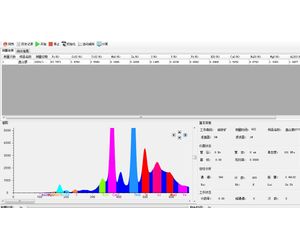
Instrument Parameters Element analysis range:
From Na11 (sodium) to U92 (uranium)
Analyzable content range: 1ppm - 99.99%
Detector: Original imported high-resolution electrically cooled FSDD silicon drift detector.
High-throughput count rate linear dynamic range: 1000-1000000cps, including the signal enhancement processing module SNE.
Multichannel analyzer: 4096-channel DPP analyzer. The peak drift is less than 0.5 channels (within 24 hours).
X-ray tube: Original imported high-power beryllium window X-ray tube (a high-power composite target X-ray tube can be optionally configured).
High-voltage generator: The maximum output voltage is 100kV, with built-in overvoltage protection. Sample observation system: 10-megapixel high-definition CCD camera, including the function of positioning the sample spot image.
Data processing system MCA: The control response time is less than 100 milliseconds. It can simultaneously collect 9 channels of feedback signals and monitor in real time, including tube voltage, tube current, baseline, dead time, temperature, count rate, vacuum degree, collimator, and filter status signals.
Sample chamber: Air, vacuum, helium filling (optional). It is equipped with a built-in high-power vacuum pump. The vacuum system is automatically controlled and adjusted by software. There is a dual-vacuum pumping speed mechanism, and an automatic vacuum stabilization system is standard.
Voltage: 220ACV 50/60HZ Ambient temperature: -10 °C to 35 °C
Optional configurations:
1. Sample spin system, which increases the sample testing area and improves the testing accuracy of powder samples.
2. A helium-fillable micro sample chamber, which improves the testing performance of light elements in liquids and powders.