

Waste Water Treatment Plants for Waste - Waste and Recycling
The wastewater treatment plants designed by Artas’s expertise secure the most efficient and optimum treatment of wastewater via applying physical, chemical and biological methods.
- Physical Treatment Units
- Screens
- Hydrosieves
- Grit Chambers
- Dissolved Air Flotation Units (DAF)
- Sedimentation Basins
- Chemical Treatment Units
- Acid Cracking Units
- Neutralisation Units
- Coagulation Units
- Flocculation Units
- Chemical Precipitation Units
- Biological Treatment Units
- Aerobic Treatment Units
- Anaerobic Treatment Units
- Membrane Bioreactors (MBR)
In addition to screens, sieves, grit chambers and flotation units, the systems existing of equalisation, sedimentation and flotation tanks are physical treatment units. The high quality equipments that Artas manufactures serve in many national and international plants with their customer specific designs, endurance and reliability.
Screens
Coarse and fine screens are the units to prevent the damage of the grain sized particles to piping and equipment; to reduce the load of other treatment units or to remove coarse material from water. The coarse and fine screens, which are in our manufacturing range, are produced either automatically or manually cleaned according to the characteristics of wastewater.
Hydrosieves
Hydrosieves are the units used for the removal of fine particles, from 0.3 mm to 3.0 mm, from wastewater especially arising from textile, food and paper industry. In principal the removal of solid particles from wastewater is achieved by gravity. In our manufacturing range, hydrosieves are produced as ST 37 epoxy coated or completely AISI 304 stainless steel according to the characteristics of wastewater and also with optional automatic cleaning system.
These are the units used for the removal of floating material that are lighter than water such as grit, grease, solvents etc. These units are easily used in refineries, tank filling stations, petrol stations and restaurants. Grit chambers, which are in our manufacturing range, are produced from hot galvanized, epoxy coated steel, stainless steel according to the characteristics of wastewater. To increase the grit removal capacity, they are delivered with grease scraping mechanisms.
Dissolved Air Flotation Units (DAF)
These are the units to collect and remove either liquid or solid particles in the wastewater, which are lighter than water, by making them float. These units, which are in the manufacturing range of Artas from 10 m3/h to 30 m3/h, are used in oil and soap production and food industries.
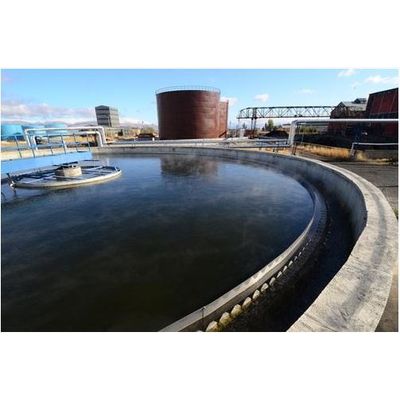
These are the treatment units used for the removal of the particles heavier than water by settling them in appropriate conditions by the help of gravitational forces. The aim of settling is to have treated wastewater and sludge that have high solid concentrations to be easily operated. By using sludge and scum scraper systems, which are in our manufacturing range from 10 m to 30 m, the removal of the scum and sludge at the bottom of the basin are achieved effectively.
Chemical treatment units are the systems following physical treatment units to remove the pollutants chemically which are not removed by physical treatment and are dissolved in water. The fast and slow mixing units, which are in our manufacturing range, are to be used safely in chemical preparation and dosing systems and chemical treatment processes.
The pH of wastewater is adjusted to a suitable range for acid cracking process by dosing acid and coagulant in the control of a pH measuring device and the grease in wastewater is processed to emulsion cracking by flash mixing. The turbine or propeller type mixers, which are in our manufacturing range, are used in subject units. The chemical preparation and dosing systems, which are also in our manufacturing range, may be adapted to these units.
Neutralisation Units
In this unit the pH of wastewater is neutralised by dosing acid in the control of a pH measuring device. During the process, to achieve complete mixing of water and chemicals, flash mixing process is applied. For mixing process the turbine mixers and/or diffusers, which are in our manufacturing range, are used. The chemical preparation and dosing systems may be adapted to these units. For neutralisation process environmental friendly weak acids, alkaline or CO2 is used.
The pH of wastewater is adjusted to a suitable range in the control of a pH measuring device and coagulation of colloidal particles is achieved by dosing coagulant solution. During this process, to achieve complete mixing of water and chemicals, flash mixing process is applied. The chemical preparation and dosing systems may be adapted to these units.
By chemical preparation and dosing units, polyelectrolyte solution is dosed to water to form larger particles from the coagulated particles that are formed during coagulation process and easy removal from water is achieved. In the flocculation units, to achieve complete mixing of water and chemicals, stirrers with paddles, which are manufactured by Artas are used.
In the chemical precipitation units, hydraulically still conditions help the flocks to be separated from wastewater and are collected at the bottom of the tank as sediments or precipitates. By using sludge and scum scraper systems, which are in our manufacturing range from 10 m to 30 m, the removal of the scum and sludge at the bottom of the basin are achieved effectively.
This is the process of removing organics from wastewater by the help of microorganisms.
Aerobic Treatment Units
Aeration is applied to wastewater by means of blower or surface aerators to oxidize organic material and to help formation of new cells. The tank is designed to achieve both complete mixing and homogenous air distribution. To prevent unnecessary operational costs and to achieve optimum aeration, oxygenmeters or devices measuring biological oxygen consumption are used.
Anaerobic Treatment Units
This method is applied when it is difficult to treat wastewater by aerobic methods. In addition to that, the methane gas resulting from anaerobic treatment of wastewater is an energy source and the plant investment may pay off itself.
Membrane Bioreactors (MBR)
MBR is a new treatment method used, of which Artas is applying the know-how of leading international companies. By using membranes, aerobic (aerated activated sludge) units achieve high treatment efficiencies in less volumes and recycling of wastewater is obtained. You can contact our company to get detailed information on MBR.