

- Home
- Companies
- Aimix Group Co., Ltd
- Articles
- 5 Tops Container Lifting Solution
5 Tops Container Lifting Solution
Container lifting solutions play a crucial role in the efficient handling and transportation of cargo containers in various industries, including shipping, logistics, warehousing, and distribution. As the demand for containerized shipping continues to grow, the need for innovative and effective container lifting solutions has become increasingly important. In this comprehensive guide, we will explore five top container lifting solutions, their features, benefits, and applications across different industries.
Container Crane Systems
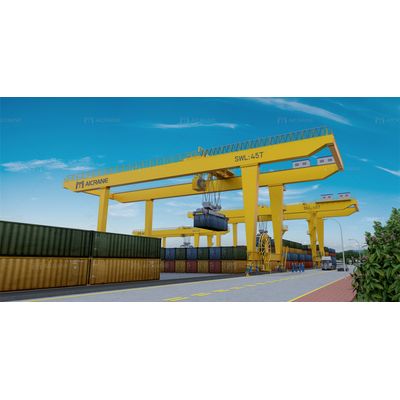
Container crane systems, also known as container gantry cranes or ship-to-shore cranes, are large, specialized cranes designed for loading and unloading cargo containers from ships to terminal yards and vice versa. These cranes are typically located at seaports, container terminals, and intermodal facilities. Key features of container crane systems include:
High Capacity: Container cranes are capable of lifting heavy loads, ranging from 20 feet to 40 feet standard containers, with lifting capacities exceeding hundreds of tons.
Reach and Span: They have a wide reach and span to reach multiple rows of containers on ships or stack them in the terminal yard efficiently.
Automation: Many modern container crane systems are equipped with automation and remote control capabilities, allowing for precise and efficient container handling operations.
Safety Features: Container cranes are equipped with safety features such as load monitoring systems, anti-collision devices, and emergency stop mechanisms to ensure safe operations.
Versatility: Container crane systems can handle a variety of container sizes, configurations, and types, including refrigerated containers (reefers) and hazardous materials containers.
Applications: Container crane systems are widely used in container terminals, ports, and shipping facilities for loading and unloading container vessels, transferring containers between ships and storage yards, and facilitating containerized cargo movements.
Straddle Carrier Systems
Straddle carrier systems are specialized vehicles designed to lift and transport containers horizontally within container terminals, stacking yards, and storage areas. These vehicles are equipped with a set of lifting mechanisms and adjustable legs that can straddle containers for secure lifting and transportation. Key features of straddle carrier systems include:
Mobility: Straddle carriers are highly maneuverable and can move in multiple directions, including forward, backward, sideways, and diagonally, allowing for efficient container handling in confined spaces.
Container Capacity: They can lift and transport one or multiple containers simultaneously, depending on their configuration and lifting capacity.
Flexibility: Straddle carriers can handle a range of container sizes, from standard 20-foot and 40-foot containers to oversized or special containers.
Low Ground Pressure: Straddle carriers distribute weight evenly across their multiple wheels, resulting in low ground pressure and minimal impact on paved surfaces in container yards.
Remote Control: Many modern straddle carrier systems are equipped with remote control and automation features, enabling operators to control and monitor operations from a safe distance.
Applications: Straddle carrier systems are commonly used in container terminals, intermodal yards, rail yards, and distribution centers for horizontal container transport, stacking, and storage operations.
Reach Stacker Cranes
Reach stacker cranes, also known as container handlers or container reach stackers, are versatile lifting machines designed for handling containers in various environments, including ports, terminals, warehouses, and rail yards. These machines feature telescopic booms with lifting attachments that can reach containers stacked several tiers high. Key features of reach stacker cranes include:
Vertical and Horizontal Reach: Reach stackers can lift containers vertically and horizontally, allowing for efficient stacking, destacking, and positioning of containers in tight spaces.
Lift Capacity: They have high lift capacities, ranging from 30 tons to over 100 tons, depending on the model and configuration.
Intermodal Capabilities: Reach stackers can handle a wide range of container sizes, including standard, high-cube, and heavy containers, as well as swap bodies and flat racks.
Maneuverability: Reach stackers are highly maneuverable and can navigate congested areas, narrow aisles, and uneven terrain, making them suitable for diverse operating environments.
Multi-Functionality: Many reach stacker cranes are equipped with additional features such as spreader attachments, twist locks, side shifters, and tilt functions for versatile container handling operations.
Applications: Reach stacker cranes are utilized in container terminals, logistics hubs, rail yards, and distribution centers for container loading and unloading, intermodal transport, container stacking, and yard management.
Automated Guided Vehicles (AGVs)
Automated guided vehicles (AGVs) are autonomous or semi-autonomous vehicles equipped with navigation and control systems for automated material handling tasks, including container transport and logistics operations. AGVs can be customized to handle different container sizes and configurations. Key features of AGVs include:
Automation: AGVs operate without direct human intervention, following predetermined routes, waypoints, or navigation markers within controlled environments.
Flexibility: AGVs can adapt to changing operational requirements, routes, and schedules through programmable software and real-time communication systems.
Safety Sensors: AGVs are equipped with safety sensors, collision avoidance systems, and obstacle detection mechanisms to prevent accidents and ensure safe operations.
Integration: AGVs can integrate with warehouse management systems (WMS), container tracking systems, and enterprise resource planning (ERP) software for seamless data exchange and process optimization.
Energy Efficiency: Many AGVs are designed with electric power sources, regenerative braking systems, and energy-efficient technologies to reduce fuel consumption and environmental impact.
Applications: AGVs are deployed in container terminals, distribution centers, manufacturing facilities, and warehouses for automated container transport, pallet handling, inventory replenishment, and order fulfillment tasks.
Mobile Harbor Cranes
Mobile harbor cranes are versatile, self-propelled lifting machines designed for handling cargo, including containers, bulk goods, and heavy equipment, in port terminals, dockyards, and maritime environments. These cranes feature telescopic booms, lifting attachments, and mobility systems for efficient cargo handling operations. Key features of mobile harbor cranes include:
Portability: Mobile harbor cranes can be moved and positioned easily within port areas, quaysides, and vessel berths, providing flexibility and accessibility for container handling tasks.
Lifting Capacity: They have high lifting capacities, ranging from 20 tons to over 100 tons, depending on the crane model, configuration, and reach.
Multi-Purpose Functionality: Mobile harbor cranes can handle various types of cargo, including containers, bulk commodities, project cargo, and heavy machinery, making them versatile for diverse cargo handling operations.
Outreach and Reach: They can reach containers on ships, barges, and docksides, as well as stack containers in terminal yards or transfer them between different transport modes.
Stability and Safety: Mobile harbor cranes are equipped with stabilizers, load monitoring systems, anti-sway technology, and operator cabins with panoramic views for safe and efficient crane operations.
Applications: Mobile harbor cranes are utilized in seaports, container terminals, bulk handling facilities, and offshore installations for container loading and unloading, general cargo handling, vessel servicing, and heavy lift operations.
In conclusion, the top container lifting solutions discussed in this guide offer diverse options for efficient and effective container handling operations across various industries. Container crane systems, straddle carrier systems, reach stacker cranes, automated guided vehicles (AGVs), and mobile harbor cranes each have unique features, capabilities, and applications that cater to specific container lifting and logistics needs. By evaluating the operational requirements, cargo volumes, space constraints, and automation preferences, businesses can choose the most suitable container lifting solution to optimize productivity, reduce operating costs, enhance safety, and streamline containerized cargo operations in today's dynamic global supply chain.