

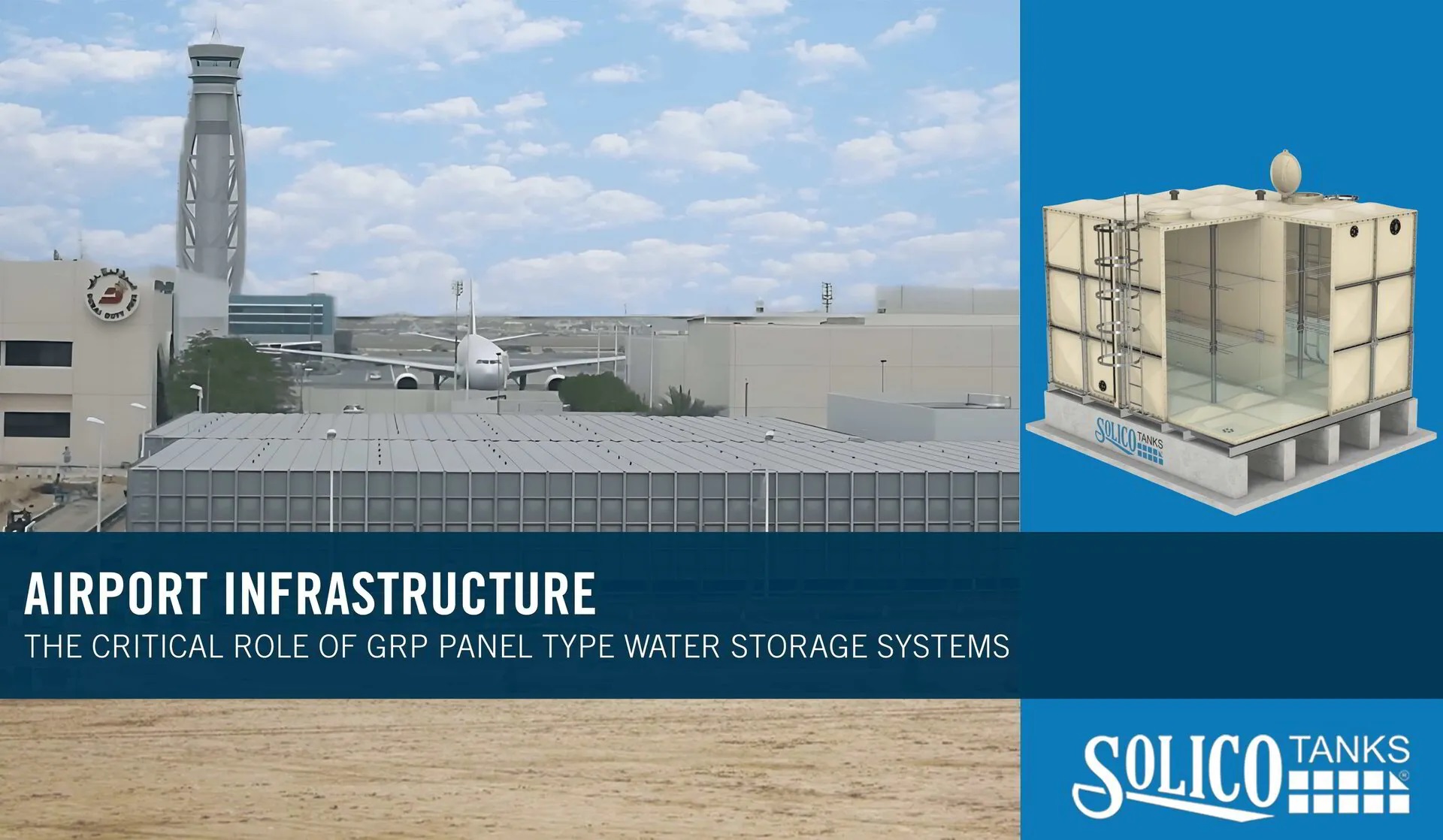
Airport Infrastructure - The Critical Role of GRP Panel Type Water Storage Systems
Introduction to Airport Infrastructure and Water Storage Needs
Airports are the backbone of global transportation, facilitating the movement of millions of passengers and goods daily. Their operations demand seamless coordination and highly efficient systems to ensure safety, reliability, and scalability. Among the many crucial components of airport infrastructure, water storage systems play a vital role in enabling smooth functionality across various operations. From potable water for passengers and staff to firefighting systems, HVAC systems, and wastewater management, the demand for robust water storage solutions is vast and diverse.
The high stakes and unique demands of airport operations necessitate water storage systems that are not only efficient but also long-lasting and customizable. In this regard, Glass Reinforced Plastic (GRP) panel type water storage systems have emerged as a transformative solution, offering durability, flexibility, and reliability. Their advanced design and adaptability make them a cornerstone of modern airport infrastructure.
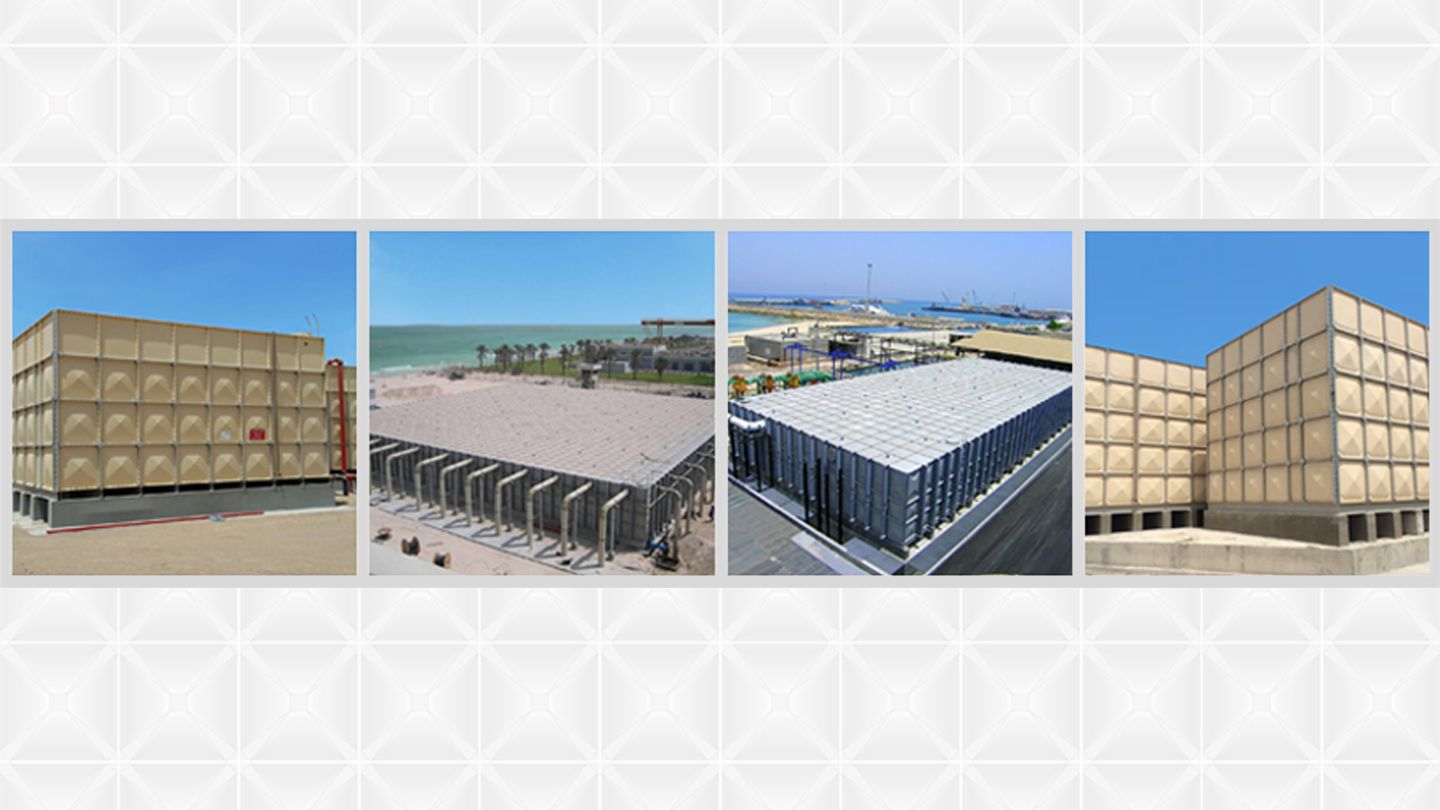
GRP panel type water storage systems are modular water tanks constructed from glass-reinforced plastic panels. These panels are engineered to withstand challenging conditions while delivering superior performance for a wide range of applications. GRP tanks stand out due to their resistance to corrosion, lightweight nature, and capacity for customization.
Some key features of GRP panel tanks include:
- Corrosion Resistance: GRP materials are impervious to rust and chemical corrosion, making them highly suitable for long-term water storage. This is particularly advantageous in coastal regions or areas with harsh environmental conditions.
- Modular Design: GRP tanks can be configured to any size or shape, allowing for efficient use of available space. This adaptability is especially valuable for airports with complex infrastructure.
- Thermal Insulation: These tanks maintain water temperature effectively, preventing freezing in cold climates and overheating in hot environments.
- Ease of Maintenance: The smooth interior surfaces reduce sediment buildup, making cleaning and maintenance straightforward.
- Hygienic and Safe: GRP tanks are designed to meet stringent water safety standards, ensuring stored water remains uncontaminated and safe for consumption.
Airports are complex ecosystems that require robust and reliable water storage systems to support a wide range of critical operations. From ensuring passenger comfort and safety to enabling the functionality of advanced mechanical systems, water storage plays an indispensable role in airport infrastructure. Below is an expanded examination of why water storage is essential for airports and how it supports their diverse needs:
1. Potable Water Supply
A reliable supply of potable water is a fundamental requirement for any airport. With thousands to millions of passengers, crew members, and staff passing through daily, water must be available for drinking, sanitation, and general hygiene.
- Passenger Amenities: Passengers expect access to clean drinking water in terminals, lounges, and food service areas. Airports with insufficient water supply risk diminishing passenger satisfaction and reputation.
- Employee Needs: Airport staff and airline crew also depend on a consistent potable water supply for their daily activities.
- Stringent Health Regulations: Airports must comply with health and safety regulations that mandate high standards for potable water storage. GRP tanks meet these requirements, ensuring water remains hygienic and uncontaminated during storage.
2. Firefighting Systems
Safety is a top priority in airport operations, and firefighting systems are a critical component of emergency preparedness. Reliable water storage systems are integral to the functionality of these systems.
- High Fire Risks in Airports: Airports house flammable materials such as aviation fuel, lubricants, and de-icing fluids. Fires in such environments can escalate quickly, requiring immediate suppression.
- Compliance with Safety Standards: Water storage systems must comply with fire safety standards to provide adequate reserves for sprinkler systems, fire hydrants, and foam suppression systems.
- Continuous Availability: GRP tanks, with their high durability and scalability, ensure that sufficient water reserves are always available to combat fire emergencies.
3. HVAC Systems
Heating, Ventilation, and Air Conditioning (HVAC) systems are critical for maintaining a comfortable environment in airport terminals and other facilities. These systems often depend on large volumes of water for cooling, particularly in regions with extreme weather conditions.
- Temperature Regulation: Airports experience constant foot traffic, making efficient cooling and heating essential for passenger comfort.
- Support for High-Capacity Systems: Larger airports with extensive HVAC requirements benefit from GRP tanks` scalability, which can support systems of varying capacities.
- Energy Efficiency: GRP tanks, with their thermal insulation properties, contribute to the efficiency of HVAC systems by reducing heat exchange in stored water.
4. Wastewater Management
Airports generate significant amounts of wastewater from restrooms, food service areas, cleaning operations, and industrial processes such as aircraft maintenance. Efficient wastewater management is essential to prevent environmental pollution and ensure regulatory compliance.
- Temporary Storage for Treatment: GRP tanks can store wastewater temporarily before it is treated or transported to a processing facility.
- Custom Solutions for Industrial Wastewater: Airports often need specialized storage for industrial wastewater containing chemicals or oils. GRP tanks can be customized with coatings to handle such contaminants safely.
- Environmental Compliance: Proper wastewater storage and management help airports adhere to environmental regulations, avoiding fines and reputational damage.
5. Emergency Preparedness
Airports must be prepared to handle unexpected disruptions or emergencies, such as natural disasters, power outages, or operational delays. Water storage systems play a crucial role in such scenarios by ensuring continuity of operations.
- Emergency Water Reserves: GRP tanks can store water for use in emergencies, such as firefighting, medical needs, or sanitation during prolonged disruptions.
- Flexibility for Rapid Response: Modular GRP tanks can be quickly expanded or relocated to address changing requirements during emergencies.
- Natural Disaster Resilience: Airports in regions prone to earthquakes, hurricanes, or floods benefit from GRP tanks’ durability, which ensures water availability even in the face of disasters.
6. Aircraft Maintenance and Ground Operations
Water is essential for a range of maintenance and operational activities that keep an airport running smoothly.
- Aircraft Cleaning: Regular cleaning of aircraft exteriors and interiors requires substantial water reserves. GRP tanks provide a reliable and scalable solution for storing the necessary water.
- Ground Vehicle Operations: Many ground support vehicles, such as those used for de-icing, fueling, and baggage handling, rely on water for their operations.
- Support for Specialized Processes: Aircraft maintenance often involves processes like cooling and flushing systems, which require water stored in durable and contamination-resistant tanks.
7. Support for Remote Facilities
Airports often include remote facilities, such as hangars, radar stations, and satellite offices, which require independent water storage solutions.
- Autonomous Water Supply: GRP tanks enable these facilities to operate independently, even if they are not connected to the main airport infrastructure.
- Adaptability to Space Constraints: The modular nature of GRP tanks allows them to be installed in confined or irregular spaces, meeting the needs of remote facilities efficiently.
- Reliability in Isolated Locations: Remote facilities benefit from GRP tanks’ long lifespan and low maintenance requirements, reducing the need for frequent servicing.
8. Support for Expanding Airport Operations
As airports grow and expand to accommodate increasing passenger and cargo volumes, water storage requirements also evolve. GRP tanks offer the scalability and flexibility needed to support this growth.
- Scalable Solutions: GRP panel tanks can be easily expanded by adding panels, ensuring they grow alongside airport infrastructure.
- Temporary Storage for Construction Projects: During airport expansions or renovations, temporary water storage solutions are often required. GRP tanks can be quickly deployed and relocated as needed.
- Future-Proof Design: By choosing modular and durable GRP tanks, airports can future-proof their water storage systems against evolving operational demands.
9. Regulatory and Environmental Compliance
Airports are subject to strict regulations regarding water management, including safety standards for potable water, firefighting systems, and wastewater disposal. GRP tanks help airports meet these requirements effectively.
- Compliance with International Standards: GRP tanks are designed to meet ISO, NSF, and other international standards for water safety and quality.
- Environmental Stewardship: Proper water storage supports sustainable practices, such as rainwater harvesting and wastewater recycling, which are increasingly important for airports aiming to reduce their environmental impact.
- Avoidance of Fines and Penalties: By investing in high-quality water storage systems, airports can avoid costly penalties for non-compliance with water management regulations.
Water storage is undeniably essential for airports, underpinning nearly every aspect of their operations. From ensuring passenger comfort and safety to supporting critical systems like HVAC and firefighting, robust water storage solutions are indispensable. GRP panel type water storage systems offer the durability, reliability, and flexibility needed to meet the diverse and evolving demands of modern airports, making them an essential component of aviation infrastructure.
Airports are dynamic, high-stakes environments where every infrastructure component must perform flawlessly under challenging conditions. Glass Reinforced Plastic (GRP) panel type water storage systems have emerged as a leading solution for addressing the unique demands of airport water management. Below is an expanded discussion of the specific advantages that make GRP panel tanks ideal for airport applications:
1. Durability and Longevity
One of the standout features of GRP panel tanks is their exceptional durability. Airports are often subjected to a variety of environmental stresses, from fluctuating temperatures to exposure to corrosive substances like de-icing fluids and salt in coastal areas. GRP tanks are inherently resistant to such challenges due to their non-corrosive nature. Unlike metal tanks that may rust over time or concrete tanks that are prone to cracking, GRP tanks maintain structural integrity for decades with minimal maintenance.
- Resilience to Weather Conditions: Whether located in humid tropical regions, dry desert climates, or freezing environments, GRP tanks perform reliably. They can withstand UV radiation, high winds, and extreme temperature variations without deteriorating.
- Resistance to Wear and Tear: Even in high-demand airport settings where water tanks are in constant use, GRP panels resist abrasion and mechanical damage.
2. Corrosion Resistance
Corrosion is a significant issue for water storage systems, especially in environments with high humidity or exposure to chemical agents. GRP tanks are inherently resistant to corrosion, as the composite material does not react with water, oxygen, or most chemicals. This makes them ideal for airports, where operations may expose water tanks to a variety of potentially corrosive elements.
- No Rusting: Unlike steel tanks, GRP tanks do not rust, ensuring the stored water remains uncontaminated.
- Chemical Resistance: GRP materials can be designed to resist aggressive substances, including aviation fuel, cleaning chemicals, and saline environments.
3. Hygienic and Safe
The safety and hygiene of water storage are paramount for airport operations, particularly in potable water systems used for passengers and staff. GRP panel tanks meet stringent hygiene standards thanks to their smooth, non-porous surfaces and non-toxic materials.
- Smooth Interior Surface: The interior of GRP tanks is designed to prevent the buildup of algae, bacteria, and sediments, ensuring clean water storage.
- Non-Toxic Materials: GRP tanks are manufactured using materials that are certified safe for potable water storage, making them ideal for drinking water applications in airports.
- Compliance with Global Standards: GRP tanks are designed to meet or exceed international safety and quality standards, providing peace of mind to airport operators.
4. Customizability and Modular Design
The modular design of GRP panel tanks provides unmatched flexibility in terms of size, shape, and capacity. This is especially valuable for airports, where space constraints and unique requirements often dictate the design of infrastructure.
- Adaptable Sizing: GRP tanks can be customized to fit irregular spaces, whether beneath terminals, on rooftops, or in confined mechanical rooms.
- Expandable Solutions: As airport demands grow, GRP tanks can be expanded by adding panels, avoiding the need for a complete replacement.
- Tailored Configurations: Tanks can be designed to meet specific operational requirements, such as fire suppression systems, HVAC support, or wastewater storage.
5. Lightweight and Easy Installation
GRP panel tanks are significantly lighter than traditional steel or concrete tanks, offering several advantages during installation and operation.
- Reduced Structural Load: The lightweight nature of GRP tanks minimizes the load on supporting structures, making them ideal for installations in elevated or weight-sensitive areas, such as rooftops or multi-level buildings.
- Simplified Transportation and Handling: The individual panels are easy to transport and maneuver, reducing installation time and costs.
- Rapid Assembly: Modular panels allow for quick on-site assembly, which is crucial for airports operating on tight schedules.
6. Thermal Insulation
Temperature control is critical for water storage systems in airports, especially in extreme climates. GRP tanks offer excellent thermal insulation properties, ensuring that stored water remains at an optimal temperature.
- Prevention of Freezing: In colder climates, GRP tanks reduce the risk of water freezing, which could disrupt operations.
- Heat Resistance: In hot climates, GRP tanks prevent water from overheating, preserving its usability and quality.
- Energy Efficiency: The insulation properties reduce the need for external heating or cooling systems, saving energy and operational costs.
7. Low Maintenance Requirements
Airports demand infrastructure that operates reliably with minimal downtime. GRP tanks excel in this regard, requiring far less maintenance than traditional steel or concrete tanks.
- Smooth Surfaces: The non-porous interior of GRP tanks prevents the buildup of deposits, reducing the frequency of cleaning.
- No Repainting Needed: Unlike steel tanks, GRP tanks do not require periodic repainting to prevent corrosion.
- Minimal Downtime: Routine inspections and maintenance tasks are straightforward and can be completed quickly, ensuring minimal disruption to airport operations.
8. Eco-Friendly and Sustainable
Sustainability is an increasingly important consideration for airports, as the aviation industry seeks to reduce its environmental footprint. GRP tanks align with these goals by offering eco-friendly manufacturing and operational benefits.
- Recyclable Materials: GRP tanks are made from recyclable components, contributing to sustainable waste management practices.
- Energy-Efficient Production: The manufacturing process for GRP tanks consumes less energy compared to steel or concrete tanks.
- Long Lifespan: The durability of GRP tanks reduces the need for replacements, minimizing waste and conserving resources over time.
9. Cost-Effectiveness
While the initial cost of GRP tanks may be higher than some traditional materials, their long-term cost benefits are significant. Airports, with their high demands and tight budgets, benefit greatly from the cost-effectiveness of GRP tanks.
- Lower Maintenance Costs: The reduced need for maintenance, repairs, and replacements translates to substantial savings over the lifespan of the tank.
- Energy Savings: Thermal insulation properties reduce energy costs associated with heating or cooling stored water.
- Extended Lifespan: The long-lasting nature of GRP tanks means that airports can avoid the recurring costs of replacing tanks prematurely.
10. Regulatory Compliance
Airports operate under strict regulations to ensure safety, efficiency, and environmental stewardship. GRP tanks are designed to meet or exceed these standards, making them a reliable choice for compliance-focused projects.
- Fire Safety Standards: GRP tanks provide reliable water storage for firefighting systems, helping airports comply with fire safety codes.
- Hygiene Certifications: For potable water applications, GRP tanks meet international health and safety standards, ensuring water quality.
- Environmental Regulations: GRP tanks support sustainable water management practices, helping airports adhere to environmental guidelines.
Conclusion
The numerous advantages of GRP panel type water storage systems make them an indispensable asset for modern airport infrastructure. Their durability, corrosion resistance, modular design, and sustainability ensure they meet the high demands of airports while minimizing operational challenges. By choosing GRP tanks, airport operators can enhance reliability, safety, and efficiency across critical water management systems, ensuring uninterrupted service in one of the world’s most demanding environments.
Airports are complex facilities with diverse operational requirements, ranging from passenger services and firefighting to aircraft maintenance and environmental management. Glass Reinforced Plastic (GRP) panel tanks have become a critical component of airport infrastructure due to their flexibility, durability, and reliability. Their applications span multiple domains within airports, ensuring efficient water management across all systems. Below is a detailed exploration of how GRP panel tanks are utilized in airports:
1. Passenger Terminals
Passenger terminals are among the busiest and most water-intensive areas of an airport. GRP tanks support a wide range of functions within terminals, ensuring a seamless experience for travelers.
- Potable Water Supply: Airports must provide clean and safe drinking water to passengers, whether through water fountains, cafes, or restaurants. GRP tanks maintain high standards of hygiene, ensuring water remains uncontaminated during storage.
- Restroom Facilities: Restrooms in terminals see high traffic, necessitating a reliable water supply. GRP tanks, with their corrosion resistance and thermal insulation, ensure consistent availability of water for sanitation and hygiene.
- Food and Beverage Operations: Restaurants, cafes, and food courts depend on water for cooking, cleaning, and beverage preparation. GRP tanks provide the necessary storage capacity to meet these demands while maintaining water safety standards.
2. Aircraft Maintenance Areas
Aircraft maintenance is a critical operation in any airport, requiring substantial water resources for cleaning, cooling, and servicing planes. GRP panel tanks excel in this environment due to their adaptability and resistance to harsh chemicals.
- Aircraft Cleaning: Regular cleaning of aircraft, both interior and exterior, consumes large amounts of water. GRP tanks provide a reliable storage solution for this purpose, ensuring efficient operations.
- Cooling Systems: Maintenance processes often involve cooling systems that require consistent water supply. GRP tanks, with their customizable capacity, are ideal for such high-demand applications.
- Chemical Resistance: Maintenance operations may involve exposure to chemicals or detergents. GRP tanks’ non-reactive surfaces can handle these substances without degradation, ensuring longevity.
3. Fire Safety Systems
Fire safety is a paramount concern in airport operations, given the high volume of passengers, staff, and the presence of flammable materials like aviation fuel. GRP tanks play a vital role in supporting airport fire safety systems.
- Firefighting Water Storage: GRP tanks store the water required for sprinkler systems, fire hydrants, and foam suppression systems, ensuring a steady and reliable supply during emergencies.
- Compliance with Safety Standards: These tanks are engineered to meet stringent fire safety regulations, making them indispensable for airports.
- Rapid Response Readiness: GRP tanks can be strategically installed in key areas to provide immediate access to water for firefighting, minimizing response times.
4. HVAC Systems
Heating, Ventilation, and Air Conditioning (HVAC) systems are essential for maintaining a comfortable and safe environment in airports, especially in passenger terminals and lounges. GRP tanks support these systems by providing the necessary water storage.
- Chilled Water Storage: GRP tanks are often used to store chilled water for cooling systems, particularly in airports located in warm climates.
- Thermal Insulation: The insulation properties of GRP tanks help maintain water at the required temperature, reducing energy costs associated with HVAC systems.
- Scalability for Large Systems: Airports with extensive HVAC requirements benefit from the modular design of GRP tanks, which can be tailored to meet large-scale demands.
5. Wastewater Management
Airports generate vast amounts of wastewater from restrooms, food service areas, cleaning operations, and industrial activities like aircraft maintenance. GRP panel tanks are integral to effective wastewater management.
- Temporary Storage Before Treatment: GRP tanks provide secure storage for wastewater before it is treated or transported to a processing facility.
- Industrial Wastewater Solutions: Maintenance and ground operations may produce wastewater containing oils, chemicals, or other contaminants. GRP tanks can be customized with protective coatings to handle these substances safely.
- Rainwater Harvesting and Reuse: Some airports use GRP tanks to collect and store rainwater, which can then be reused for non-potable applications like cleaning or landscaping.
6. Support for Remote Facilities
Airports often include remote or standalone facilities such as radar stations, hangars, and satellite offices. These areas require independent water storage systems, and GRP tanks are ideally suited for such applications.
- Autonomous Water Supply: GRP tanks ensure these facilities have access to water even if they are not connected to the airport`s central water infrastructure.
- Compact and Flexible Design: The modular nature of GRP tanks allows them to be installed in confined or irregular spaces, making them ideal for remote locations.
- Durability in Harsh Environments: Whether exposed to extreme heat, cold, or chemicals, GRP tanks maintain their performance and structural integrity.
7. Fuel Storage and Fire Suppression
The storage and handling of aviation fuel is a high-risk activity that requires robust safety measures. GRP tanks play a role in ensuring the availability of water for fire suppression systems associated with fuel storage areas.
- Dedicated Fire Suppression Systems: GRP tanks store water for foam-based fire suppression systems, which are commonly used in fuel storage areas.
- Corrosion Resistance: GRP materials are highly resistant to the corrosive effects of fuel vapors and other chemicals present in these areas.
- Strategic Placement: Tanks can be installed close to fuel storage zones to ensure rapid deployment of firefighting measures in the event of an incident.
8. Construction and Expansion Projects
Airports are constantly evolving, with construction and expansion projects underway to accommodate growing passenger numbers and cargo volumes. GRP panel tanks provide flexible and reliable water storage solutions during these projects.
- Temporary Water Storage: During construction, GRP tanks can be deployed to provide water for site activities, such as concrete mixing, equipment cleaning, and worker facilities.
- Rapid Deployment: The lightweight and modular design of GRP tanks enables quick installation, making them ideal for temporary applications.
- Support for New Facilities: As new terminals, runways, or maintenance areas are built, GRP tanks can be customized to meet the specific water storage needs of these facilities.
9. Emergency Water Storage
Airports must be prepared for unexpected disruptions or emergencies, such as natural disasters, power outages, or operational delays. GRP tanks provide a reliable source of emergency water storage.
- Emergency Resilience: GRP tanks ensure a steady supply of water for firefighting, sanitation, and medical needs during emergencies.
- Scalable Solutions: Tanks can be easily expanded or relocated to address changing requirements in response to emergencies.
- Redundancy in Critical Systems: GRP tanks can serve as backup water storage, ensuring that airport operations remain uninterrupted even during unforeseen events.
Conclusion
The diverse applications of GRP panel tanks across airport operations highlight their versatility and importance in modern aviation infrastructure. From passenger terminals and maintenance areas to fire safety systems and remote facilities, GRP tanks provide reliable, durable, and customizable water storage solutions. Their ability to support critical systems, ensure compliance with safety standards, and adapt to changing demands makes them an invaluable asset for airports worldwide.
The implementation of Glass Reinforced Plastic (GRP) panel tanks in airports around the world demonstrates their versatility, reliability, and importance in managing water storage requirements. These tanks have been successfully integrated into various aspects of airport infrastructure, solving unique challenges and meeting stringent operational needs. This section examines real-world examples of how GRP tanks have been deployed in airports, illustrating their effectiveness while maintaining anonymity.
1. An Airport in Singapore
One of the busiest and most advanced airports in the world faced challenges with ensuring uninterrupted potable water supply and robust firefighting systems. Situated in a region characterized by high humidity and heavy rainfall, the airport required water storage solutions that could withstand constant exposure to moisture without corroding.
Key Applications:
- Potable Water Storage: GRP tanks were installed in passenger terminals to store drinking water. The tanks’ hygienic properties ensured the water met international safety standards.
- Fire Safety Systems: Strategically placed GRP tanks provided a reliable water supply for firefighting systems, ensuring rapid response capabilities in the event of an emergency.
- Environmental Adaptability: The tanks’ corrosion-resistant design made them ideal for Singapore’s humid climate, where traditional materials like steel would degrade quickly.
Results:
- The GRP tanks delivered long-term durability and reduced maintenance costs, ensuring consistent operation even in challenging environmental conditions.
- Their modular design allowed for efficient use of space, meeting the airport’s storage needs without compromising on terminal functionality.
2. Many Airports in the Middle East
A major international hub located in an arid desert environment in Dubai & in Abu Dhabi required water storage systems to support its HVAC operations, firefighting infrastructure, and emergency preparedness. The extreme heat and lack of natural water sources posed unique challenges.
Key Applications:
- HVAC Water Supply: GRP tanks were used to store chilled water for the airport’s extensive HVAC systems, ensuring a comfortable environment for passengers and staff in temperatures often exceeding 40°C.
- Emergency Water Reserves: Tanks were installed to provide emergency water supplies, supporting fire suppression and sanitation needs during potential disruptions.
- Thermal Insulation: The tanks’ superior thermal insulation properties helped maintain water temperature, preventing energy losses and ensuring system efficiency.
Results:
- The GRP tanks successfully withstood the harsh desert climate, maintaining performance and structural integrity without requiring frequent maintenance.
- The modular tanks were customized to fit various operational needs, contributing to the airport’s reputation for world-class infrastructure.
- 3. An Airport in the United Kingdom
A prominent European airport undergoing an expansion project needed scalable water storage solutions for its new passenger terminal and maintenance areas. The project demanded tanks that could be quickly deployed, customized for specific needs, and integrated into existing systems.
Key Applications:
- Construction Support: GRP tanks provided temporary water storage for construction activities, such as concrete mixing and equipment cleaning, during the terminal expansion.
- Wastewater Management: Tanks were installed to store wastewater from restrooms and food service areas in the new terminal, ensuring compliance with environmental regulations.
- Firefighting Systems: Dedicated GRP tanks were placed in the expanded facility to supply water for fire suppression systems.
Results:
- The modular design of GRP tanks enabled swift installation, keeping the construction project on schedule.
- Their scalability allowed the airport to expand water storage capacity as new facilities was completed, avoiding the need for costly and time-consuming replacements.
- The tanks supported sustainable practices by facilitating wastewater management and rainwater harvesting.
4. An Airport in East Asia
A regional airport facing space constraints and environmental challenges sought efficient water storage systems to support its firefighting, potable water, and wastewater management needs. The airport’s location in a coastal region exposed it to high levels of salt in the air, increasing the risk of corrosion for traditional water storage materials.
Key Applications:
- Fire Safety: GRP tanks were installed near critical infrastructure, including fuel storage areas and runways, to provide a reliable water source for firefighting systems.
- Potable Water Supply: Hygienic GRP tanks ensured safe storage of drinking water for passengers and staff, maintaining water quality despite the challenging environment.
- Wastewater Storage: Tanks were customized to store wastewater from terminal facilities before it was treated or transported, supporting the airport’s sustainability goals.
Results:
- The corrosion-resistant properties of GRP tanks ensured long-term durability despite exposure to salty air and humid conditions.
- The tanks’ modular design allowed them to be installed in tight spaces, maximizing the use of limited real estate within the airport.
- The airport achieved enhanced operational efficiency while maintaining environmental compliance.
5. An Airport in Africa
An airport in a developing region required water storage solutions to support its growing passenger numbers and newly introduced maintenance facilities. With limited access to advanced materials and technology locally, the project needed cost-effective and low-maintenance tanks that could be easily transported and installed.
Key Applications:
- Support for Maintenance Facilities: GRP tanks were used to store water for cleaning and servicing aircraft, ensuring reliable supply in a remote location.
- Emergency Preparedness: The airport installed GRP tanks to store water for fire suppression and sanitation during operational disruptions.
- Sustainable Practices: GRP tanks were integrated into a rainwater harvesting system, reducing the reliance on external water supplies.
Results:
- The lightweight nature of GRP tanks allowed for easy transportation and rapid installation, minimizing logistical challenges.
- The tanks provided a cost-effective solution with minimal maintenance requirements, ensuring long-term usability in a resource-constrained environment.
- By supporting rainwater harvesting, the airport reduced its environmental impact and reliance on external water resources.
Conclusion
The deployment of GRP panel tanks in airports around the world highlights their unmatched versatility, durability, and adaptability. Whether addressing environmental challenges, supporting critical systems like HVAC and fire safety, or ensuring compliance with international regulations, GRP tanks have proven to be a reliable and cost-effective solution. These case studies demonstrate that regardless of location, climate, or operational needs, GRP tanks play a pivotal role in ensuring airports operate smoothly and efficiently.
GRP tanks address several operational and logistical challenges unique to airport environments:
1. Space Optimization:
Airports often deal with space constraints. GRP tanks’ modular design enables efficient use of available areas, even in confined spaces.
2. Environmental Resistance:
Harsh weather conditions, coastal locations, and exposure to chemicals require materials that can endure. GRP tanks excel in such environments.
3. Operational Efficiency:
By reducing maintenance needs and ensuring consistent performance, GRP tanks contribute to operational efficiency.
At Solico Tanks, we specialize in delivering premium GRP panel type water storage systems designed to meet the specific needs of the aviation and airport sectors. Our reputation for quality and reliability makes us a trusted partner for contractors, consultants, and MEP engineers.
- Decades of Expertise: We bring years of experience in designing and manufacturing water storage solutions for diverse industries.
- Cutting-Edge Technology: Our GRP tanks incorporate the latest advancements in material science and engineering.
- Customization Capabilities: We work closely with clients to provide tailor-made solutions that meet unique project requirements.
- Global Network: With a presence in major markets worldwide, we ensure timely delivery and support.
- Sustainability Focus: Our manufacturing processes prioritize eco-friendly practices, aligning with global sustainability goals.
For reliable, efficient, and customizable water storage solutions, Solico Tanks is your go-to partner. We are committed to helping airports, contractors, consultants, and MEP engineers build infrastructure that stands the test of time.
Contact Solico Tanks today to learn more about our GRP panel type water storage systems.
Let’s collaborate to create resilient, future-ready airport infrastructure. Visit our website or connect with our sales team to get started.