


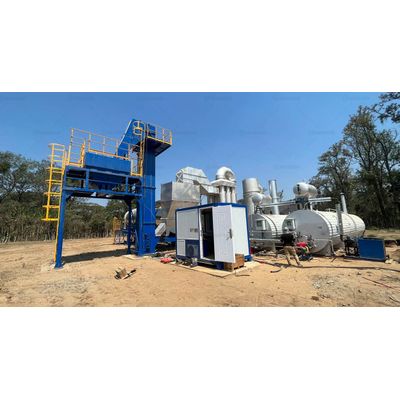
Asphalt Drum Mix Plant Manufacturer Prioritize Eco Upgrades For Lasting Value
Facing tighter environmental and energy‑saving mandates, the central claim is that the asphalt drum mix plant manufacturer is focusing upgrades that directly lower emissions, reduce fuel consumption, and improve material efficiency—changes that increase the aftermarket value of asphalt plants for sale. Buyers should evaluate specific retrofits and factory configurations that target particulate capture, thermal efficiency, binder conservation, and automation for process optimization. This article explains three concentrated upgrade areas—emission control, thermal and fuel efficiency, and materials/process automation—that procurement teams must quantify to judge long‑term competitiveness and return on investment.
Targeted emission control systems and regulatory readiness
First, manufacturers are integrating advanced particulate capture and VOC reduction modules to meet stricter limits. For example, compact baghouse systems and modular scrubbers designed for drum flow patterns reduce PM emissions without requiring expansive civil works. Consequently, operators face fewer permitting hurdles and lower risk of operational stop orders. Therefore, when comparing asphalt plants for sale, verify measured capture efficiencies and modular retrofit compatibility rather than accepting generic emission claims.
Furthermore, manufacturers are optimizing entrainment management within the drum to limit fugitive dust and unburned hydrocarbons. By refining dust extraction points and balancing induced draft flows, the plant reduces particulate carryover into downstream systems. As a result, filter loading and maintenance frequency fall, which lowers lifecycle emissions management costs. Hence, lifecycle maintenance planning should include realistic maintenance intervals tied to these enhanced extraction designs.
In addition, some producers offer integrated sampling ports and emissions monitoring interfaces that align with compliance reporting. Thus, real‑time reporting capabilities help contractors demonstrate regulatory adherence and quickly respond to exceedances. Consequently, the documented control chain increases resale appeal of asphalt plants for sale in jurisdictions with strict monitoring requirements.
Thermal efficiency, burner modernization and fuel strategy
Beyond emissions, thermal efficiency upgrades materially cut fuel burn per ton. Manufacturers are improving drum insulation, optimizing burner-to-drum heat transfer, and fitting variable‑output burners that maintain combustion efficiency across partial loads. Therefore, fuel consumption stabilizes even when production rates vary, which is critical for contractors juggling multiple small‑scale jobs.
Moreover, staged combustion and improved air‑fuel control systems lower excess oxygen and reduce heat losses. As a result, less fuel is required to reach target mix temperatures and reheating cycles diminish. Thus, lifecycle energy cost models should compare specific fuel‑use reductions claimed by manufacturers rather than relying on unit throughput metrics alone.
Also, options for dual‑fuel burners or biomass-compatible systems appear more frequently, giving operators flexibility to exploit lower‑cost or lower‑carbon fuels where available. Consequently, these configurations can both improve near‑term operating margins and position assets for future regulatory tightening.
Materials handling, mix quality control and process automation
Importantly, manufacturers are upgrading control systems to tighten aggregate proportioning and moisture correction, reducing waste and off‑spec production. Enhanced weighbridge precision, closed‑loop dosing, and real‑time moisture compensation decrease rejected batches and rework. Therefore, contractors achieve higher yield from the same material inputs, improving resource efficiency and lowering landfill or disposal costs.
Additionally, automation platforms now offer predictive maintenance alerts and batch traceability, so operators detect component drift before it affects mix quality. Hence, uptime improves and documented quality records increase the asset’s marketability when listed among asphalt plants for sale.
Lastly, modular cold feed designs and improved aggregate transfer paths reduce segregation and abrasion, which lowers wear‑part turnover. As a result, total cost of ownership over multiple campaigns declines, strengthening the long‑term application value of upgraded plants.
Conclusion
Asphalt drum mix plant manufacturer are pursuing specific emission controls, thermal efficiency advances, and improved materials automation to meet stricter environmental and energy standards. These targeted upgrades cut compliance risk, reduce fuel and material waste, and increase operational reliability—factors that enhance both market competitiveness and the durable value of asphalt plants for sale.