


Automotive Borescope Inspection Camera Buying Guide
Automotive diagnostics rely heavily on accuracy, and that accuracy starts with visibility. Whether you’re an experienced mechanic, a fleet technician, or a DIY car enthusiast, an automotive borescope camera is one of the most valuable inspection tools you can have in your kit. Instead of tearing down an engine or removing multiple components to visually inspect a problem area, a borescope allows you to look inside hard-to-reach spaces quickly, clearly, and safely.
But with so many models on the market, choosing the right automotive borescope camera can feel overwhelming. This guide walks you through the essential features, specs, and considerations to help you invest in the right tool for your needs, one that provides reliable performance and long-term value.
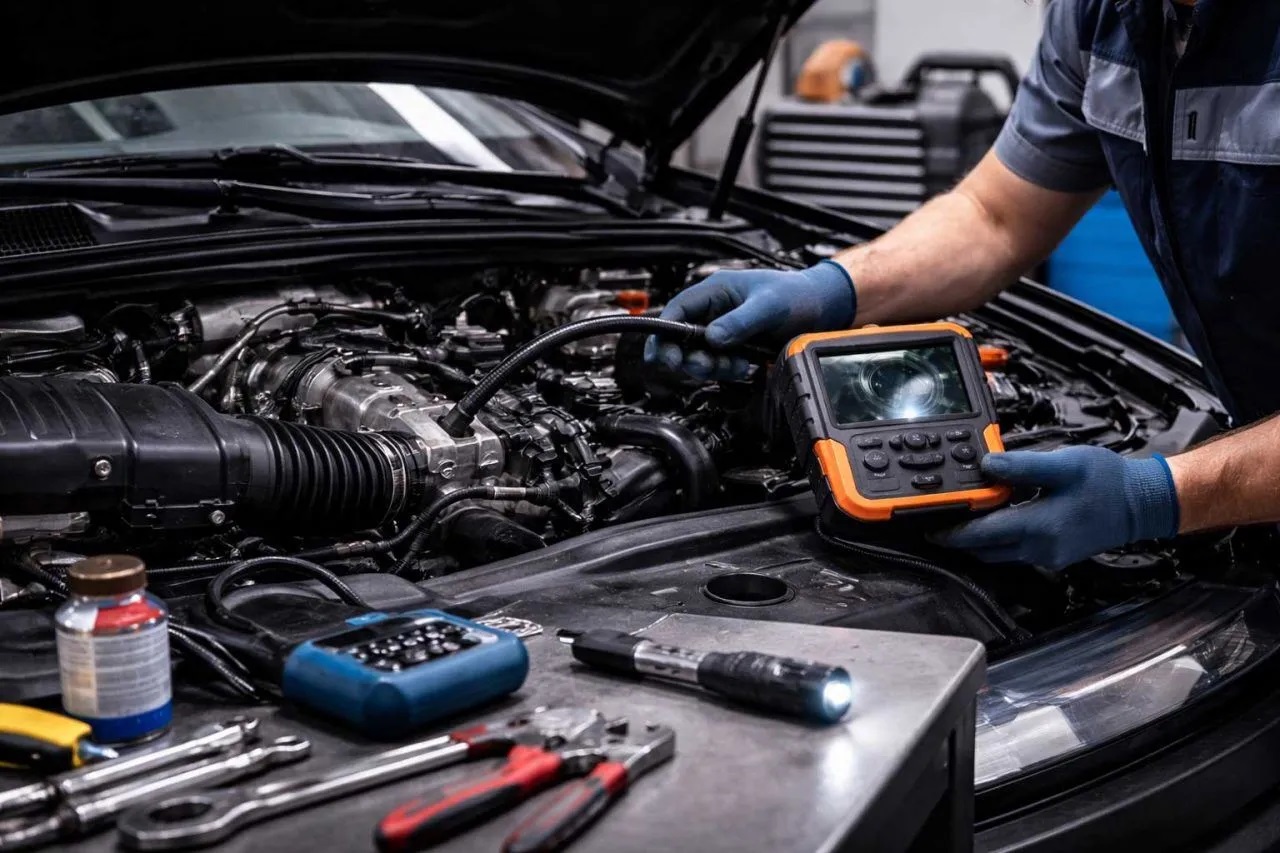
Automotive systems are becoming more complex every year, with tighter engine compartments, intricate wiring, and components packed into compact spaces. A borescope camera allows you to:
- Diagnose problems without disassembly
- Inspect cylinders, valves, injectors, gaskets, and exhaust systems
- Locate carbon buildup or internal wear
- Check behind dashboards or inside HVAC systems
- Verify repairs before reassembly
Whether you’re troubleshooting rough idles, oil consumption, or ignition issues, the right borescope saves time and money, both for you and your customers.
With many inspection camera options available, choosing the right one requires understanding the specifications that truly matter for automotive work.
1. Camera Diameter
The diameter of the probe determines where the borescope can go. Automotive technicians typically need:
- 3.9 mm – 6 mm probes for spark plug holes, small passages, and precision inspections
- 6 mm – 9 mm probes for general automotive inspections, such as intake manifolds or behind panels
A smaller diameter allows access to tight spaces, but may slightly reduce image quality, so find a balance based on your most common tasks.
2. Image Resolution
Clear visuals are essential for identifying cracks, pitting, scoring, debris, or corrosion. Resolutions vary widely:
- 720p: Good for basic mechanical checks
- 1080p: Ideal for most automotive diagnostics
- High-Definition or Dual-Camera Probes: Best for detailed inspections
Higher resolution cameras provide better clarity but may increase the price. For professional use, 1080p is often the sweet spot.
3. Probe Length & Flexibility
You’ll need a probe long enough to navigate complex engine compartments. Common lengths range from 1 meter to 3 meters.
Also consider:
- Rigid probes for straight-line inspections
- Semi-rigid probes for controlled navigation
- Flexible probes for maneuvering through bends
For automotive work, semi-rigid is generally the best choice as it maintains shape while still allowing directional movement.
4. Lighting Quality (LED Brightness & Control)
Because engines and ducts are dark, built-in LEDs are crucial. Look for:
- Adjustable brightness settings
- High-intensity LEDs to illuminate deep cavities
- Even light distribution without glare
Dimmable lighting helps prevent overexposure when inspecting reflective surfaces like metal.
5. Display Type (Built-In Screen vs. Smartphone Connection)
You’ll find two main categories:
- Borescopes With a Built-in Monitor
- No connection needed
- Often more rugged
- Ideal for shop environments
- Wi-Fi or USB Borescopes That Connect to Phones or Tablets
- Lighter and more portable
- Often more budget-friendly
- Convenient for image sharing
Professionals typically prefer built-in monitors for durability and reliability, while mobile-compatible models are great for light, occasional use.
6. Articulation Options
Articulating borescopes allow the camera tip to move for better viewing angles, which is especially useful in automotive diagnostics.
Types include:
- Non-Articulating (Fixed Direction): Economical
- One-Way Articulation: Basic directional control
- Two-Way Articulation: Allows up/down movement
- Four-Way Articulation: Premium flexibility
For cylinder and valve inspections, articulating probes provide a major advantage because they help technicians clearly inspect sidewalls and hidden surfaces.
7. Durability & Build Quality
Automotive shops are demanding environments. Choose a borescope with:
- Oil- and chemical-resistant construction
- Waterproof or IP-rated probe (IP67+ recommended)
- Shock-resistant housing
- Replaceable or interchangeable probes
Durability ensures your investment lasts longer and performs reliably over time.
While not mandatory, these features provide added convenience:
- Image/Video Recording: Essential for documenting repairs or showing customers issues
- Zoom capability: Helps capture fine details
- Dual-camera probes: Offer forward and side-view imaging
- Rechargeable long-lasting batteries: Ideal for full-day shop use
- Carrying cases: For protection and organization
Ask yourself:
- Do you perform frequent inspections or occasional diagnostics?
- Do you need articulation for in-depth engine work?
- What probe diameter fits the components you inspect most?
- Do you prefer a built-in screen or a mobile setup?
- What is your budget for long-term professional use?
When in doubt, choose a mid-to-high-end automotive borescope camera with good resolution, adjustable lighting, and durable construction. These provide the best return on investment for mechanics.
USA Borescopes offers one of the most extensive selections of automotive borescope cameras, including articulating, high-resolution, and ultra-thin models trusted by professional automotive technicians nationwide. Their expert team can help you choose the right tool based on your inspection needs, repair workflow, and budget.
Whether you’re upgrading your shop equipment or purchasing your first borescope, USA Borescopes makes it easy to find a camera that delivers crystal-clear images and long-lasting performance.
An automotive borescope camera is a must-have tool for modern diagnostics. It improves accuracy, reduces teardown time, and gives technicians the visibility needed to make confident repairs. By choosing a high-quality model with the right specs (and buying from a trusted supplier like USA Borescopes), you’ll be equipped to handle inspections quickly, safely, and professionally.