

- Home
- Companies
- Puroxi Pure Water Global Inc.
- Articles
- Bubble Tank DO Systems Improve Oxygen ...
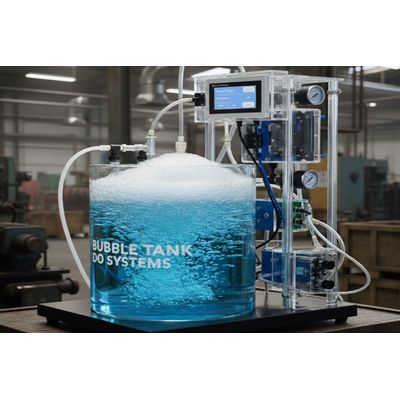
Bubble Tank DO Systems Improve Oxygen Transfer Efficiency in Water Treatment
Bubble Tank DO systems improve oxygen transfer efficiency in water treatment, delivering stronger biological treatment with lower energy input and aiding compliance with discharge standards.
Why Oxygen Transfer Efficiency Matters
Oxygen transfer efficiency measures the extent to which oxygen dissolves in water. An increase in efficiency translates into enhanced biological treatment, enabling plants to achieve better results with less energy.
- Slower microbial activity
- Poor sludge settling
- Higher BOD and COD levels
- Increased energy consumption
What Is a Bubble Tank DO System?
A bubble tank DO system forms a thinner liquid film around the gas to increase the interfacial area, enabling a more efficient delivery of oxygen. A thinner liquid film provides greater surface area, so oxygen dissolves more quickly and efficiently.
These systems combine precision sizing and optimized tank geometry to improve mixing and oxygen contact, delivering a consistent oxygen supply to microbes.
The Science Behind Fine Bubble Aeration
Thin-film bubbles persist longer in the water column. Their rapid action creates immediate oxygen release and expands the gas-liquid interface, yielding higher transfer rates and more efficient oxygen utilization. Traditional coarse bubble systems waste oxygen as large bubbles escape quickly; Bubble Tank DO systems maximize the use of circulating air.
How Do Bubble Tank Systems Improve Efficiency?
- Enhanced Surface Area Contact: Fine bubbles multiply surface area instantly, increasing dissolution without higher airflow.
- Uniform Oxygen Distribution: Smart placement ensures even coverage, eliminating dead zones.
- Reduced Energy Consumption: Faster dissolution allows pumps to run at more consistent speeds, reducing energy costs over time.
- Real-Time DO Monitoring: Integrate a DO sensor to continuously track DO and adjust airflow accordingly.
- Optimized Tank Hydraulics: Proper mixing prevents sludge buildup and supports steady biomass activity.
Operational Benefits for Treatment Plants
Bubble Tank DO systems deliver measurable improvements, including lower specific energy consumption, improved nitrification rates, stable sludge age control, and faster system recovery after load spikes. Operators gain enhanced process visibility, and empirical adjustments improve data reliability over the long term; many facilities upgrade aeration systems to realize these benefits.
Integration with Smart Treatment Strategies
Modern plants require automation; Bubble Tank DO systems can integrate with SCADA platforms to provide real-time performance insights. Predictive analytics optimize airflow, reducing manual interventions and allowing staff to focus on strategic improvements. Midway through modernization projects, Puroxi provides advanced oxygen-optimization solutions that balance performance with sustainability and reliability.
Environmental and Sustainability Impact
Energy consumption drives operating costs and carbon footprint. Aeration can account for up to 60 percent of a plant’s energy use. Improving oxygen transfer reduces pump energy demand, lowers greenhouse gas emissions, and supports stable biological treatment, moving facilities toward net-zero goals and delivering cleaner water discharge to communities.
Practical Applications Across Industries
- Municipal wastewater plants
- Food and beverage processing
- Pharmaceutical manufacturing
- Textile industries
- Chemical processing facilities
Maintenance and Longevity Advantages
Bubble Tank DO systems are designed for long service life with maintenance benefits including corrosion-resistant materials, easy access for inspection, and modular component design, minimizing downtime and reducing labor costs.
How to Maximize Performance
Even advanced systems require proper management. Best practices include:
- Monitor DO levels daily
- Calibrate sensors regularly
- Inspect cabinets periodically
- Analyze airflow patterns
- Track energy consumption trends
Periodic audits aid early identification of inefficiencies and support anticipatory changes to sustain long-term performance.
The Future of Oxygen Transfer in 2026 and Beyond
The water treatment process is evolving toward higher efficiency under stricter discharge norms, with energy prices remaining volatile. Smarter aeration should become a priority. Bubble Tank DO systems offer a forward-looking solution, combining engineering precision with digital intelligence to achieve compliance and cost control. Future innovations are expected in diffuser materials, sensor accuracy, and AI-driven predictive aeration controls, creating a longer-term competitive advantage for facilities.
Industry providers, including Puroxi, offer oxygen-optimization solutions to support modernization efforts and balance performance with sustainability.
Original: https://puroxi.com/how-bubble-tank-do-systems-improve-oxygen-transfer-efficiency/?utm_source=rss&utm_medium=rss&utm_campaign=how-bubble-tank-do-systems-improve-oxygen-transfer-efficiency