
Butt Weld Pipe Fittings FAQ
Navigating the world of industrial piping? Butt weld fittings are fundamental components, and understanding their function is key. Here are answers to the most common questions.
What Exactly Is a Butt Weld Pipe Fitting?
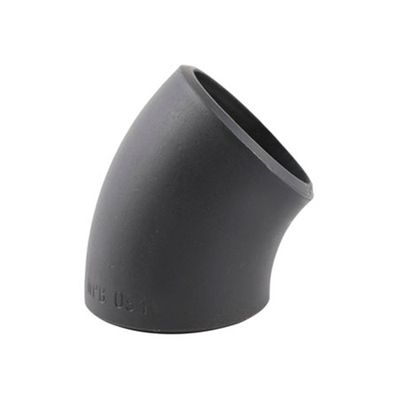
Think of a butt weld fitting as a specialized connector in a pipeline. Its ends are beveled to be welded directly to pipes, creating a strong, permanent, and leak-proof seal. These fittings are essential for changing the direction of flow, branching off to a new line, or altering the diameter of the pipe. They become an integral part of the pipeline, ensuring that fluids such as oil, gas, or chemicals are transported safely.
Seamless vs. Welded Fittings: What’s the Difference?
When choosing a fitting, you’ll encounter two main types: seamless and welded.
Seamless Pipe Fittings: These are forged from a single, solid piece of pipe. Heat and pressure are used to mold the material into its final shape, such as a pipe fitting elbow or tee. The key advantage? There are no welded seams on the fitting itself. This eliminates potential weak points, making seamless fittings the top choice for high-pressure systems and critical applications where failure is not an option.
By comparison, a regular butt weld fitting has one, two, or more welds, depending on dimension, shape, and manufacturing method.
No weld means less risk of weld yield and porosities.
Where Are Butt Weld Fittings Used?
Butt weld fittings are the backbone of countless industries that rely on fluid transport.
Key Industries:
Energy: From oil and gas exploration (upstream) and transportation (midstream) to refining (downstream) and power generation plants.
Manufacturing: Essential for producing everything from chemicals and pharmaceuticals to semiconductors and plastics.
Food & Beverage: Used in systems that process ingredients, produce drinks, and maintain cold chains for frozen goods.
Infrastructure: Critical for desalination plants that create drinking water and in the production of construction materials.
Why Are Some Fittings Thicker Than the Pipe?
You might notice that a fitting is often heavier and has thicker walls than the pipe it connects to. There are two primary reasons for this:
Stress Compensation: Fittings like elbows and tees endure higher stress concentrations than straight sections of pipe. The extra thickness adds strength right where it’s needed most, preventing deformation and ensuring long-term integrity.
Manufacturing Practicality: To meet an order’s specific requirements, manufacturers sometimes use the next-higher available size of raw material. While the inner diameter is precisely machined, the outer wall remains thicker, resulting in a more robust part.
Ensuring Quality: The Standards That Govern Fittings
Pipe fittings aren’t made to arbitrary dimensions. Their production is governed by strict standards to guarantee safety, compatibility, and performance.
Key Standards include:
ASME (American Society of Mechanical Engineers)
ASTM (American Society for Testing and Materials)
These bodies set the rules for material composition, dimensional tolerances, and testing requirements. Furthermore, many large industrial users maintain an Approved Manufacturers List (AML), certifying that a manufacturer’s plant meets their own rigorous quality criteria.
The Manufacturing Process of buttweld pipe fittings:
Creating a butt weld fitting is a multi-step process focused on precision and quality:
1. Material Selection: It starts with choosing the correct grade of raw material, either seamless pipe or plate.
2. Cutting & Heating: The material is cut to size and heated in a furnace until it’s malleable.
3. Forming: The hot material is pressed, pierced, or drawn over a die to forge it into the desired shape (e.g., an elbow or reducer).
4. Welding & Machining: If the fitting requires it (like a large tee), welding is performed. The ends are then machined to create the beveled edge for welding.
5. Inspection & Testing: This is the most critical stage. Every fitting undergoes rigorous testing to ensure it is free of defects.
6. Finishing & Shipping: The fitting may be coated for corrosion protection before being documented and shipped to the customer.
How Quality is Verified: Common Non-Destructive Tests (NDT)
To guarantee a fitting is flawless without damaging it, manufacturers perform several non-destructive tests:
Surface Inspection: Methods like Dye Penetrant and Magnetic Particle Inspection reveal tiny surface cracks or flaws that are invisible to the naked eye.
Internal Integrity Check: Radiography (X-ray) is used to see inside the fitting and detect any internal weaknesses. Hydrostatic Testing, where the fitting is filled with water and pressurized, confirms it is strong and leak-proof.
Material Verification: Positive Material Identification (PMI) uses a specialized tool to analyze the fitting’s elemental composition, confirming the correct alloy was used for maximum strength and corrosion resistance.
JS FITTINGS is the buttweld steel pipe fittings manufacturer & exporter in China. Our fittings and flanges are exported to over 50 countries and regions, such as the UAE, Canada, Mexico, South America, Europe, the Middle East, and the Asia Pacific.
Our products include, but not limited to, steel pipe flange, buttweld elbow, butt weld tee, pipe Reducers, and steel end caps.
We have earned ISO9001:2015, CE, GOST-R, and passed the Pressure Equipment Directive (PED) certification. All this comes with exemplary customer service and a comprehensive warranty that guarantees your satisfaction.
Email: admin@jsfittings.com
Whats APP: +8618003119682