


- Home
- Companies
- Xingaonai Heavy Industry Group Co., ...
- Articles
- Capacity of Jaw Crusher: Factors, ...
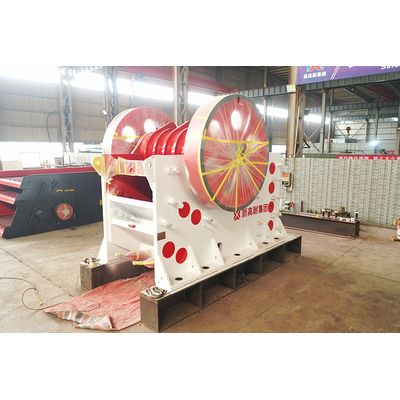
Capacity of Jaw Crusher: Factors, Calculation, and Optimization Strategies
Jaw crushers are fundamental equipment in mining, quarrying, and recycling industries, designed to reduce large rocks into smaller fragments through compressive force. The capacity of jaw crusher—defined as the maximum material throughput per unit time—is critical for operational efficiency. This article delves into the factors influencing capacity, calculation methods, and optimization strategies to enhance performance while maintaining structural integrity.
Key Factors Affecting Jaw Crusher Capacity
Crusher Size and GeometryCrushing Chamber Dimensions: Larger feed openings (e.g., 1,380 mm width in Nordberg® C3054™) and deeper chambers increase volumetric throughput. Deep-cavity designs reduce dead zones, improving material flow.
Stroke and Kinematics: Aggressive stroke patterns (e.g., elliptical motion in single-toggle crushers) enhance crushing efficiency. For instance, single-toggle jaw crushers achieve higher capacity than double-toggle models of similar size due to optimized force transmission.
Feed Size and Material CharacteristicsFeed Size: Exceeding recommended feed sizes reduces capacity and increases wear. Scalped feeds (pre-screened to remove fines) improve throughput by minimizing overloading.
Material Hardness and Abrasiveness: Harder materials (e.g., granite) require more energy, reducing capacity. Soft materials (e.g., limestone) allow faster processing.
Operating ParametersClosed-Side Setting (CSS): Narrower CSS settings yield finer products but reduce capacity. Adjustable CSS mechanisms (e.g., hydraulic wedges) enable real-time optimization.
Speed and Frequency: Higher rotational speeds (e.g., 260 RPM) increase throughput but may elevate wear rates.
Calculating Jaw Crusher Capacity
Two primary formulas are widely used:
Lewenson Formula:
Capacity=60W×S×N(tons/hour)
Where W = jaw width (m), S = stroke length (m), N = rotational speed (RPM).
Taggart Formula:
Capacity=CSS0.085×L×W×ρ×N(tons/hour)
Where L = jaw length (m), ρ = material density (kg/m³), CSS = closed-side setting (m).
Crushing Ratio: Calculated as Ratio=P80F80, where F80 and P80 are 80% passing sizes for feed and product, respectively.
Optimization Strategies
Structural EnhancementsModular Design: Bolted frames (e.g., Nordberg® C Series™) simplify maintenance and reduce vibration.
Wear-Resistant Components: High-strength jaw plates and cheek plates extend service life.
Vibration Dampening: Counterweights and optimized flywheel angles reduce inertia forces by up to 71.2%, minimizing noise and fatigue damage.
Power and Installation OptimizationIntegrated Motors: Direct-drive systems reduce installation space and energy losses.
Remote Monitoring: IoT-enabled systems (e.g., IC-automation) adjust parameters dynamically for peak efficiency.
Intelligent SystemsAdaptive Crushing: Real-time adjustment of CSS and stroke based on material properties.
Predictive Maintenance: Sensors monitor bearing temperatures and vibration, enabling proactive repairs.
Conclusion
Optimizing the capacity of jaw crusher requires balancing mechanical design, material properties, and operational parameters. By leveraging advanced calculation methods and modern optimization strategies—such as intelligent systems and structural enhancements—industries can achieve higher throughput, reduced downtime, and extended equipment life. For professionals in mining, quarrying, and recycling, these insights are instrumental in maximizing productivity while adhering to safety and sustainability standards.