


- Home
- Companies
- Shenzhen Macrosafe Technology Co.,Ltd.
- Articles
- Challenges and Solutions in ...
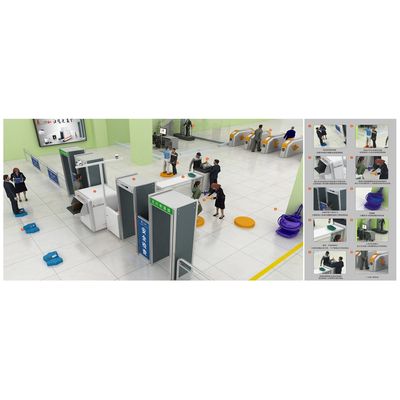
Challenges and Solutions in Implementing Portable Walk-Through Metal Detectors
### Challenges and Solutions in Implementing Portable Walk-Through Metal Detectors
The implementation of portable walk-through metal detectors presents a array of challenges and requires adept solutions to ensure effective threat detection, operational efficiency, and seamless integration within diverse security environments. This article addresses the key challenges associated with the implementation of portable walk-through metal detectors and provides insightful solutions to mitigate these challenges, ultimately enhancing the overall effectiveness of security protocols.
#### Challenge 1: Rapid Deployment and Setup
One of the primary challenges in implementing portable walk-through metal detectors is the need for rapid deployment and efficient setup. Time constraints in establishing security checkpoints, events, or temporary venues can hinder the seamless integration of portable detectors.
#### Solution: Streamlined Deployment Processes
To address the challenge of rapid deployment and setup, security teams can develop streamlined processes for transporting, assembling, and configuring portable detectors. This may involve pre-planning the layout of security checkpoints, providing training for quick assembly, and employing efficient deployment strategies to ensure the rapid integration of portable detectors into security operations.
#### Challenge 2: Adaptability to Diverse Security Environments
Portable walk-through metal detectors must be adaptable to diverse security environments, such as outdoor events, public venues, or temporary checkpoints. Achieving consistent threat detection in varying environmental conditions presents a significant challenge for portable detector implementation.
#### Solution: Environmental Calibration and Configuration
The implementation of portable detectors can be enhanced by incorporating environmental calibration and configuration. This includes adjusting the sensitivity levels, environmental compensation controls, and target discrimination technology to mitigate the impact of varying environmental factors on the detectors' performance. Furthermore, ongoing monitoring and calibration of portable detectors can ensure their adaptability to diverse security environments.
#### Challenge 3: Minimizing False Alarms and Enhancing Detection Accuracy
Balancing the need for thorough threat detection while minimizing false alarms poses a challenge during the implementation of portable walk-through metal detectors. False alarms can cause disruptions, impact crowd flows, and pose challenges to operational efficiency.
#### Solution: Comprehensive Training and Calibration
Addressing the challenge of minimizing false alarms and enhancing detection accuracy necessitates comprehensive training for security personnel on the operation and calibration of portable detectors. By providing thorough knowledge in adjusting sensitivity levels, optimizing target discrimination, and reducing false alarms, security teams can enhance the detection accuracy of portable walk-through metal detectors while minimizing disruptions.
#### Challenge 4: Integration with Access Control and Security Screening Protocols
Portable walk-through metal detectors often need to seamlessly integrate with access control systems, security screening protocols, and identification technologies. Ensuring a cohesive integration with existing security infrastructure and operational protocols poses a notable implementation challenge.
#### Solution: Compatibility Assessments and System Integration Testing
To overcome this challenge, security teams can conduct compatibility assessments and system integration testing between portable walk-through metal detectors and existing security infrastructure. Ensuring seamless coordination with access control systems, security screening protocols, and identification technologies through comprehensive testing, evaluations, and adjustment processes is pivotal in the successful implementation of portable detectors.
#### Challenge 5: Mobility and Storage Constraints
The mobility and storage constraints associated with portable walk-through metal detectors present challenges in their implementation, particularly in scenarios where space limitations or logistical constraints are prevalent.
#### Solution: Efficient Storage Solutions and Logistics Planning
Efficient storage solutions and logistics planning are crucial in addressing the challenge of mobility and storage constraints. This may involve utilizing compact storage systems, developing efficient transportation strategies, and integrating portable detector mobility considerations into security operations planning. By proactively addressing mobility and storage constraints, security teams can streamline the implementation of portable walk-through metal detectors.
In conclusion, the implementation of portable walk-through metal detectors is underscored by a series of challenges ranging from rapid deployment and adaptability to minimizing false alarms and integrating with existing security infrastructure. However, with effective solutions such as streamlined deployment processes, environmental calibration, comprehensive training, compatibility assessments, and efficient storage solutions, these challenges can be mitigated, ultimately enhancing the overall effectiveness of portable detector implementation. By proactively addressing these challenges, security teams can ensure that portable walk-through metal detectors serve as valuable assets in safeguarding public gatherings, events, and diverse security environments, providing robust threat detection while maintaining operational efficiency.