




Challenges for a Greener Future
The reduction of pollution impact is crucial nowadays, governments and industries are putting a big effort into this process and monitoring the air concentration of harmful compounds is a key point in achieving success.
Environmental organizations around the world have set strict limits for all kinds of pollutants and many laws have been written in recent years in order to control emissions from anthropogenic sources.
The quality of the air we breath has a direct correlation with the quality of our lives and the future of planet Earth. Quick detection of harmful compounds, and consequent counteraction, is a great help in improving the quality of the environment and reducing health risks for people. Innovative analytical instruments are needed in order to supply real-time data that are reliable, precise, and readily available on Cloud.
Historically the emissions have been monitored from stacks using Continuous Emission Monitoring Systems (CEMS). These bulky and fixed analyzers have been used for decades to analyze the concentration of harmful compounds and make sure that legal standards are met, however, it has become much clearer now that this approach is not enough and more punctual and widespread control is needed. Monitoring the potential escape of pollutant gases from industrial sites, airports, harbors, and more, can be difficult to achieve due to changing weather conditions and the large size of many of these sites. The fenceline monitor is the only way to ensure that proposed standards are being met and that neighboring communities are not being exposed to unintended emissions.
A similar approach is needed when monitoring the air quality in our cities and correlate this data with many others through a network of Information and communication technologies (ICT). Smart cities will be our future and will enhance the quality and performance of urban services, reduce resource consumption and overall costs, both financial and human. In order to achieve this goal, it is necessary to monitor real-time the environmental conditions with a network of sensor nodes across relevant spots in a city.
Among all gaseous pollutants, volatile organic compounds (VOCs) are a specific class of chemicals that contain carbon and have a high vapor pressure and a low boiling point at room temperature. They include both human-made and naturally occurring compounds. Typical examples are benzene, toluene, formaldehyde, glycol ethers, fossil fuels, terpenes, ethanol, carbon disulfide, 1,3-butadiene, dichloromethane. Humans being exposed to VOCs may experience adverse health effects, the extent and nature will depend on many factors including the type of chemical, concentration, level, and duration of exposure. Moreover, VOCs react with nitrogen oxides in the atmosphere through a radical reaction catalyzed by sunlight, forming ozone, which is responsible for the greenhouse effect and smog.
As part of VOC, BTEX (Benzene, Toluene, Ethylbenzene, Xylene) are a more specific class of aromatic compounds that are classified as priority pollutants regulated by many environmental organizations around the world. World Health Organisation (WHO) considers exposure to Benzene a major public health concern that can lead to several diseases, including cancer and leukemia. Benzene concentration is regulated by European Air Quality Directive 2008/50EC, which sets the limit value (LV) at 5 µg/m3 for the annual mean. As for the US, the Occupational Safety and Health Organisation (OSHA) recommendations are set for TWA (time-weighted average limit) at 1 ppm in an 8-hour time-weighted average, and for STEL (Short-term exposure limit) set at 5 ppm as averaged over any 15 minute period.
There are several European standards and US EPA methods that set the guidelines for monitoring these harmful compounds. In particular EPA method 25A and UNI EN 12619 explain how to monitor VOC using a flame ionization detector (FID), and UNI EN 14662-3 how to monitor benzene using in-situ gas chromatography (GC) with a photoionization detector (PID).
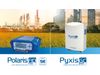
Common gas chromatographs are bulky, need a controlled environment to properly function, pressurized gas cylinders, skilled technicians, so they are not suitable for modern applications as fenceline monitoring or smart city projects. Pollution Analytical Equipment (pollution.it) has developed in recent years a new type of analyzer, which will improve the environmental control of industries and governments. Pyxis GC is an innovative BTEX monitoring station with no carrier-gas, low power consumption, fully automated measurement, 24/7 real-time data acquisition, and connectivity to the Cloud. A truly portable GC that can be placed outside directly in the site of interest and continuously send information about the quality of air and BTEX concentration. A device that can be used to create a network and put under control vast areas around industrial facilities, like the project that we have developed in the coastal city of Taranto, in the South of Italy. Here there is a critical situation caused by a huge smelter industry and refineries with the industrial harbor, placed in the vicinity of various neighborhoods, for a total impact area of 20 square kilometers. A real-time integrated monitoring system has been developed by placing several analyzers around the fence line, the critical spots in the city, and others on boats navigating along the coastline. All environmental data has been matched with weather reports, logistic and industrial operations, in order to acquire a very precise picture of air quality, in every single moment of the day. The map overlay and data acquisition and visualization software is a great tool that gives all information needed by control agencies in order to react quickly and protect the population in case the level of benzene in the air rises above a certain limit. An innovative solution that has been made possible by technological advancement and a new approach to analytical instruments.
This new approach has been applied by us also to VOC stack emission monitoring. Pollution Analytical Equipment manufactures Polaris FID, a portable, certified, safe, and easy-to-use FID analyzer. Miniaturization was at the core of technological innovation, allowing the creation of an instrument that weights 13Kg with batteries. The hydrogen is not contained in a big pressurized gas tank but in a small metal cylinder that can be safely shipped by plane with no restrictions. The 1-liter span gas and zero air bottles are integrated into the chassis and have a weight of 200 grams. The overall miniaturization assures fast heating and allows the use of batteries, powering the analyzer for more than two hours, keeping it warm while moving from stack to stack. The Bluetooth connectivity is a great help for the worker, who can keep track of the monitoring real-time and share it with his phone, without the need of standing next to the instrument in a dangerous spot as the sampling point on the chimney. All these features represent a technological advancement that increases the quality of pollution monitoring, helping companies and workers doing their job while reducing cost and improving safety.
The world is facing a tremendous challenge in reducing the impact of pollution and climate change. Technological advancement and new fields of application will open up wide possibilities and improve our quality of life in the future. A smarter, real-time, integrated monitoring of pollutants is a key point in achieving this goal and Pollution Analytical Equipment is actively involved in this process, supplying state-of-the-art analytical instruments.