


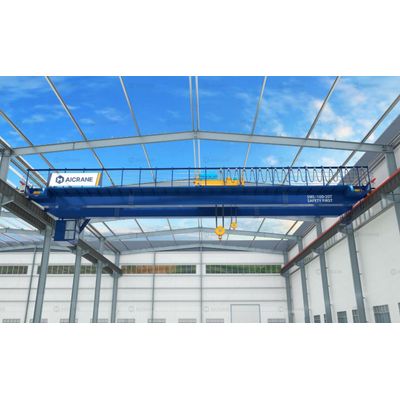
Determining the Optimal Load Capacity for Double Girder Overhead Cranes
Double girder overhead cranes are a cornerstone of modern industrial operations, providing reliable lifting solutions for heavy loads in factories, warehouses, steel mills, ports, and other industrial environments. Among the many design considerations for these cranes, determining the optimal load capacity is one of the most critical, as it directly affects safety, efficiency, lifespan, and operational costs. This article explores the factors influencing load capacity, calculation methods, safety considerations, and practical recommendations for selecting the right double girder crane for your operation.
Understanding Double Girder Overhead Cranes
Before diving into load capacity, it is important to understand the structure and function of double girder overhead cranes. Unlike single girder cranes, which use one bridge girder to support the hoist, double girder cranes feature two parallel bridge girders that carry the trolley and hoist system. This configuration allows for:
- Higher lifting capacities (typically 10 tons to over 500 tons)
- Longer spans for covering large factory floors or warehouse spaces
- Enhanced stability and reduced deflection under heavy loads
- Greater versatility in lifting heavy, bulky, or irregularly shaped items
Because of these advantages, double girder cranes are widely used in industries requiring frequent and high-capacity lifting, such as steel manufacturing, precast concrete production, shipyards, and power plants.
Factors Affecting Load Capacity Determination
Determining the optimal load capacity of a double girder crane is not a simple guesswork. Engineers must consider several interrelated factors:
1. Maximum Weight of the Load
The most obvious factor is the weight of the heaviest load the crane is expected to lift. This includes the load itself, lifting attachments such as slings, hooks, spreader beams, or lifting frames. It is essential to account for the gross load, not just the material weight, to ensure the crane can handle the total lifting requirement safely.
2. Load Distribution
Some loads are unevenly distributed, leading to eccentric loading on the crane. Double girder cranes are more resilient to uneven loads than single girder cranes, but uneven distribution still affects the maximum permissible load. For irregular loads, engineers may increase the nominal load capacity to ensure structural safety and minimal deflection.
3. Lifting Height and Span
The lifting height—the vertical distance from the crane hook to the floor—and the span—the horizontal distance between runway rails—directly influence load capacity. Longer spans result in greater bending moments in the bridge girders. Similarly, higher lifting heights require stronger hoist systems to overcome gravitational forces safely. A balance must be achieved between span, height, and capacity to avoid excessive stress on the crane structure.
4. Duty Classification
Crane load capacity is also determined by its duty class or work classification, typically defined by international standards such as ISO 4301-1 or FEM 9.511. The duty classification considers:
- Frequency of lifting operations
- Load characteristics (light, moderate, or severe)
- Operating environment (indoor, outdoor, dusty, humid)
For instance, a crane with a class A5 duty is designed for frequent heavy-duty operations, while a class A3 crane is suitable for lighter, less frequent lifting. Higher duty classes generally require a slightly higher design capacity to withstand repeated stress over time.
5. Safety Factors
Safety is paramount. Load capacity calculations must incorporate a safety factor, typically ranging from 1.25 to 1.5 for heavy duty overhead cranes. This factor compensates for:
- Dynamic effects during lifting
- Wind loads (for outdoor operations)
- Start-stop and acceleration forces
- Unexpected material weight variations
Without proper safety margins, the crane may experience structural fatigue, mechanical failure, or accidents.
Methods for Calculating Optimal Load Capacity
1. Engineering Standards
Engineering standards provide formulas and tables for calculating load capacity based on span, girder dimensions, hoist type, and work duty. Common references include:
- ISO 4301-1: Classification of cranes based on duty
- FEM 9.511: European standard for overhead crane design
- ASME B30.2: Safety standards for overhead and gantry cranes
By consulting these standards, engineers can determine the maximum allowable load for a given crane configuration.
2. Structural Analysis
Modern crane design often relies on finite element analysis (FEA) or structural simulations to model stress distribution on the bridge girders and trolley under various load scenarios. This approach helps identify weak points, predict deflection, and optimize materials to achieve maximum efficiency with minimum material cost.
3. Consideration of Dynamic Loads
Lifting is rarely static. Acceleration, deceleration, and lateral movement introduce dynamic forces that increase stress on the crane. A crane designed to lift 50 tons statically may experience 55–60 tons of effective load dynamically. Therefore, engineers often increase nominal capacity by 10–20% to account for dynamic effects.
Practical Recommendations for Determining Load Capacity
1. Conduct a Load Survey
Start by evaluating the heaviest loads in your operation and any potential future increases. Consider:
- Maximum weight of equipment, machinery, or materials
- Accessories, rigging, and lifting attachments
- Frequency of lifting
2. Consider Future Expansion
Industrial operations may grow, and load requirements may increase. Choosing a crane with slightly higher capacity than current needs can prevent costly upgrades in the future.
3. Match Hoist and Trolley with Bridge Capacity
Ensure the hoist system is capable of handling the desired load, and the trolley mechanisms can move the load safely across the span. For example, using a 50-ton hoist on a bridge designed only for 40 tons is unsafe and may lead to structural damage.
4. Factor in Duty Cycle
Assess how often and how fast the crane will operate. Heavy-duty, continuous operations require a higher safety factor and potentially a higher nominal load capacity.
5. Consult with Crane Manufacturers
Reliable crane manufacturers often provide load charts, simulations, and customized recommendations based on your operational needs. Consulting experts can save time, reduce risk, and ensure compliance with safety standards.
Conclusion
Determining the optimal load capacity for double girder overhead cranes is a critical engineering decision that requires careful consideration of load characteristics, structural design, duty class, dynamic forces, and safety factors. Selecting a crane that is too small can lead to frequent breakdowns, safety hazards, and operational inefficiency, while over-sizing a crane unnecessarily increases costs.
By following engineering standards, conducting thorough load surveys, considering future operational needs, and leveraging expert advice, industries can select double girder overhead cranes that provide safe, efficient, and long-lasting lifting solutions. The right crane ensures smooth material handling, protects workers, and maximizes productivity, making it a vital asset for any heavy-duty industrial environment.