


- Home
- Companies
- Pulsar Instruments plc
- Articles
- Difference between Class 1 and 2 Sound ...
Difference between Class 1 and 2 Sound Level Meters
What is the difference between a Class 1 and a Class 2 Sound Level Meter? The answer to this can be quite complex, but to put it simply:
- A Class 1 sound level meter is generally seen as more accurate than a Class 2 meter; and,
- A Class 1 sound level meter is able to measure sound over a wider frequency range than a Class 2 meter.
The technical difference
The Class of a sound level meter describes its accuracy as defined by the relevant international standards. Sound level meters are defined by International Standards such as IEC 61672-1:2002 (or BS EN61672-1:2003). These standards define a wide range of complex accuracy, performance and calibration criteria that instruments must meet to be fit for purpose. Within the Standard, there are two allowable levels of tolerance and these are known as Class 1 and Class 2. Class 1 is more accurate than Class 2.
These Class 1 and Class 2 tolerances are necessary as a way of dealing with variations in the instruments. The variations are caused by the different electronic components used inside the sound level meters and because of the way different meters have been designed and verified. Even the test equipment used to check the sound level meters during manufacture will introduce some variation.
The two levels of tolerance
A Class 1 sound level meter is often called a ‘precision’ grade meter and a Class 2 sound level meter is a ‘general grade’ meter because of their difference tolerance levels.
At lower and upper extremities of the sound frequency range* tolerances are wider, and at higher frequencies, the tolerances are narrower. At the outer extremes of the frequency range, you can expect Class 1 meters to have narrower tolerances and therefore a more accurate response.
Class 1 sound level meters need to measure sound over a wider frequency than Class 2 meters and meet narrower tolerances for all performance criteria. Class 1 is therefore seen as being more accurate than Class 2. So we can say a Class 2 meter has wider tolerances and is therefore slightly less accurate, but for most applications, the difference is not noticeable and as Class 2 sound level meters are a lower-cost compared to Class 1, for most users a Class 2 meter still meets the standard, is accurate enough and is fit for purpose.
*The frequency of sound is measured in Hertz (Hz) which is defined as one cycle per second. The higher the frequency, the more high-pitched a sound is perceived. Visit our Acoustic Glossary for more information on noise measurement terminology.
Which sound level meter do you need?
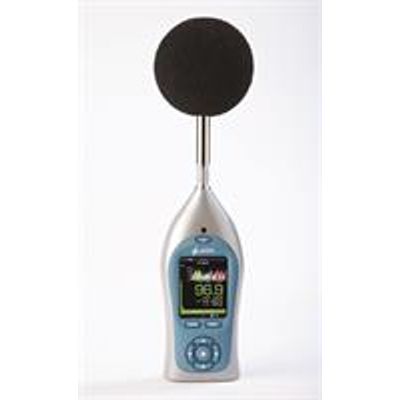
Which meter you need will depend on what you want to use the meter for (i.e. what noise you want to measure), what measurement regulations you need to meet, and whether your measurements will be used as legal evidence (e.g. if you want your measurements submitted as legal evidence then you may prefer to use a Class 1 meter for increased accuracy). The Pulsar Nova range of sound level meters has both Class 1 and Class 2 and each offers a range of features depending on what you want to measure.
At the simplest level:
- Class 1 sound level meter is often called a ‘precision’ grade meter. It is ideal for laboratory use, environmental applications, boundary noise, building acoustics, and for traffic assessments (as well as everything that a Class 2 meter can do)
- Class 2 sound level meter is a ‘general grade’ meter. It is ideal for use in Noise at Work assessments, basic environmental measurements, entertainment noise, industrial hygiene, construction noise, and vehicle noise.
Pulsar provides a range of Class 1 and Class 2 Sound Level Meters including: