


- Home
- Companies
- Alpha Moisture Systems
- Articles
- Ensuring Weld Quality: Why Trace ...
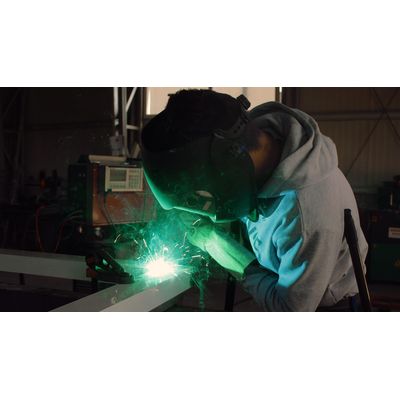
Ensuring Weld Quality: Why Trace Moisture Measurement Matters
Welding is the backbone of countless industries, from aerospace and automotive to construction and energy. Compromising on weld quality can lead to costly failures and serious safety hazards. Trace moisture is one often overlooked factor that can significantly affect weld reliability.
Why moisture matters in welding
Weld strength and consistency rely on a tightly controlled environment. Even small amounts of moisture, whether in shielding gases, gas lines, fluxes, fillers or on metal surfaces, can dissociate in the arc and introduce hydrogen into the weld pool and heat affected zone. This increases the risk of:
- Porosity (gas pockets within the weld)
- Hydrogen induced cracking, also known as hydrogen assisted cold cracking, which can appear hours or days after welding
- Brittleness and reduced ductility, leading to unexpected failures in service
Sources of moisture contamination
Moisture can enter the welding process in more ways than many operators expect:
- Shielding gases contaminated at the source or during handling and storage
- Leaks or permeation through hoses, regulators or fittings that allow ambient moisture ingress
- Condensation inside pipelines and distribution systems, especially with pressure or temperature changes
- Humidity introduced during cylinder changes or from ambient air in poorly controlled environments
- Filler materials, fluxes and electrodes that have absorbed moisture due to improper storage or handling
Each entry point raises the likelihood of defects and can seriously undermine weld performance.
Best practices for moisture monitoring
Ensuring weld quality means taking a proactive, multi‑layered approach to moisture management:
- Purge gas lines using dry argon or nitrogen before welding to remove residual humid gas.
- Measure moisture in real time using trace moisture analysers placed at critical points, such as gas supply lines, torch heads and purge exhausts.
- Install desiccant dryers or gas purifiers in the gas supply to maintain shielding gas purity and low dew point.
- Calibrate moisture analysers regularly, set gas flow rates to minimise turbulence and prevent ambient moisture ingress.
- Regularly inspect equipment and check hoses, filters and regulators for leaks, wear or trapped water.
Moisture measurement solutions for welding
Installing portable or online trace moisture analysers gives immediate insight into gas quality, down to parts per million (ppm) levels of water vapour. Our instruments use aluminium oxide based sensor technology to deliver fast, sensitive measurements suitable for welding applications. Effective trace moisture measurement helps detect problems before contamination can cause production losses, product defects or compliance failures.
Meeting industry standards
Strict industry standards, such as ISO 14175 for shielding gases, specify limits for water vapour content and dew point because excessive moisture directly threatens weld integrity. In aerospace, NADCAP accreditation frameworks emphasise control of special processes, including welding, where tight moisture and dew point control is essential for critical components. Using validated moisture measuring solutions not only protects materials and processes, it also demonstrates a clear commitment to quality and safety in regulated industries.
Conclusion
Welding operators and manufacturers who embrace rigorous moisture monitoring enjoy fewer defects, higher weld quality and simpler compliance with demanding specifications. With trace moisture analysers and a proactive mindset, it becomes far easier to safeguard reputation and ensure welded products perform when it matters most.
Read our application note - Trace Moisture Measurement in Welding.