


- Home
- Companies
- Aimix Group Co., Ltd
- Articles
- Exploring the Versatility and ...
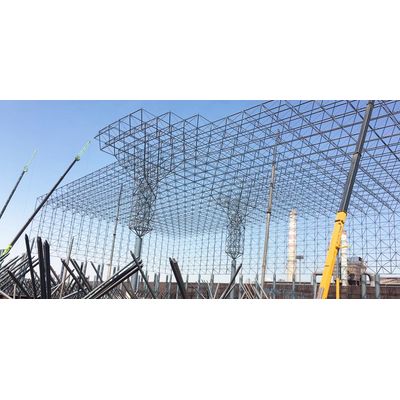
Exploring the Versatility and Advantages of Long Span Steel Structures
Long span steel structures have revolutionized modern engineering, enabling architects and engineers to create awe-inspiring, functional, and sustainable buildings and infrastructure. These structures, characterized by their ability to cover large distances without the need for intermediate supports, offer a myriad of uses across various sectors, from commercial and industrial to recreational and cultural. In this article, we delve into the diverse applications and advantages of long span steel structures, highlighting their significance in contemporary construction projects.
Industrial Facilities:
Long span steel structures find extensive use in industrial facilities such as manufacturing plants, warehouses, and distribution centers. Their ability to provide vast column-free spaces facilitates efficient material handling, storage, and operations. Additionally, the flexibility offered by steel allows for customizable designs to accommodate specific production processes and equipment layouts. The durability and resilience of steel ensure these structures can withstand heavy loads, harsh environments, and seismic activities, making them ideal for industrial applications.
Sports Arenas and Stadiums:
Sports arenas and stadiums require expansive, unobstructed spaces to accommodate large audiences and sporting events. Long span steel structures fulfill this requirement by offering clear sightlines and ample seating capacity without obstructive columns. Their versatility allows architects to design iconic and visually striking venues while ensuring structural integrity and safety standards. Moreover, steel's lightweight nature minimizes construction time and costs, making it a preferred choice for sports facilities worldwide.
Exhibition Halls and Convention Centers:
Exhibition halls and convention centers serve as venues for trade shows, conferences, and events that demand spacious and adaptable layouts. Long span steel structures provide the flexibility to create versatile spaces that can be easily configured to accommodate different types of events and exhibitors. The open-plan design facilitated by steel enhances accessibility and circulation, optimizing the visitor experience. Additionally, the ability to incorporate large openings and atriums enhances natural light penetration and creates inviting environments for attendees.
Transportation Infrastructure:
Long span steel structures play a crucial role in transportation infrastructure projects, including bridges, railway stations, and airport terminals. In bridge construction, steel's high strength-to-weight ratio allows for the creation of long-span bridges that span rivers, valleys, and urban areas, minimizing the need for intermediate piers and reducing visual obstructions. Steel railway stations and airport terminals offer expansive spaces for passenger circulation, ticketing, and waiting areas, enhancing the overall travel experience.
Cultural and Recreational Facilities:
Cultural and recreational facilities, such as museums, theaters, and concert halls, benefit from the design versatility and performance capabilities of long span steel structures. These buildings often require large, uninterrupted spaces to accommodate exhibits, performances, and audiences. Steel's ability to support complex architectural forms, such as curved roofs and cantilevered structures, allows for the creation of iconic landmarks that blend functionality with aesthetic appeal. Moreover, the use of steel enables efficient construction methods, minimizing disruption to ongoing cultural and recreational activities.
Advantages of Long Span Steel Structures:
a. Durability and Resilience: Steel structures offer exceptional durability and resilience, capable of withstanding environmental factors such as wind, snow, and seismic loads.
b. Design Flexibility: Steel's inherent properties allow for flexible design solutions, enabling architects to realize complex and innovative designs while meeting project requirements.
c. Speed of Construction: Steel structures can be fabricated off-site and assembled quickly on-site, reducing construction time and minimizing disruptions to surrounding areas.
d. Sustainability: Steel is a highly sustainable construction material, as it is recyclable, reusable, and energy-efficient. Additionally, steel structures can incorporate green building technologies to enhance sustainability further.
e. Cost-Effectiveness: Despite initial investments, long span steel structures offer long-term cost savings through reduced maintenance requirements, extended lifespan, and adaptability to future needs.
Conclusion:
Long span steel structures represent a cornerstone of modern construction, offering unparalleled versatility, durability, and efficiency across various sectors. From industrial facilities and sports arenas to cultural landmarks and transportation hubs, the applications of steel structures continue to expand, driven by advancements in engineering, technology, and sustainability practices. As the demand for innovative and sustainable building solutions grows, long span steel structures will remain at the forefront of contemporary architecture and construction, shaping the skylines of cities around the world.