


- Home
- Companies
- Tianezk Instrument Manufacturing ...
- Articles
- Fully Automated Microwave Digester: ...
Fully Automated Microwave Digester: Fast, Efficient, and Precise Sample Digestion
In modern laboratory analysis, sample pre-treatment is a crucial step in the analytical workflow. The digestion process directly impacts the accuracy and efficiency of subsequent analyses. Fully automated microwave digesters, as a sample pre-treatment device, are becoming an important tool in laboratories due to their speed, efficiency, and precision.
I. Principle
Microwave energy is used to heat and digest samples. Microwave energy can rapidly penetrate the sample, heating both the interior and exterior simultaneously, thus accelerating the chemical reaction. Compared to traditional heating methods, microwave digestion offers advantages such as rapid heating, uniform temperature, and short reaction time. Furthermore, the equipment is equipped with an automated control system that precisely controls the temperature, time, and pressure during the digestion process, ensuring consistent and repeatable digestion results.
II. Rapid Dissolution
Microwave digestion can complete the sample digestion process in a short time. Traditional digestion methods typically take several hours or even longer, while microwave digestion can be completed in minutes to tens of minutes, greatly improving laboratory efficiency. For example, when processing soil samples, traditional methods may take several hours, while microwave digestion can be completed in only about 30 minutes, saving a significant amount of time for subsequent analysis.
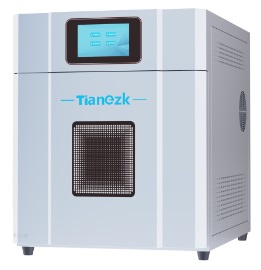
III. High-efficiency processing
The high efficiency is reflected not only in the digestion speed but also in the batch processing capacity of the sample. The equipment is typically equipped with multiple digestion vessels, enabling the simultaneous processing of multiple samples, further improving laboratory efficiency. For example, some models of microwave digesters can process 12 or more samples at the same time, which is very practical for laboratories that need to process large numbers of samples.
Furthermore, microwave digestion systems can reduce sample loss and contamination. Because the digestion process takes place in a sealed container, the sample is isolated from the external environment, reducing the loss of volatile components and the introduction of impurities, thereby improving the accuracy of analytical results.
IV. Precise Control
Equipped with an advanced control system, it can precisely control the temperature, time, and pressure during the digestion process. The equipment typically employs high-precision sensors and intelligent control systems to monitor various parameters during the digestion process in real time and automatically adjust the digestion conditions to ensure the consistency and repeatability of the digestion results.
For example, when digesting metal samples, precise control of temperature and pressure is required to prevent excessive oxidation or incomplete digestion. Microwave digesters can automatically adjust digestion conditions according to preset programs, ensuring consistent digestion results for each sample, thus providing a reliable basis for subsequent analysis.
V. Application Areas
Fully automated microwave digestion systems are widely used in many fields, including but not limited to:
- Environmental Science: Used for digesting environmental samples such as soil and water to provide accurate data support for environmental monitoring.
- Food testing: Used to decompose heavy metals, pesticide residues and other components in food to ensure food safety.
- Pharmaceutical industry: Used for the digestion of drug components, providing support for drug development and quality control.
- Materials Science: Used for the digestion of various materials, providing accurate data for materials analysis.
- VI. Conclusion
- Fully automated microwave digestion systems, with their speed, efficiency, and precision, are becoming an important tool in modern laboratories. They not only significantly improve sample processing efficiency but also ensure the consistency and repeatability of digestion results, providing a reliable foundation for subsequent analysis.