


Fully Automated Microwave Digestion System: An Innovative Device for Enhancing Laboratory Efficiency
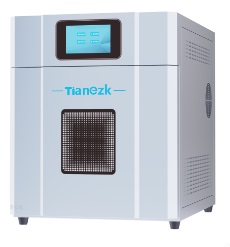
Traditional digestion methods are typically time-consuming, inefficient, and complex. The advent of fully automated microwave digestion systems has revolutionized laboratory sample pre-treatment, significantly improving laboratory efficiency and analytical accuracy.
I. Highly efficient and rapid digestion capabilities
The fully automated microwave digestion system utilizes microwave energy to rapidly heat samples and digestion reagents, significantly reducing digestion time. Compared to traditional hot plate digestion methods, microwave digestion can complete sample digestion within minutes to tens of minutes, while traditional methods may take several hours or even longer. This highly efficient and rapid digestion capability allows laboratories to process large quantities of samples more quickly, improving work efficiency.
II. Automated and Intelligent Operation
It possesses a high degree of automation and intelligence. The equipment has multiple built-in pre-set programs; users only need to select the appropriate program according to the sample type, and the instrument can automatically complete operations such as acid addition, heating, heat preservation, and pressure release. In addition, some devices are equipped with intelligent control systems that can monitor parameters such as temperature and pressure during the digestion process in real time and automatically adjust digestion conditions to ensure the stability and safety of the digestion process.
III. High precision and high repeatability
It provides high-precision and highly repeatable digestion results. The uniformity of microwave heating ensures more even heating of the sample, avoiding problems such as localized overheating or uneven heating. Simultaneously, the device`s precise temperature and pressure control functions ensure consistent digestion conditions, thereby improving the repeatability and reliability of sample processing. This is particularly important for laboratories requiring high-precision analysis, significantly improving the accuracy and reliability of analytical results.
IV. Safety and Environmental Protection
The design fully considers operational safety and environmental friendliness. The equipment employs a closed digestion system, effectively preventing the leakage of harmful gases generated during digestion and protecting the health of laboratory personnel. Furthermore, microwave digestion requires less reagent, reducing the use of chemical reagents and the generation of waste, thus meeting the environmental protection requirements of modern laboratories.
V. Wide range of applications
Fully automated microwave digesters are suitable for digesting a variety of samples, including soil, plants, food, pharmaceuticals, and environmental samples. In environmental monitoring, they can rapidly digest soil and water samples, providing pretreatment support for heavy metal detection. In food testing, they can efficiently process various food samples, providing a reliable pretreatment method for nutritional analysis and pollutant detection. Furthermore, microwave digesters are increasingly being used in pharmaceuticals, materials science, and other fields.
VI. Future Development Trends
With continuous technological advancements, microwave digesters will evolve towards greater automation, higher precision, and greater intelligence. In the future, the equipment will integrate more automated functions, such as automatic sample transfer and automatic cleaning, further reducing manual operation. Simultaneously, intelligent control systems will be better able to adapt to the digestion needs of different samples, achieving more precise temperature and pressure control.
Fully automated microwave digestion systems, with their high-efficiency and rapid digestion capabilities, automated and intelligent operation, high precision and repeatability, safety and environmental friendliness, have become ideal equipment for modern laboratories to improve work efficiency and analytical accuracy. They not only significantly shorten sample pretreatment time but also improve the accuracy and reliability of analytical results, providing strong support for the efficient operation of laboratories.