


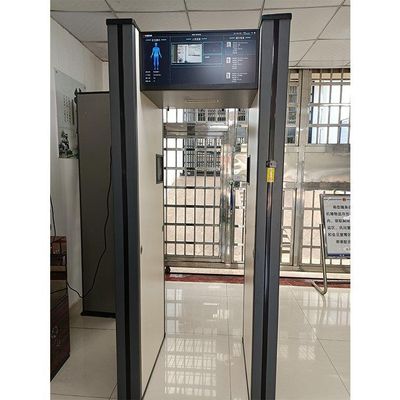
Future Trends in Walk Through Metal Detector Technology: Advancements and Innovations
**Future Trends in Walk-Through Metal Detector Technology: Advancements and Innovations**
Walk-through metal detectors are integral components of security infrastructure, providing a crucial layer of defense against concealed threats and unauthorized metallic objects. As technology continues to evolve, the trajectory of advancements in walk-through metal detector technology showcases a spectrum of innovative features aimed at enhancing detection capabilities, operational efficiencies, and user experience. By exploring the future trends in walk-through metal detector technology, we can anticipate the potential developments that will revolutionize security screening across various industries and operational contexts.
### 1. Enhanced Detection Capabilities:
The next generation of walk-through metal detectors is poised to feature enhanced detection capabilities, enabling the identification of an expanded range of metallic objects. Advanced sensor technologies and sophisticated detection algorithms will optimize threat detection accuracy, detecting even smaller metallic items while minimizing false alarms. These improvements will bolster security measures, particularly in settings where precise threat detection is paramount, such as aviation, critical infrastructure protection, and public venues.
### 2. Integration of Artificial Intelligence (AI) and Machine Learning:
Future iterations of walk-through metal detectors are likely to incorporate AI and machine learning algorithms, empowering the devices to adapt to evolving security threats and environmental variables. AI-driven detection systems will enable real-time analysis of metal detection data, enhancing predictive capabilities and enabling proactive threat response. By leveraging AI and machine learning, walk-through metal detectors will become increasingly adept at identifying anomalous patterns and potential security risks, fortifying the overall security posture within diverse operational settings.
### 3. Customized Threat Profiling and Alarming:
The integration of advanced profiling capabilities will empower walk-through metal detectors to customize threat detection parameters based on specific security requirements. Customizable threat profiling and alarming will enable security personnel to tailor detection thresholds and alarm responses to align with the unique security needs of various environments. From high-traffic public venues to secure access control points, customized threat profiling will optimize the detectors' efficacy in identifying prohibited metallic objects while minimizing inconveniences caused by false alarms.
### 4. Seamless Integration with Security Ecosystems:
Future trends in walk-through metal detector technology will focus on seamless integration with broader security ecosystems, including access control systems, surveillance technologies, and centralized security management platforms. These integrated solutions will foster interconnected security infrastructures, enabling real-time sharing of threat intelligence, comprehensive situational awareness, and streamlined security responses. The cohesive integration of walk-through metal detectors within multifaceted security ecosystems will enhance proactive threat mitigation and optimize operational efficiencies.
### 5. Enhanced User Experience and Operational Efficiency:
The future of walk-through metal detector technology will prioritize user experience and operational efficiency through intuitive interfaces, ergonomic designs, and streamlined maintenance protocols. User-friendly interfaces, guided calibration workflows, and remote diagnostic functionalities will empower security personnel to operate and maintain the detectors efficiently. Additionally, advancements in materials and construction will contribute to durable, lightweight designs that facilitate easy deployment and reconfiguration in diverse operational environments.
### 6. Multi-Sensory Threat Detection:
Innovations in walk-through metal detector technology will encompass multi-sensory threat detection capabilities, encompassing not only metal detection but also ancillary threat indicators. Integrating technologies such as millimeter-wave imaging, chemical detection sensors, and advanced behavioral analysis will enable walk-through metal detectors to identify a broader spectrum of security threats, including concealed weapons, explosives, and hazardous materials. This convergence of multi-sensory threat detection capabilities will elevate the detectors' effectiveness in proactive security screening.
### Conclusion:
The future trends in walk-through metal detector technology reflect a convergence of innovative advancements aimed at optimizing threat detection, operational efficiencies, and user experience. Enhanced detection capabilities, AI-driven threat analysis, customized profiling, seamless integration with security ecosystems, and multi-sensory threat detection are poised to redefine security screening across various industries and operational contexts. By embracing these future trends, the evolution of walk-through metal detector technology will fortify security measures, empower proactive threat mitigation, and ensure the safety and well-being of individuals within diverse environments.