


- Home
- Companies
- Aimix Group Co., Ltd
- Articles
- Ground Requirements for Heavy ...
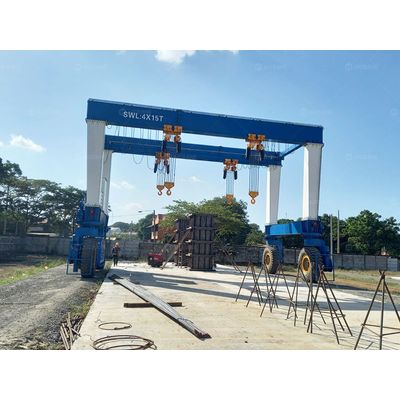
Ground Requirements for Heavy Rubber-Tired Gantry Cranes
Rubber-tired gantry (RTG) cranes are indispensable in modern logistics, container terminals, and industrial operations due to their mobility, high lifting capacity, and efficiency. Unlike rail-mounted gantry (RMG) cranes that operate on fixed tracks, RTG cranes travel on rubber tires, allowing flexibility in container yard layouts. However, the performance, safety, and lifespan of an RTG crane are closely tied to the ground it operates on. Proper ground preparation is critical to prevent structural damage, ensure operational efficiency, and reduce maintenance costs. This article explores the essential ground requirements for heavy RTG cranes, focusing on soil stability, surface quality, drainage, load distribution, and regulatory standards.
1. Importance of Ground Quality for RTG Cranes
The ground supporting an RTG crane must handle extremely high loads. Heavy rubber tired gantry cranes, especially those handling 40–100+ ton containers, generate substantial point and dynamic loads on the surface due to their concentrated wheel loads and movements during lifting and trolley travel. If the ground is not properly engineered:
Tires can sink, causing uneven crane travel.
Structural components may experience excessive stress, leading to premature wear.
Lifting operations may become unstable, increasing the risk of accidents.
Maintenance costs for both cranes and yard surfaces will escalate.
Ensuring a robust ground foundation is therefore the first step in safe RTG crane operations.
2. Types of Ground Surfaces for RTG Cranes
RTG cranes typically operate on two main types of surfaces:
a. Rigid Concrete Pavements
Concrete surfaces are preferred for heavy RTG cranes due to their high load-bearing capacity and durability. Key characteristics include:
Thickness: Typically, 250–300 mm for light-duty RTGs and 350–500 mm for heavy-duty RTGs.
Reinforcement: Steel reinforcement is necessary to prevent cracking under point loads.
Quality: High compressive strength (≥30 MPa) ensures long-term performance.
Joint Design: Expansion joints prevent cracking due to thermal expansion and contraction.
b. Asphalt Pavements
Asphalt surfaces may be used for lighter RTG cranes or temporary operations. However, asphalt is more susceptible to deformation under heavy wheel loads, especially in high-temperature regions. To mitigate this:
Use high-quality, dense asphalt mixes.
Ensure adequate thickness (minimum 250–300 mm for heavy RTGs).
Incorporate proper base layers with compacted granular material.
c. Soil and Compacted Gravel
For temporary or less intensive operations, compacted gravel or engineered soil bases may suffice. However, these require meticulous compaction and grading, with layers engineered to distribute wheel loads evenly. They are rarely used for permanent heavy RTG crane operations due to higher maintenance demands.
3. Ground Load-Bearing Capacity
The load-bearing capacity of the ground is a critical factor. Each RTG crane wheel can exert loads ranging from 15–40 tons depending on crane size and lifting operations. The following parameters are essential:
Subgrade Reaction Modulus (k-value): Indicates soil stiffness. For heavy RTGs, the k-value should typically exceed 100 MPa/m to prevent excessive settlement.
Wheel Load Distribution: Ground must handle the maximum wheel load without deformation. Engineers calculate this using wheel load × safety factor (typically 1.5–2).
Differential Settlement: Uneven settlement leads to misalignment and operational inefficiencies. The allowable differential settlement is usually less than 5 mm over 20 m.
Geotechnical surveys, including soil borings, compaction tests, and load tests, are often conducted before RTG yard construction to ensure the ground meets required specifications.
4. Surface Flatness and Evenness
RTG cranes require a flat, level surface for safe and efficient operation. Uneven surfaces can lead to:
Crane tilting during lifting.
Uneven tire wear and damage.
Increased mechanical stress on the crane structure.
The recommended flatness for heavy RTG crane operations is:
Maximum slope: 1 in 1000 (0.1%) longitudinally and transversely.
Tolerances: ±5 mm over 5 m for heavy duty gantry cranes.
Precision surveying and grading are crucial during installation. Laser-guided leveling equipment is commonly used to ensure surface evenness.
5. Drainage and Water Management
Proper drainage is essential for maintaining ground integrity. Water accumulation can weaken the subgrade, cause uneven settlement, and accelerate concrete or asphalt deterioration. Ground design should include:
Surface Drainage: Sloped pavements or channels to divert water away from RTG travel lanes.
Subsurface Drainage: Perforated pipes or geotextiles beneath the surface to prevent waterlogging.
Runoff Management: Integration with yard stormwater systems to avoid erosion or flooding.
Neglecting drainage often leads to potholes, rutting, and reduced operational safety.
6. Subgrade Preparation and Compaction
Heavy RTG crane yards often require a multi-layered subgrade structure:
Subgrade Soil: Compacted to ≥95% standard Proctor density.
Base Layer: Typically crushed stone or gravel, 150–300 mm thick, compacted in layers to distribute loads.
Surface Layer: Concrete or asphalt, designed to handle wheel loads with minimal deflection.
Proper compaction reduces settlement, prevents surface deformation, and ensures uniform load transfer from crane wheels to the subgrade.
7. Pavement Design for Dynamic Loads
Unlike static loads, RTG cranes generate dynamic loads during acceleration, deceleration, and braking. Pavement design must account for:
Impact Loads: Sudden lifting or trolley travel can amplify wheel loads by 10–20%.
Fatigue Resistance: Pavement material should withstand repeated loading cycles without cracking.
Tire Pressure Distribution: Wheel footprint size and tire pressure influence the stress on the pavement.
Structural engineers often use finite element analysis (FEA) or load distribution modeling to simulate crane movements and optimize pavement thickness and reinforcement.
8. Expansion, Contraction, and Temperature Effects
Heavy-duty RTG yards are exposed to temperature variations. Concrete and asphalt expand and contract with temperature, potentially leading to cracking or misalignment. Key measures include:
Use of expansion joints in concrete pavements.
Proper asphalt mix design to resist rutting in hot climates.
Periodic inspection and maintenance of joints to ensure level travel lanes.
9. Maintenance and Inspection
Ground maintenance is as crucial as initial construction. Recommended practices include:
Routine surface inspection for cracks, depressions, and potholes.
Immediate repair of damaged sections to prevent crane instability.
Monitoring subgrade settlement using sensors or survey equipment.
Regular cleaning to remove debris that could impede RTG crane movement.
Maintenance not only prolongs pavement life but also enhances operational safety.
10. Regulatory Standards and Guidelines
Several international standards provide guidance for RTG crane ground requirements:
ISO 1161 & ISO 8686: Guidelines for container handling equipment and wheel load distribution.
DIN 15018 / FEM 1.001: Standards for crane design, including ground and foundation requirements.
ACI 318 / Eurocode 2: Concrete pavement design standards applicable to heavy-duty applications.
Port Authorities’ Guidelines: Many port authorities specify RTG crane lane widths, slopes, and pavement types.
Compliance with these standards ensures operational safety and reduces liability risks.
11. Special Considerations for Heavy RTG Cranes
For cranes lifting 50–100+ tons or more:
Use high-strength reinforced concrete with heavy-duty reinforcement.
Increase pavement thickness to handle higher wheel loads.
Optimize tire pressure and load distribution to minimize pavement stress.
Incorporate ground vibration control measures near sensitive installations.
These measures prevent premature failure and maintain operational efficiency.
Conclusion
The ground supporting heavy rubber-tired gantry cranes is as critical as the cranes themselves. Proper design, construction, and maintenance of crane pavements and subgrades ensure safety, operational efficiency, and longevity of the equipment. Key factors include load-bearing capacity, surface flatness, drainage, subgrade preparation, pavement design, temperature effects, and adherence to international standards. Failing to meet these ground requirements can result in costly repairs, operational disruptions, and safety hazards.
Investing in high-quality ground infrastructure is therefore an essential component of RTG crane deployment, ensuring reliable and efficient container handling or heavy-lifting operations in any industrial or port environment.