


- Home
- Companies
- Aimix Group Co., Ltd
- Articles
- How Aggregate Plants Support Local ...
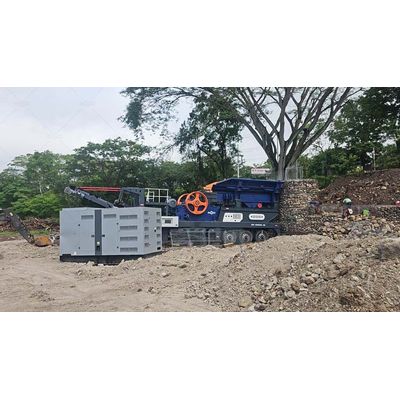
How Aggregate Plants Support Local Latin American Contractors to Achieve Scale
Across Latin America's diverse and rapidly developing construction landscape, local contractors face a common challenge: how to grow from small regional operators into organizations capable of winning and executing major infrastructure projects. The path to scale is fraught with obstacles, from equipment limitations to supply chain reliability to quality consistency. At the foundation of successful scaling lies access to reliable, affordable aggregate materials. The relationship between aggregate producers and contractors has evolved significantly in recent years, with modern aggregate plants playing an increasingly strategic role in enabling contractor growth. Understanding this dynamic provides insight into how the region's construction sector is transforming.
The Strategic Importance of Aggregate Access
For contractors seeking to scale operations, aggregate supply represents far more than a routine procurement category. The availability, quality, and cost of crushed stone directly influence bidding competitiveness, project execution capability, and ultimately, profitability.
From Material Sourcing to Competitive Advantage
Small contractors often begin by purchasing aggregates from local suppliers on an as-needed basis, accepting whatever quality and pricing the market offers. As these contractors pursue larger projects, however, this passive approach becomes a liability. Major infrastructure projects require consistent material quality across extended production runs, reliable delivery schedules that keep paving operations moving, and pricing structures that support competitive bidding. An aggregate crusher plant(planta procesadora de agregados) that delivers these capabilities becomes not merely a supplier but a strategic partner in the contractor's growth trajectory.
The Quality Consistency Factor
One of the greatest challenges facing growing contractors is maintaining quality standards across expanding operations. When aggregate quality varies from load to load, mix designs must be adjusted continuously, paving operations face delays, and finished work may fail to meet specifications. Modern stone crusher plant operations equipped with advanced screening and quality control systems eliminate this variability, delivering consistent material that allows contractors to focus on their core competencies rather than firefighting supply issues. For a contractor managing multiple concurrent projects, this reliability proves invaluable.
Production Capabilities That Enable Growth
The technical capabilities of modern aggregate plants directly support contractor scaling by providing the volumes, grades, and consistency that larger projects demand.
High-Volume Production for Major Projects
As contractors win larger contracts, material requirements escalate dramatically. A highway project may consume hundreds of thousands of tons of base course, sub-base, and pavement aggregates. A single building development can require tens of thousands of tons of concrete aggregate. An aggregate crusher plant with sufficient production capacity becomes essential to meeting these demands without sourcing from multiple inconsistent suppliers. Plants producing 300 to 500 tons per hour can support simultaneous large projects, providing the material foundation for contractor growth.
Multiple Product Streams Simultaneously
Modern infrastructure projects require multiple aggregate grades delivered concurrently. Road construction needs coarse base materials, intermediate binder courses, and fine surface treatments, often all on the same day. A well-configured mobile stone crusher plant(trituradora de piedra móvil) produces these multiple gradations simultaneously through sophisticated screening systems and multiple product conveyors. This capability allows contractors to receive complete material packages from a single source, simplifying logistics and ensuring compatibility between layers.
Geographic Reach and Market Access
Latin America's vast geography presents particular challenges for contractors expanding beyond their home regions.
Regional Production Networks
Major contractors pursuing projects across multiple states or countries need aggregate sources that can serve dispersed sites without excessive hauling costs. Progressive aggregate producers have responded by developing regional networks of aggregate crusher plant locations that provide coverage across broad territories. A contractor working on highway projects in northern Mexico and port facilities in the south can draw from different plants within the same organization, maintaining consistent quality and simplified procurement relationships across diverse locations.
Strategic Plant Positioning
The location of aggregate production relative to project sites significantly affects project economics. Hauling aggregates over long distances consumes budget that could otherwise contribute to profit. Producers serving growing contractors increasingly position stone crusher plant operations strategically near major infrastructure corridors and growing metropolitan areas. This positioning reduces contractor transportation costs while expanding the producer's addressable market, creating mutual benefit.
Technical Support and Expertise Transfer
Beyond raw material supply, aggregate plants increasingly provide technical support that helps contractors improve their own operations.
Material Characterization and Mix Design Assistance
Proper mix design requires detailed understanding of aggregate properties including gradation, particle shape, soundness, and affinity for binders. Modern aggregate crusher plant(planta chancadora de áridos) operations employ technicians who characterize materials thoroughly and work with contractor personnel to develop optimized mix designs. This collaboration ensures that the aggregates are used in ways that maximize performance while minimizing costs. For contractors lacking in-house materials expertise, this support proves particularly valuable.
On-Site Quality Verification
Many aggregate producers now provide quality documentation with each shipment, including gradation certificates and test results that contractors can submit directly to project engineers. Some operations go further, offering on-site testing support or maintaining mobile laboratories that visit contractor staging areas to verify material before use. This commitment to quality reduces contractor risk and simplifies compliance with project specifications. A stone crusher plant that delivers this level of support becomes an extension of the contractor's own quality management system.
Equipment and Operational Flexibility
The aggregate industry's evolution toward more flexible production models benefits contractors with varying and changing requirements.
Mobile Solutions for Project-Specific Needs
For large, remote projects where hauling from fixed plants proves uneconomical, mobile aggregate solutions create new possibilities. Producers deploying mobile aggregate crusher plant units can establish temporary production closer to project sites, dramatically reducing material transportation costs. This flexibility allows contractors to pursue projects in locations that would otherwise be economically marginal. When the project concludes, the mobile plant relocates to serve the next opportunity, leaving no permanent infrastructure behind.
Responsive Production Scheduling
Growing contractors face fluctuating demand patterns as projects start and finish, weather affects schedules, and funding releases create activity surges. An aggregate crusher plant with flexible production scheduling accommodates these variations, ramping up during peak periods and adjusting when demand softens. Producers who maintain surge stockpiles and flexible operating hours provide contractors with supply reliability that supports confident project scheduling.
Economic Development and Local Employment
The relationship between aggregate plants and local contractors extends beyond commercial transactions to encompass broader economic development.
Local Procurement Requirements
Many infrastructure projects in Latin America, particularly those funded by international development banks, include local procurement requirements that favor regional contractors and suppliers. Local aggregate crusher plant operations enable contractors to meet these requirements while accessing quality materials. This alignment of project requirements with local supply chains strengthens regional economic development while supporting contractor competitiveness.
Workforce Development
Modern aggregate plants employ skilled personnel who develop expertise in materials processing, quality control, and equipment maintenance. This workforce represents a regional resource that benefits contractors indirectly through supplier capability and directly when personnel move between sectors. Contractors who develop close relationships with aggregate producers often gain access to this expertise through technical collaboration and knowledge sharing. A progressive stone crusher plant operation contributes to the overall capability of the regional construction industry.
Financing and Business Stability
The capital-intensive nature of aggregate production creates business stability that benefits contractor customers.
Reliable Supply Through Market Cycles
Well-capitalized aggregate crusher plant operations maintain production through market fluctuations, ensuring that contractors have material access even when smaller suppliers reduce operations or close during downturns. This reliability provides contractors with supply security that supports confident bidding and project planning. When economic conditions improve, these stable supply relationships enable contractors to ramp up quickly without supply constraints.
Credit and Payment Flexibility
Established aggregate producers often develop financing arrangements that support contractor growth, extending credit terms that align with project payment schedules or providing volume pricing that improves contractor margins. These financial accommodations, built on long-term relationships and mutual understanding, provide contractors with working capital flexibility that proves particularly valuable during rapid growth phases.
Building Partnerships for Mutual Growth
The most successful contractor-producer relationships in Latin America transcend simple buyer-seller transactions to become genuine partnerships focused on mutual growth. Contractors who view their aggregate suppliers as strategic partners rather than commodity vendors gain access to capabilities that directly support scaling objectives. Producers who understand their contractors' growth trajectories invest in production capacity, quality systems, and geographic coverage that anticipate future requirements.
For local contractors throughout the region, the path to scale increasingly runs through well-equipped aggregate producers. An aggregate crusher plant with modern technology, sufficient capacity, and strategic location provides the material foundation for expanding operations. A stone crusher plant committed to quality, technical support, and responsive service becomes a growth partner rather than merely a supplier. As Latin America's infrastructure development continues accelerating, these partnerships between contractors and aggregate producers will play an increasingly important role in building the region's future.