
How RTO works and why it desires ceramic blocks
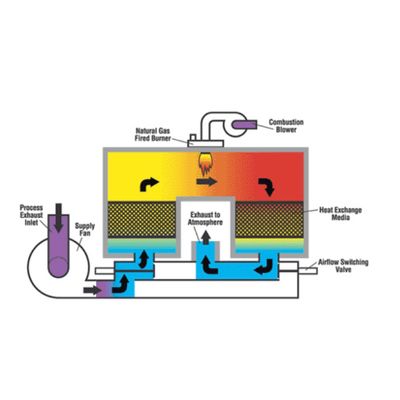
1. An RTO burns very lean waste gases without using much fuel. Operating temperature is about the same as a normal thermal oxidizer (say 1600oF), but the hot flue gas passes through a heat exchange module before reaching the stack. At least 2 of these modules are used -- one is always absorbing heat from the flue gas and one is always shedding heat into the waste gas. The modules are insulated boxes full of heat exchange media – usually ceramic packing. When a box has absorbed all the heat it can, it is taken offline and waste gas is sent through it backwards until it is cool again. Once cooled, it is taken offline and hot flue gas is again sent through it. Two boxes are needed so the flue gas always has a path to the exhaust stack – each box switches from heating to cooling every 5 minutes, or so. Specialized “Airflow Switching Valves”, set on a timer, are used to make the flow changes.
2. Why ceramic blocks are desired in RTO
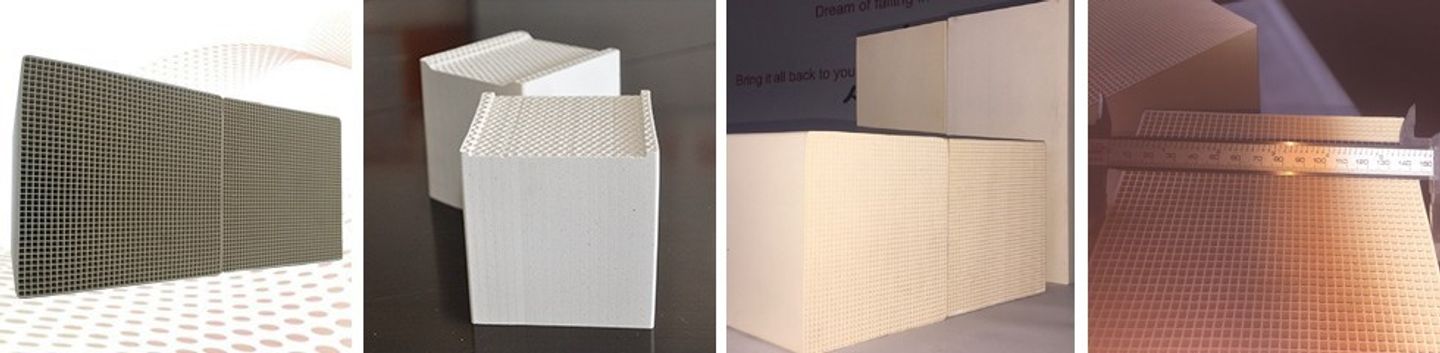
Ceramic blocks is a structured heat exchange media for his high performance in high efficiency, low pressure drop, lower coefficient of heat expansion, high thermal shock resistance and etc. makes it widely used in RTO equipment.