


- Home
- Companies
- Aimix Group Co., Ltd
- Articles
- How the Trolley Mechanism Moves Along ...
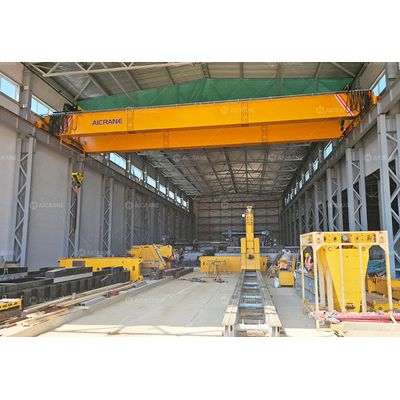
How the Trolley Mechanism Moves Along the Overhead Crane Girder
The trolley mechanism is one of the most crucial components of an overhead crane system. It is responsible for moving the hoist along the crane’s bridge girder, enabling precise positioning of loads for lifting, transferring, and placement operations. Understanding how the trolley mechanism works, its components, and its operation is essential for crane operators, maintenance personnel, and engineers who design or optimize lifting systems. This article explores the movement of the trolley along an overhead crane girder in detail, covering mechanical structure, drive systems, guiding mechanisms, control methods, and the impact on safety and efficiency.
1. Overview of the Trolley Mechanism
In an overhead crane for sale, the trolley is mounted on the crane bridge, which spans across the work area. The primary function of the trolley is to support and move the hoist along the length of the bridge girder. While the bridge itself moves along the runway rails to cover the span of the workshop or factory, the trolley provides lateral movement along the bridge, allowing precise load positioning.
The trolley mechanism consists of the following main components:
- Trolley frame: The structural base that supports the hoist and houses other components.
- Wheels and wheel assemblies: Typically mounted on flanged wheels that roll along the bridge girder flange.
- Drive system: Usually composed of an electric motor, gearbox, and shaft or chain drive that powers the movement of the trolley.
- Guides and bearings: Ensure smooth motion and reduce friction between the trolley and girder.
- Braking system: Maintains trolley position when stopped and prevents accidental movement.
The trolley mechanism is engineered to carry significant loads while ensuring precise and controlled movement. Depending on the crane design, it can operate in single or double girder cranes, with variations in wheel configuration and load-bearing capacity.
2. Wheel and Rail Interaction
The fundamental principle behind trolley movement is the rolling interaction between the trolley wheels and the bridge girder. The wheels are designed to fit precisely on the flange of the girder, which acts as a rail. Overhead crane girders are designed to have consistent dimensions and smooth surfaces to minimize wear on the wheels and to maintain stability during operation.
Typically, the wheels are made of high-strength steel with a hardened tread to withstand heavy loads and frequent operation. They are often mounted on axles with roller or ball bearings to reduce friction and ensure smooth motion. Some high-capacity trolleys use multiple wheel sets to distribute the load evenly across the girder, reducing stress and extending the service life of both the trolley and the bridge.
The wheel-to-rail interface is critical. Misalignment can cause uneven wear, vibration, and potentially derailment of the trolley. Therefore, precise installation and periodic maintenance of the girder rails and trolley wheels are essential. Lubrication and wheel alignment checks are common practices to ensure optimal performance.
3. Drive System for Trolley Movement
The trolley’s motion along the bridge girder is powered by an electric drive system. This system typically consists of:
- Electric motor: Provides the mechanical power to move the trolley. Motors can be AC or DC, with variable frequency drives (VFD) or inverter controls for precise speed regulation.
- Gearbox: Reduces the motor speed to a usable rate while increasing torque for moving heavy loads.
- Drive wheels or chain systems: Transfer torque from the motor to the trolley wheels.
Modern trolley mechanisms often employ variable-speed drives, allowing operators to adjust the speed of the trolley according to the load, lifting height, and precision required. Low-speed operation is essential when positioning heavy loads, while higher speeds are used for non-critical travel across the bridge.
Some advanced systems utilize synchronous motors or servo drives for even more precise positioning, which is particularly important in applications like steel mills, warehouses, or factories handling delicate or oversized components.
4. Guiding and Stability
In addition to the wheels, trolleys incorporate guiding mechanisms to maintain stability along the girder. Side guide rollers or plates may be installed to prevent lateral movement or sway, ensuring the hoist travels in a straight line even under heavy load conditions.
The trolley frame is designed to handle both vertical load from the hoist and horizontal forces generated during acceleration, deceleration, or sudden stops. Proper design ensures that the trolley does not tilt or bind on the girder, which could compromise safety or cause operational delays.
In some high-capacity cranes, anti-sway mechanisms are integrated into the trolley system to reduce load oscillation during movement. These mechanisms may include shock absorbers, dampers, or electronic control systems that coordinate trolley motion with the hoist lifting operation.
5. Control Methods
Trolley movement is controlled either by manual operation, pendant control, or remote control systems.
- Pendant control: A wired controller attached to the crane allows the operator to start, stop, and control the speed and direction of the trolley.
- Radio remote control: Provides freedom of movement around the worksite while maintaining control over trolley travel.
- Automated control systems: In large industrial setups, trolleys may be integrated into PLC or SCADA systems for automated positioning, synchronized movement with multiple cranes, and safety interlock monitoring.
Control systems often include limit switches, proximity sensors, and emergency stops to prevent over-travel or collisions with the bridge end stops. These systems ensure safe operation even in environments with limited visibility or heavy traffic.
6. Braking and Safety Considerations
Safety is paramount in trolley operation, as uncontrolled movement can lead to accidents, equipment damage, or operational downtime. The trolley incorporates braking systems, usually including:
- Electromechanical brakes: Engage automatically when power is cut or during controlled stops.
- Friction brakes: Provide resistance to prevent motion under gravity or load imbalance.
Some advanced trolleys also integrate dynamic braking, which uses the motor to slow down the trolley gradually, reducing wear on mechanical brakes and providing smoother stops.
Operators must also follow regular inspection protocols, checking wheel wear, brake function, and motor performance to ensure reliable trolley operation. Overloading, sudden starts, or uneven loads can compromise the system and lead to premature failure.
7. Factors Affecting Trolley Movement
Several factors can influence the efficiency and stability of the trolley mechanism:
- Load weight and distribution: Uneven or excessive load can strain the trolley wheels and drive system.
- Speed of travel: Faster trolley movement increases dynamic forces, requiring careful acceleration and deceleration control.
- Girders’ alignment: Any deviation in the girder rail can cause vibration or derailment.
- Environmental conditions: Dust, moisture, or temperature extremes can affect wheel traction and motor performance.
- Maintenance practices: Regular lubrication, inspection, and replacement of worn parts ensure smooth operation.
Optimizing these factors improves both the lifespan of the trolley system and operational efficiency.
8. Conclusion
The trolley mechanism is an essential component of overhead cranes, enabling precise, safe, and efficient movement of loads along the bridge girder. Through a combination of robust wheels, drive systems, guiding mechanisms, and control technology, trolleys can carry heavy loads across industrial workspaces with high accuracy.
A thorough understanding of how trolleys operate, the interaction between wheels and girders, drive systems, control methods, and safety measures is critical for anyone involved in crane operation or maintenance. Proper design, installation, and regular maintenance ensure that trolley mechanisms perform reliably, minimizing downtime and maximizing productivity in various industrial applications.
By integrating advanced motor drives, automated controls, and anti-sway systems, modern trolleys not only improve efficiency but also enhance the safety and precision of overhead crane operations, making them indispensable in manufacturing, logistics, and heavy industry environments.