

How to Choose Lifting Solution For Manufacturing Industry
Choosing the right lifting solution is critical for the manufacturing industry, as it directly impacts productivity, efficiency, safety, and overall operational success. Manufacturers must carefully evaluate various factors to select the most suitable lifting solution for their specific needs. Here are the key considerations and steps involved in choosing a lifting solution for the manufacturing industry.
Assessing Operational Requirements
The first step in choosing a lifting solution is to assess your operational requirements. This includes understanding the types of loads you need to lift, their weights, dimensions, and frequency of lifting operations. Consider whether you need to lift small components, heavy machinery, raw materials, or finished products, and determine the load capacity required for efficient handling.
Identifying Application Specifics
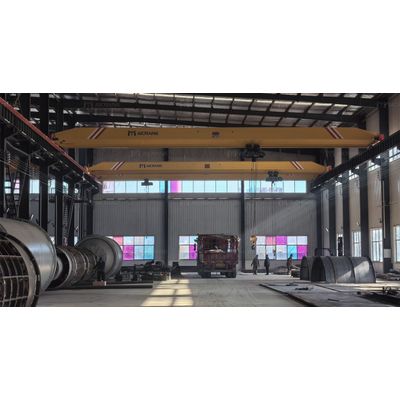
Different manufacturing applications require specific lifting solutions. Identify whether you need overhead cranes, gantry cranes, jib cranes, hoists, or a combination of these. Consider factors such as the layout of your facility, available space, vertical and horizontal reach requirements, material handling processes, and environmental conditions (e.g., indoor vs. outdoor operations, hazardous environments).
Understanding Safety Regulations
Safety is paramount in manufacturing, so it's essential to understand and comply with safety regulations and standards related to lifting equipment. Familiarize yourself with OSHA (Occupational Safety and Health Administration) regulations, ANSI (American National Standards Institute) standards, and local safety guidelines applicable to lifting operations. Choose lifting solutions that meet or exceed these safety requirements.
Evaluating Load Handling Features
Evaluate the load handling features of different lifting solutions. Consider aspects such as lifting capacity, lifting speed, load positioning accuracy, smooth acceleration and deceleration, precision control, and compatibility with various load types (e.g., containers, pallets, machinery). Choose a solution that can handle your loads efficiently and safely.
Considering Automation and Integration
Automation plays a significant role in modern manufacturing, enhancing efficiency and reducing manual labor. Consider whether you need automated lifting solutions, such as robotic cranes or automated guided vehicles (AGVs), to streamline material handling processes. Evaluate integration capabilities with existing manufacturing systems, such as ERP (Enterprise Resource Planning) software, for seamless data exchange and workflow optimization.
Assessing Environmental Factors
Take into account environmental factors that may impact your lifting operations. Consider temperature extremes, humidity levels, exposure to corrosive substances, dust or debris, and the presence of hazardous materials. Choose lifting solutions with appropriate environmental protection features, such as corrosion-resistant coatings, sealed electrical components, and explosion-proof designs as needed.
Budget and Total Cost of Ownership (TCO)
Evaluate the initial investment cost as well as the total cost of ownership (TCO) of different lifting solutions. Consider not only the purchase price but also installation costs, maintenance expenses, spare parts availability, energy consumption, and potential downtime for repairs. Calculate the long-term ROI (Return on Investment) to determine the most cost-effective solution.
Reviewing Manufacturer Reputation and Support
Research and review the reputation of lifting equipment manufacturers and suppliers. Choose reputable manufacturers known for quality, reliability, and customer support. Check customer reviews, testimonials, and industry certifications to gauge the manufacturer's track record. Ensure that the manufacturer provides comprehensive support, including installation assistance, training, maintenance services, and spare parts availability.
Conducting Site Surveys and Consultations
Before finalizing your decision, conduct site surveys and consultations with lifting equipment experts. Invite manufacturers or authorized distributors to assess your facility, understand your specific needs, and recommend suitable lifting solutions. Ask for detailed proposals, equipment specifications, 3D layouts, and performance guarantees to make an informed decision.
Testing and Evaluation
Whenever possible, test and evaluate lifting solutions before making a final purchase decision. Arrange for equipment demonstrations, trials, or pilot projects to assess performance, usability, safety features, and compatibility with your operational requirements. Solicit feedback from operators, maintenance personnel, and other stakeholders to ensure alignment with expectations.
In conclusion, choosing the right lifting solution for the manufacturing industry involves assessing operational requirements, identifying application specifics, understanding safety regulations, evaluating load handling features, considering automation and integration, assessing environmental factors, managing budget and TCO, reviewing manufacturer reputation and support, conducting site surveys and consultations, and testing and evaluation. By following these steps and considerations, manufacturers can select an optimal lifting solution that enhances efficiency, safety, and overall productivity in their manufacturing operations.