


- Home
- Companies
- Aimix Group Co., Ltd
- Articles
- How to Select the Structural Steel ...
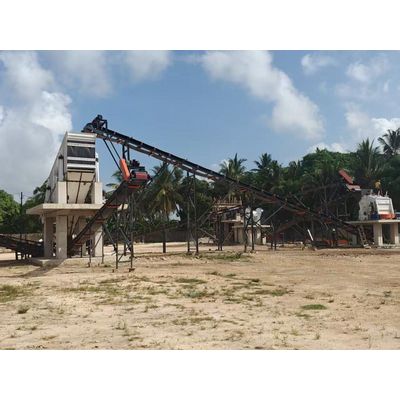
How to Select the Structural Steel Grade for Stone Crushing Plants in High-Altitude Mining Areas
When evaluating a stone crusher plant for sale for a high-altitude mining project in the Andes or similar environments, most procurement managers focus on crusher throughput, motor power, and screen area. However, beneath the paint and the flashy control panels lies a critical decision that engineers often overlook: the grade of structural steel used to build the plant itself. In the oxygen-thin air of a 4,500-meter mine site, where temperatures swing wildly and the material being processed is aggressively abrasive, the steel frame must do more than just hold components together. It must resist brittle fracture, withstand fatigue from constant vibration, and endure corrosion from unexpected sources. Whether you are considering a stationary setup or a mobile stone crusher plant, understanding metallurgy is just as important as understanding tonnage rates.
The Unique Stresses of High-Altitude Operations
High-altitude mining areas impose a combination of mechanical and environmental stresses that are rarely seen together in lower elevations. These factors fundamentally alter how structural steel behaves over time, and ignoring them can lead to catastrophic failures.
Low-Temperature Brittleness and Fracture Toughness
One of the most insidious threats to structural integrity at altitude is the cold. Nighttime temperatures in the Chilean Altiplano or the Peruvian highlands can plunge well below freezing, even during summer months. Standard carbon steel, which performs admirably in temperate climates, undergoes a ductile-to-brittle transition at these low temperatures. A impact from a falling rock or a sudden stress concentration from vibration can cause a crack to propagate through the steel instantly. When selecting a stone crusher plant for sale(planta trituradora de piedra en venta) for these conditions, the specification must call for steel with verified Charpy V-notch impact test values at the minimum anticipated operating temperature. This is particularly critical for the main frame of a mobile stone crusher plant, which also experiences torsional stresses during transport and setup.
Thermal Expansion and Contraction Cycles
Beyond the cold, the daily temperature swing from below freezing to intense solar heating creates constant expansion and contraction. This cyclic movement places stress on welded joints and bolted connections. Steel grades with higher carbon content can become more brittle over time when subjected to these thermal cycles, especially in the presence of weld stresses. A well-designed stone crusher for sand production, which requires precise screening and consistent material flow, cannot tolerate the misalignment caused by structural warping. Therefore, the chosen steel must have good weldability and low carbon equivalent values to maintain ductility in the heat-affected zones of welds.
Mechanical Loading and Fatigue Resistance
The dynamic nature of crushing operations means that structural members are not just holding static weight; they are constantly absorbing shocks and vibrations.
Vibration Damping Characteristics
A typical stone crusher plant for sale will be marketed based on its production capacity, but the frame's ability to dampen vibration is rarely discussed. High-frequency vibrations from screens and cone crushers transmit through the structure. If the steel lacks sufficient internal damping, these vibrations can lead to fatigue cracks at connection points over time. For a mobile stone crusher plant(planta trituradora movil), which may have a lighter frame design to facilitate transport, this risk is amplified. Engineers should specify steel with a fine-grained microstructure, often achieved through normalizing or thermo-mechanical controlled processing, as these grains help arrest the initiation of micro-cracks from continuous vibration.
Impact Load Considerations
In the primary crushing section, falling boulders can weigh several tons. The support structure beneath a jaw crusher must absorb these impacts repeatedly without deforming. This requires a combination of high yield strength and high toughness. Simply using a thicker plate of lower-grade steel is not always the solution, as the added weight can be prohibitive, especially for a mobile stone crusher plant that must meet axle load limits for road transport. High-strength low-alloy steels, such as those meeting ASTM A572 Grade 50 or 65 standards, offer the necessary strength-to-weight ratio while retaining sufficient toughness for impact resistance.
Corrosion Resistance in Unlikely Places
One might assume that the dry desert air of high-altitude mines would preclude corrosion concerns. However, the presence of sulphide minerals in the ore and the use of process water create aggressive corrosive environments.
Chemical Exposure from Ore and Water
Copper and other sulphide ores can generate acidic runoff when exposed to moisture. Even in the desert, condensation at night can create thin films of water on steel surfaces, which, when combined with dust from the crushing operation, form a corrosive paste. A stone crusher for sand(trituradoras de arena y grava) production often involves wet processes or misting for dust control, introducing water into the system. Structural steel in these areas must either be protected with high-performance coating systems or be specified with enhanced atmospheric corrosion resistance. In some cases, weathering steel may be considered, but its use must be carefully evaluated in high-chloride or high-sulphur environments typical of mining areas.
Abrasion and Section Loss
Beyond chemical corrosion, the constant flow of material across chutes and against structural members causes mechanical abrasion that wears away steel. When selecting a stone crusher plant for sale, buyers should look for designs that incorporate replaceable wear liners on structural elements exposed to material flow. The underlying structural steel does not need to be abrasion-resistant; it needs to maintain its load-bearing capacity behind the liners. However, the attachment points for these liners must be robust, often requiring steel grades with good weldability to allow for easy replacement without cracking the base metal.
Weldability and Field Repairs
In remote mining locations, the ability to perform repairs on-site is a practical necessity. The structural steel grade must be amenable to field welding without requiring complex pre-heat or post-weld heat treatment.
Carbon Equivalent and Hydrogen Cracking
The weldability of steel is largely determined by its carbon equivalent value. Higher carbon equivalent steels require pre-heating to prevent hydrogen-induced cracking in the heat-affected zone. In a high-altitude environment, where field conditions are windy and cold, achieving and maintaining proper pre-heat temperatures is difficult. For a mobile stone crusher plant that may need frame repairs in the field, specifying steel with a carbon equivalent below 0.45% is a wise precaution. This allows maintenance crews to make reliable welds with minimal risk of cracking, keeping the plant operational.
Standards and Certification
Finally, procurement specifications must demand traceability and certification. Structural steel in a critical application like a mining crusher plant is not a commodity item.
Material Test Reports and Mill Certificates
When purchasing a stone crusher plant for sale for high-altitude use, the buyer should request mill test reports for the primary structural members. These reports verify the chemical composition and mechanical properties, including yield strength, tensile strength, and elongation. For the most critical applications, such as the main beam of a mobile stone crusher plant supporting a heavy cone crusher, ultrasonic testing of the plate material may be warranted to ensure there is no internal laminations or inclusions that could serve as crack initiation sites under fatigue loading.
Compliance with International Standards
Specifying steel to recognized international standards, such as ASTM A36, A572, or the equivalent EN 10025 grades, provides a baseline of quality. However, for high-altitude applications, the standard alone is insufficient; the supplementary requirements for impact testing at low temperatures must be invoked. A stone crusher for sand production operating at 4,500 meters requires steel that has been tested at -20°C or lower, not just the standard room temperature tests. This attention to detail in the procurement specification separates a plant that will operate reliably for decades from one that will suffer from chronic structural failures.
In conclusion, selecting the correct structural steel grade for a stone crushing plant in a high-altitude mining area is a complex decision that balances strength, toughness, weldability, and corrosion resistance. It requires looking beyond the initial price tag and understanding the metallurgical demands of the environment. Whether the project involves a stationary facility or a mobile stone crusher plant, investing in the right steel specification is an investment in safety, reliability, and long-term operational success.