


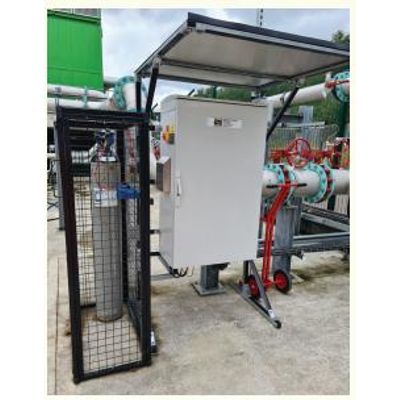
In-Situ Measurement of Siloxanes In Biogas
Overcoming measurement challenges to produce a cost-effective solution
The monitoring of biogas from sewage and landfill sites is widely accepted to determine factors influencing the efficiency of the processes used to clean and prepare the gas stream for supply to a combined heat and power engine, to fuel boilers or for direct injection to the grid.
Many of these measurements relate to the calorific quality of the gas, the methane content versus the unwanted contaminants such as VOCs, hydrogen sulphide and ammonia, but few are designed to specifically measure the presence and amount of siloxane contaminants in the gas stream. There are several reasons for this but the overriding one is cost. Traditional techniques use FTIR, GCIMS or GCMS instruments which can provide excellent accuracy, rapid results, and a huge amount of data. However, these are expensive, not designed for use in harsh environments and require a trained user to interpret the data and cost of maintenance can also be high.
There are however solutions to this, instruments that use a less sophisticated but more robust measurement technique at a fraction of the price. However, this is not without its problems. The siloxanes group consists of both cyclic and linear forms -this provides a measurement challenge as the molecular sizes being measured across the group is different and therefore any attempt to capture them will always be inclined to favour one size more than others.