


Indoor air quality in industrial environments
Indoor air quality in industrial environments has often been neglected in the light of production imperatives. However, the impact of this pollution is now demonstrated on the well-being productivity of employees. These pollutants become, in addition, harmful in the long run.
Indoor air pollution is often much more important than outdoor air. Faced with this, new technical solutions exist to monitor the air of industrial environments and optimize it.
It is now possible to continuously analyze the quality of the air to monitor the appearance of pollution peaks. Linked to laboratory emissions, processes or drilling and saturation filters.
Pollutants present in industrial environments
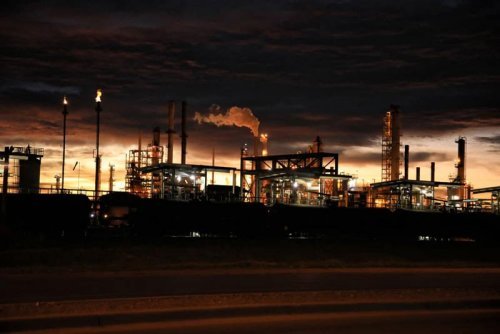
Pollution in industrial environments is caused by different pollutants from processes or laboratories. We find, formaldehyde, VOCs such as benzene, naphthalene, tetrachlorethylene, but also fine particles or pollutants such as NO2, SO2, H2S, NH3 ... Pollutants often identified as priorities by national health safety agencies, environment and work.
In addition, the primary interest of diagnosing indoor air avoids too high pollution levels. Which, in the long term and according to their concentration levels, accentuate the respiratory diseases and can develop cancers.
Regulation on air quality at work / for employees
According to the labor code, Art. R. 4222-10 et seq. , For premises with specific pollution, the average concentration of dust and / or pollutant in the atmosphere inhaled by an employee shall not exceed 10 and 5 milligrams per cubic meter of air on a period of 8 hours.
It should be noted that emissions in the form of gases, substances and dangerous vapors must be removed. In the absence of being deleted, they must always be captured in As industrial production ,. If possible closer to the source of pollutant emissions to be as effective as possible. Of course, the nature of the pollution, its characteristics, the discharged flow rate and the movement of the air must be taken into account. Technically it is not possible to capture all the pollutants emitted. These residual pollutants must be removed with general ventilation within the building.
All ventilation and collection installations must be carried out in order for the concentration present in the atmosphere to remain below the Occupational Exposure Limits (OELs).
The Occupational Exposure Limit Value (OEL)
The OEL determines the limit value represents a chemical agent in the concentration of the air can inhale a person during a specified period.
It aims to protect workers from adverse effects on their health through exposure to hazardous pollutants. Nevertheless, this does not exclude the absence of risk. OEL is a preventive value for the sake of workers` health .
How to manage the protection of your employees exposed to specific pollutants?
Protection of workers is essential in the daily management of a business. In addition to engaging the responsibility of the employer, it greatly impacts the social climate in society and has a direct impact on the productivity of employees.
Areas subject to the presence of specific pollutants (VOC including styrene, VCM, toluene, formaldehyde, fine particles ...). Whether they are near production areas, laboratories or offices are particularly affected by this phenomenon. Although spot checks are carried out annually or multi-yearly, the implementation of a monitoring solution for air quality in these industrial zones, remains the only way to ensure the permanent safety of the people who are there. working.
To address this issue, Ethera has designed a range of modular indoor air quality monitoring stations for the industry. They can integrate suitable sensors (PID, fine particles, H2S, NH3, formaldehyde, radon ...) to the situation encountered. Connected and easy to deploy, our stations are also affordable in order to multiply measurement points and create a real surveillance network. Our cloud will allow you to view data, edit reports, create a worker exposure history or set up alerts. This will allow you to be notified in real time, by sms or email of a possible peak of pollution coming from the production areas.