


- Home
- Companies
- Aimix Group Co., Ltd
- Articles
- Installing 40 Ton Overhead Crane


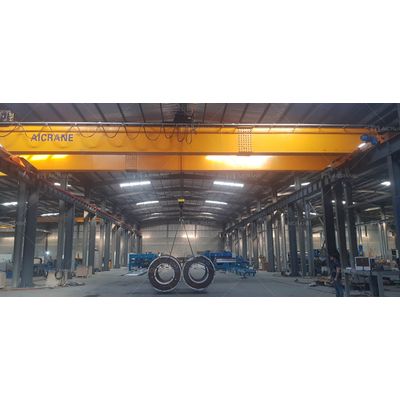
Installing 40 Ton Overhead Crane
Installing a 40 ton overhead crane involves a series of carefully planned steps to ensure safety, efficiency, and compliance with regulations. Below is a detailed guide on how to install a 40 ton overhead crane:
Pre-Installation Preparation
Obtain all necessary permits, approvals, and documentation required for crane installation in your area.
Review the manufacturer's installation manual, technical specifications, and safety guidelines for the specific 40 ton overhead crane model.
Conduct a site assessment to evaluate the space, structural integrity, floor load capacity, and overhead clearance for crane installation.
Prepare the installation area by clearing obstacles, leveling the floor, and ensuring adequate lighting and ventilation.
Assemble Crane Components
Unpack and inspect all crane components, including the bridge, hoist, trolley, runway beams, end trucks, electrical panels, and control systems.
Assemble the bridge sections, end trucks, and trolley according to the manufacturer's instructions, using appropriate tools and equipment.
Install runway beams securely on the building's support structure, ensuring proper alignment, levelness, and structural integrity.
Electrical and Mechanical Connections
Connect electrical components, such as power cables, control panels, limit switches, sensors, and pendant stations, following wiring diagrams and safety standards.
Test electrical connections, voltage levels, phase balance, and ground continuity to ensure proper functioning and compliance with electrical codes.
Install mechanical components, such as wire ropes, chains, hooks, and load-bearing accessories, according to the crane's specifications and load capacity.
Hoist and Trolley Installation
Attach the hoist unit to the trolley and secure it with bolts, nuts, and fasteners, ensuring proper alignment and balance.
Test the hoist's lifting capacity, speed, braking systems, and safety features to verify functionality and compliance with safety standards.
Install and adjust the trolley's wheels, brakes, and travel mechanisms for smooth and controlled movement along the runway beams.
Final Assembly and Testing
Complete the assembly of all crane components, including attaching the bridge to the end trucks, connecting electrical and mechanical systems, and securing safety devices.
Conduct a thorough inspection of the entire crane assembly, checking for any loose connections, misalignments, or defects that may affect operation or safety.
Perform functional tests, load tests, and operational checks to verify the crane's performance, lifting capacity, speed, and safety features.
Safety Measures and Training
Implement safety measures, such as installing warning signs, safety barriers, and emergency stop buttons near the crane installation area.
Provide training and instruction to crane operators, maintenance personnel, and other stakeholders on safe operating practices, emergency procedures, and equipment usage.
Ensure compliance with occupational safety regulations, crane standards, and industry best practices to prevent accidents, injuries, and property damage.
Commissioning and Certification
Conduct a final commissioning process, including system checks, load testing, and performance evaluations, to ensure the crane meets operational requirements and safety standards.
Obtain certification and approval from relevant authorities, inspection agencies, or third-party organizations to validate the crane's compliance with regulatory and industry standards.
Document the installation process, test results, certification records, and maintenance schedules for future reference, auditing, and compliance purposes.
By following these steps and guidelines, you can successfully install a 40 ton overhead crane in a safe, efficient, and compliant manner. Proper planning, assembly, testing, safety measures, and documentation are essential for a successful crane installation project.