

- Home
- Companies
- SOLICO TANKS
- Articles
- Maximizing Commercial Building ...
Maximizing Commercial Building Efficiency with GRP Panel Type Water Storage Systems
Introduction:
In today’s competitive commercial real estate landscape, efficiency is not just a luxury—it’s a necessity. Efficient resource management directly impacts a building’s operational costs, environmental footprint, and overall sustainability.
One crucial yet often overlooked aspect of this efficiency is water storage and management. GRP (Glass Reinforced Plastic) panel type water storage systems are a game-changing solution for maximizing efficiency in commercial buildings.
This article dives deep into how GRP panel type water storage systems can transform water management, reduce costs, and enhance operational performance in commercial properties. Furthermore, it introduces Solico Tanks as the industry leader in GRP water storage solutions, offering unmatched quality, expertise, and customer service.
GRP Defined
Glass Reinforced Plastic, commonly referred to as GRP or fiberglass, is a composite material made of polymer matrix reinforced with glass fibers. This combination results in a highly durable, lightweight, and corrosion-resistant material suitable for various applications, including water storage systems.
Panel Type Water Tanks
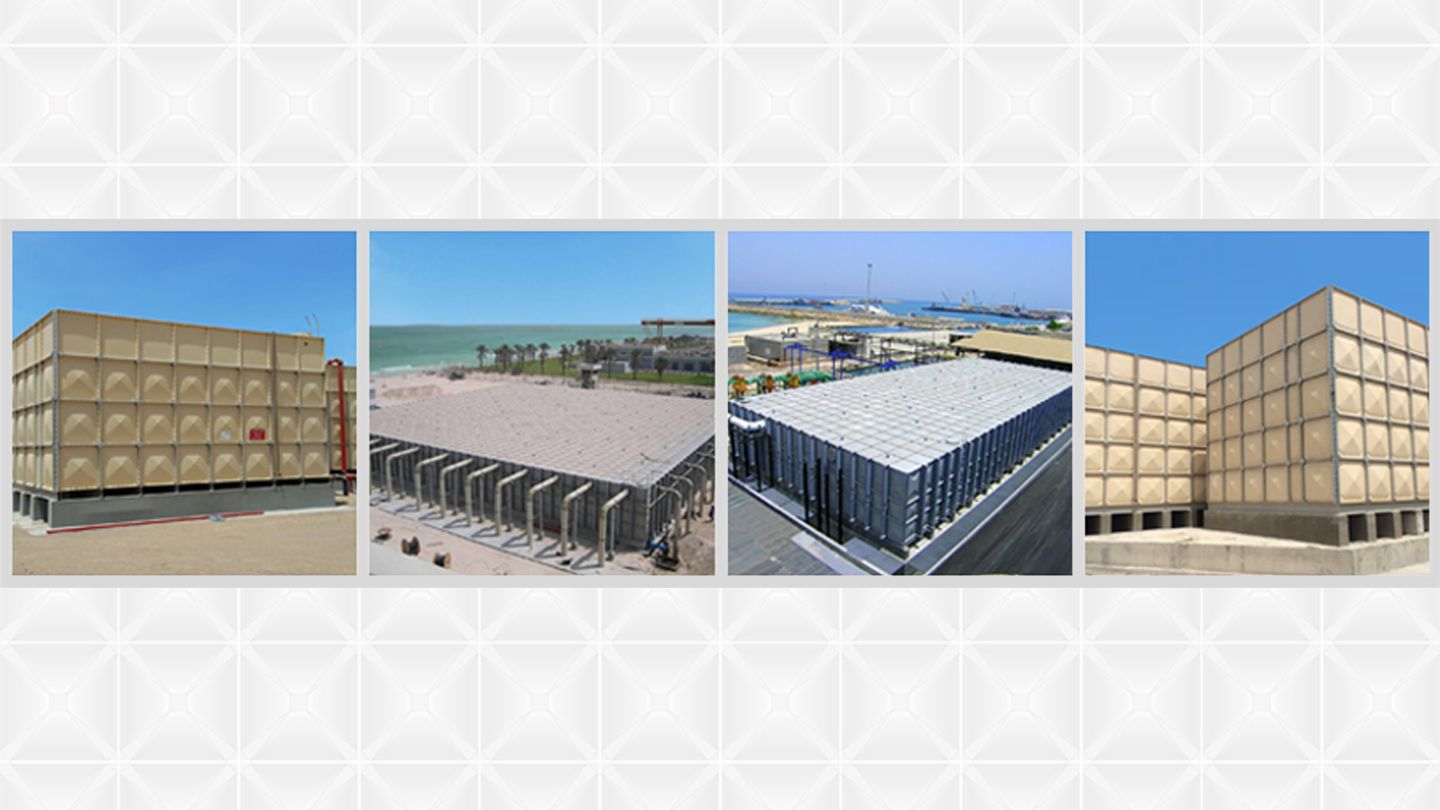
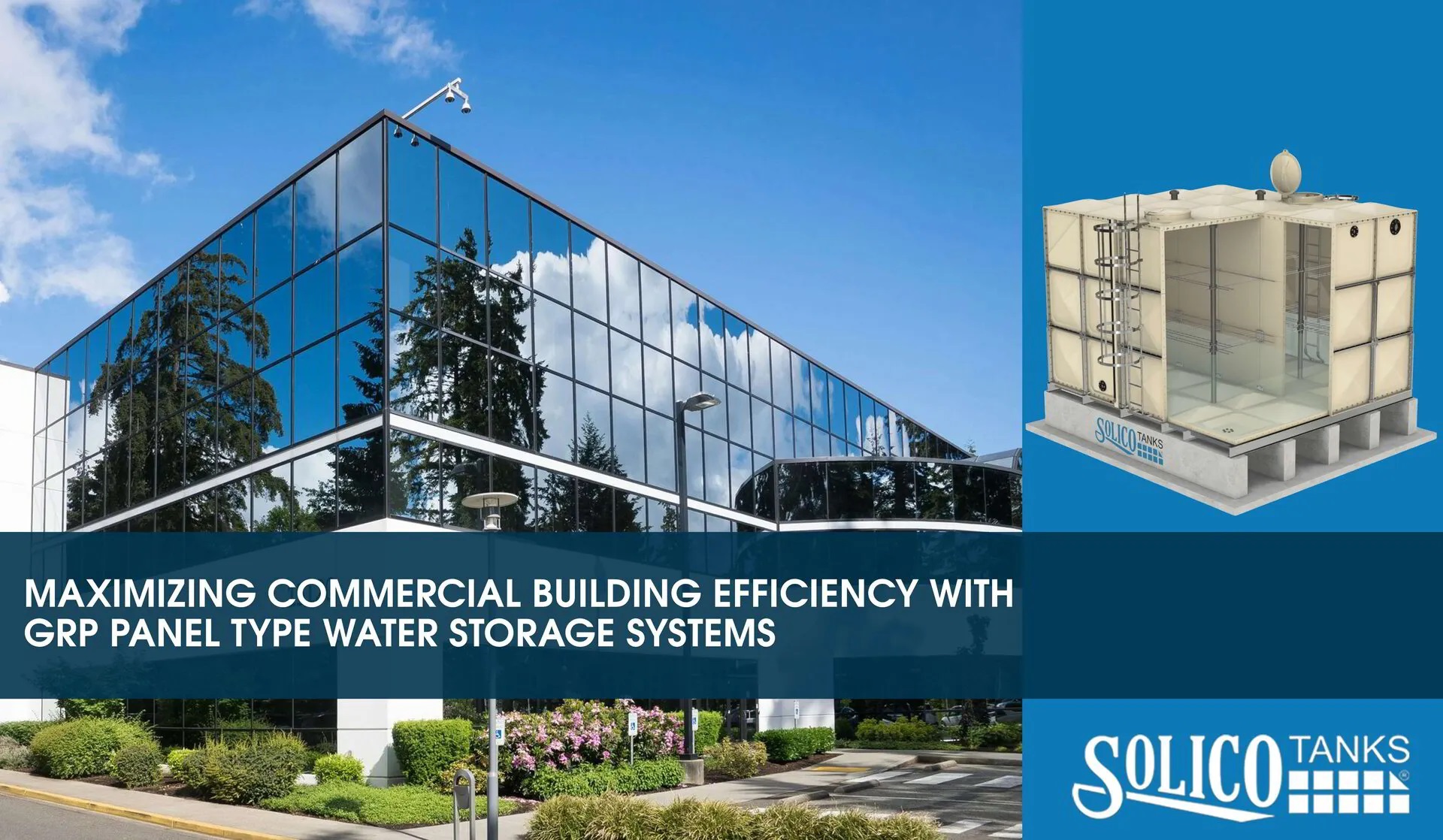
Unlike traditional cylindrical tanks, GRP panel type water tanks are modular. They are constructed from prefabricated panels that can be assembled on-site to create water tanks of varying sizes and configurations. These tanks are widely used in commercial buildings due to their adaptability, cost-effectiveness, and performance benefits.
Water is a critical resource for commercial buildings, serving essential purposes such as:
- Domestic Use: Supply for restrooms, kitchens, and other daily operational needs.
- Fire Protection Systems: Backup water for firefighting.
- HVAC Systems: Cooling towers and other HVAC applications rely heavily on water availability.
- Irrigation: Landscaping and green spaces require efficient water storage and supply.
Traditional water storage systems often fall short in addressing the specific needs of modern commercial properties. GRP panel tanks provide a sophisticated solution tailored to meet the demands of efficiency, scalability, and sustainability.
1. Durability and Longevity
GRP is inherently resistant to corrosion, rust, and environmental wear, unlike steel or concrete tanks. This ensures that the tanks can withstand harsh conditions, including high humidity, extreme temperatures, and exposure to UV rays.
- Corrosion Resistance: Essential for maintaining water quality over time.
- Impact Resistance: GRP panels can endure mechanical shocks without cracking or leaking.
2. Customizable and Modular Design
One of the most significant advantages of GRP panel type tanks is their modularity. They can be assembled to fit virtually any space, making them ideal for commercial buildings where space constraints are common.
- Flexible Sizing: Panels can create tanks of various capacities, from a few thousand liters to millions.
- On-Site Assembly: Tanks can be constructed in confined spaces, eliminating logistical challenges associated with transporting large pre-assembled tanks.
3. Lightweight and Easy Installation
GRP tanks are significantly lighter than steel or concrete tanks, which simplifies transportation and installation. This feature reduces labor costs and installation time.
- Lower Structural Load: Ideal for rooftop installations.
- Quick Assembly: Prefabricated panels allow for faster on-site construction.
4. Improved Water Quality
GRP panels are non-toxic and inert, ensuring that the stored water remains uncontaminated. Additionally, the smooth interior surface minimizes bacterial growth and prevents sediment accumulation.
- Hygienic Standards: GRP complies with international drinking water standards.
- Low Maintenance: Reduced need for frequent cleaning and repairs.
5. Thermal Insulation
GRP has excellent thermal insulation properties, keeping water at a stable temperature even in extreme climates. This is particularly important for HVAC and fire protection systems, where temperature consistency is critical.
6. Cost-Effectiveness
While GRP tanks may have a higher initial cost than some alternatives, their long-term benefits make them a more economical choice. Low maintenance requirements, durability, and extended lifespan contribute to significant cost savings over time.
7. Environmental Sustainability
GRP tanks are environmentally friendly, as they are recyclable and require less energy during production. Their long lifespan also means fewer replacements, reducing overall material waste.
1. High-Rise Buildings
Rooftop water tanks made from GRP are lightweight and reduce the structural load on the building. Their modularity ensures they can be installed even in limited spaces.
2. Hotels and Resorts
Hotels require a consistent and reliable water supply for guest services, kitchens, laundry, and recreational facilities. GRP tanks provide a hygienic and efficient solution.
3. Hospitals
Healthcare facilities depend on uninterrupted water availability for sanitation, HVAC systems, and emergency services. GRP tanks ensure reliability and safety.
4. Shopping Malls
Large-scale commercial complexes need significant water storage capacity for daily operations, fire safety, and landscaping. GRP tanks can be customized to meet these demands.
5. Industrial Complexes
Industrial facilities often use water for manufacturing, cooling, and fire suppression. GRP tanks are ideal due to their durability and resistance to chemical exposure.
When evaluating the advantages of GRP panel type water storage systems, it is essential to compare them against not only steel and concrete tanks but also plastic tanks, which are commonly used for water storage. Each material has unique characteristics, and understanding these differences helps in selecting the most suitable option for specific commercial building needs.
Corrosion Resistance
GRP tanks lead the pack when it comes to corrosion resistance. The composite material is immune to rust and chemical erosion, making it ideal for both potable water and industrial applications. Steel tanks, while durable, require frequent coatings and maintenance to prevent rust. Concrete tanks, though not susceptible to rust, are prone to chemical degradation and cracking, which can lead to contamination. Plastic tanks are also resistant to rust but can degrade under prolonged UV exposure, particularly when used in outdoor environments, reducing their lifespan.
Customizability
GRP tanks are highly customizable due to their modular panel design, allowing on-site assembly into various configurations and capacities. This adaptability makes them suitable for challenging spaces, such as rooftops or basements. Steel tanks are less flexible, as they typically come in pre-fabricated shapes, limiting their installation options. Concrete tanks can be customized during the construction process but require significant time and resources. Plastic tanks offer limited customization; they are usually available in fixed sizes and shapes, which might not fit all spaces or capacity requirements.
Weight
GRP tanks are lightweight, simplifying transportation, handling, and installation, particularly for rooftop applications. Steel tanks, by comparison, are heavy, increasing transport and structural load requirements. Concrete tanks are the heaviest, often requiring specialized equipment for transportation and installation. Plastic tanks, while lightweight like GRP, lack the structural integrity to handle large capacities or high-pressure systems, making them less suitable for high-demand commercial settings.
Ease of Installation
The prefabricated nature of GRP panels ensures quick and straightforward installation. The panels are assembled on-site, minimizing logistical challenges and project timelines. Steel tanks require welding and bolting, which can be labor-intensive and time-consuming. Concrete tanks involve lengthy construction processes and curing times. Plastic tanks, on the other hand, are easy to install due to their lightweight design, but they are often restricted to smaller capacities, limiting their utility in large-scale commercial operations.
Maintenance Requirements
GRP tanks are low-maintenance due to their durable, corrosion-resistant, and non-porous surfaces, which resist bacterial growth and sediment accumulation. Steel tanks require regular anti-corrosion treatments and inspections, while concrete tanks often demand crack repairs and resealing. Plastic tanks are relatively low maintenance but are susceptible to UV degradation and may require replacement sooner than GRP tanks.
Lifespan
GRP tanks boast an impressive lifespan of over 30 years, significantly outlasting steel tanks (10–15 years) and plastic tanks (10–20 years, depending on UV exposure and material quality). Concrete tanks can last 20–25 years but often require significant repairs during their lifetime. The longevity of GRP tanks makes them a cost-effective investment for commercial properties, particularly in environments with demanding operational requirements.
Water Quality
GRP tanks are designed to maintain excellent water quality, as their inert surfaces do not release harmful chemicals or promote bacterial growth. Steel tanks, if improperly coated, can release contaminants, while concrete tanks may leach alkalis into the water, altering its pH. Plastic tanks, while generally safe, can degrade over time, particularly when exposed to sunlight, leading to potential microplastic contamination and impacting water quality.
Key Insights
GRP tanks clearly outperform traditional steel, concrete, and plastic tanks in terms of durability, adaptability, and overall efficiency. While plastic tanks may be suitable for smaller-scale or short-term applications, they lack the robustness and longevity required for large-scale commercial projects. For high-capacity, long-term water storage with minimal maintenance and superior water quality, GRP tanks are the optimal choice.
1. Industry Leadership
With decades of experience in manufacturing and installing GRP water storage systems, Solico Tanks has established itself as a trusted name in the industry. We pride ourselves on delivering world-class solutions tailored to the needs of commercial properties.
2. High-Quality Products
Solico Tanks are manufactured using premium-grade GRP materials, ensuring exceptional durability, hygiene, and performance. Our tanks are compliant with international standards and undergo rigorous quality checks.
3. Custom Solutions
Every commercial building is unique, and so are its water storage requirements. Solico Tanks offers fully customizable solutions, including sizing, configuration, and specialized features.
4. Expert Installation Services
Our team of skilled technicians ensures seamless installation, even in the most challenging environments. From design consultation to final commissioning, we handle every step with precision.
5. Cost-Effective Offerings
Solico Tanks provides competitive pricing without compromising on quality. Our solutions are designed to deliver long-term savings, making them a smart investment for commercial properties.
6. Comprehensive Support
We offer ongoing support and maintenance services, ensuring that your water storage system continues to perform optimally throughout its lifespan.
Efficiency and reliability are non-negotiable in commercial building operations, and water storage plays a pivotal role. By choosing Solico Tanks, you’re not just investing in a product—you’re partnering with a team dedicated to your success.
Whether you’re a property manager, developer, contractor, consultant, or MEP engineer, Solico Tanks has the expertise and solutions you need. Don’t let outdated water storage systems compromise your building’s performance.
Contact Solico Tanks today to discuss your water storage needs. Let’s work together to design and implement a solution that maximizes efficiency, reduces costs, and ensures sustainability for years to come.