

- Home
- Companies
- Aimix Group Co., Ltd
- Articles
- Mobile Aggregate Plant Solutions in ...
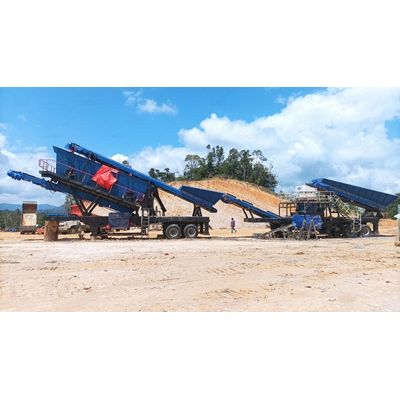
Mobile Aggregate Plant Solutions in Latin American Construction Waste Treatment Scenarios
Urban expansion and infrastructure renewal across Latin America are generating unprecedented volumes of construction and demolition (C&D) waste. Traditionally, this material has been a burden—occupying valuable landfill space, creating environmental liabilities, and representing a lost economic opportunity. However, a paradigm shift is underway. The region is increasingly turning to mobile aggregate plants as a transformative solution for on-site processing, turning waste piles into valuable secondary raw materials. Unlike static installations, a mobile aggregate crusher plant(planta chancadora de agregados) offers the unique advantage of being brought directly to the waste source, whether it's a downtown demolition site, a highway rehabilitation project, or a large-scale urban development. This approach aligns perfectly with the principles of the circular economy, reduces transportation costs and emissions, and provides a sustainable source of aggregates for new construction. For contractors and municipal authorities, this mobile technology is redefining waste from a cost center into a profit center.
The Challenge of Construction Waste in Latin America
The management of C&D waste presents distinct challenges in the Latin American context. Rapid urbanization in cities from Mexico City to São Paulo generates millions of tons of debris annually. Much of this waste, including concrete, bricks, ceramics, and asphalt, is highly suitable for recycling but often ends up in unlicensed dumps or overburdens formal landfills. The logistical cost of transporting heavy, low-value debris across congested cities to distant processing facilities is prohibitive. Furthermore, many demolition sites are constrained, with limited space for stockpiling and processing. These factors create a strong demand for decentralized, flexible processing solutions that can operate within the tight confines and timelines of active construction zones, making a mobile stone crusher plant(planta trituradora) an ideal technological fit.
Advantages of Mobile Plants in Waste Processing
The deployment of mobile crushing and screening equipment directly at the point of waste generation offers a compelling array of operational, economic, and environmental benefits that fixed facilities cannot match.
Unmatched Operational Flexibility and Logistics
The core advantage is mobility. A complete aggregate crusher plant mounted on tracked or wheeled chassis can be transported between sites with relative ease. This allows a single investment to service multiple projects throughout a city or region. For a contractor handling several demolition projects annually, this mobility maximizes asset utilization. On-site processing drastically reduces or even eliminates the cost of hauling waste to distant landfills and importing virgin aggregate. The recycled product is created exactly where it is needed, slashing transportation costs, road wear, and associated carbon emissions.
On-Demand Production of High-Value Materials
Mobile plants are not just crushers; they are integrated material processing units. A modern setup typically includes a crusher, a vibrating screen, and often a magnetic separator for removing rebar. This allows operators to produce specific, on-spec aggregate products directly on the demolition pad. For instance, crushed concrete can be sized to create an excellent sub-base material for new roads or building foundations. Finer material can be used as backfill or pipe bedding. In projects involving luxury finishes, a specialized marble crusher module can be integrated to process marble waste from building refurbishments into high-value decorative aggregates or industrial fillers, demonstrating the system's versatility.
Mitigating Site Constraints and Community Impact
Urban demolition sites are often space-limited and sensitive to noise and dust. Mobile plants are designed with a smaller physical footprint than fixed installations. Their ability to be positioned close to the workface minimizes internal material handling. Moreover, modern mobile units are engineered with environmental controls as standard. Enclosed conveyors, integrated water spray systems, and dust suppression units are critical features that allow a stone crusher plant to operate responsibly in densely populated areas, helping projects maintain good community relations and comply with urban environmental regulations.
Key Configuration Considerations for Waste Applications
Not all mobile plants are equally suited for the tough and variable duty of processing construction waste. Specific configurations are required for optimal performance and durability.
Crusher Selection: Jaw vs. Impact
The choice of primary crusher is paramount. For processing reinforced concrete and bulky demolition debris, a mobile jaw crusher is often the preferred workhorse. Its robust design and strong crushing action effectively handle rebar and miscellaneous metal embedded in the concrete. For processing cleaner, less reinforced concrete or asphalt, a mobile impact crusher offers excellent cubicity (shape) in the final product, which is desirable for certain applications. Some advanced setups may even incorporate a specialized marble crusher(trituradora de mármol) as a secondary unit for projects with significant stone waste streams, allowing for separate, value-added processing.
Screening and Separation Capabilities
Effective screening is what transforms crushed rubble into saleable products. An onboard vibrating screen with multiple decks allows for the simultaneous production of several aggregate sizes (e.g., 0-20mm, 20-40mm). A powerful electromagnetic overband magnet is a non-negotiable attachment for removing ferrous metals like rebar, which protects downstream equipment and cleans the final product. For higher-purity applications, wind sifters or air classifiers can be added to remove lightweight contaminants such as wood, plastic, and paper.
Power and Mobility Setup
The choice between diesel-electric and fully diesel-hydraulic drives has significant implications. Diesel-electric systems, where a diesel engine generates power for electric crusher and screen motors, often provide better fuel efficiency, easier maintenance, and smoother operation. The mobility system—tracked or wheeled—must be selected based on ground conditions. Tracked plants offer superior stability and mobility on rough, uneven demolition terrain, while wheeled plants may be preferable for easier transport between paved sites.
Implementing a Successful Mobile Recycling Operation
Beyond the hardware, successful implementation requires strategic planning and operational discipline. A thorough site assessment must precede deployment, evaluating waste volume and composition, available space, and access. Securing the necessary environmental permits for on-site processing is a critical and often overlooked step. Perhaps most importantly, the quality of the input material dictates the quality and marketability of the output. A degree of pre-sorting at the source—removing non-mineral waste like wood, plastic, and gypsum—greatly enhances the efficiency of the mobile aggregate crusher plant and the value of its products. Finally, identifying and securing markets for the recycled aggregates before production begins is essential for economic viability.
The rise of mobile aggregate plants is a game-changer for sustainable construction in Latin America. By bringing the processing facility to the waste, these systems offer a practical, profitable, and ecological answer to the region's growing C&D waste challenge. Investing in a well-configured mobile stone crusher plant—and potentially specialized attachments like a marble crusher for niche applications—empowers contractors, developers, and cities to close the material loop, reduce environmental footprints, and build new infrastructure from the remains of the old.