

Mobile Asphalt Mixing Plant Export: Deliveries, Transport, Installation
This article’s core view is that mobile asphalt mixing plant export success depends on three coordinated deliverables from asphalt equipment manufacturers: transport-engineered modularization, export-compliant packing and documentation, and turnkey on-site installation support. Buyers should evaluate providers by how these three tracks integrate into a single timeline that mitigates customs, lifting, and commissioning risk. The discussion focuses on concrete, verifiable solutions—module sizing and lashing designs, harmonized certificates and packing lists, and staged on-site services—that procurement teams can use to compare offers and assign realistic schedule and cost allowances.
Transport-engineered modularization and packability
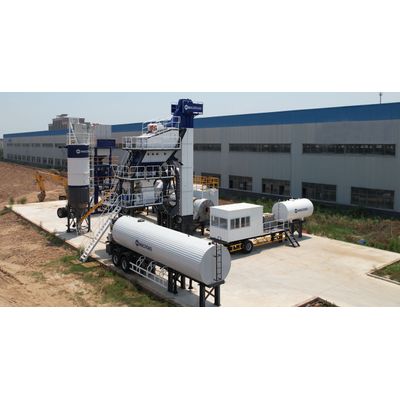
First, manufacturers design the mobile asphalt mixing plant as transportable modules with defined lifting points, center-of-gravity data, and container or low-bed compatibility. Deliverables to verify include module dimensional drawings, gross weights per transportable unit, and certified lifting plans. These items allow freight forwarders to pre-quote sea- and road-transport options and identify permits for oversized loads before signing.
Second, anti-vibration and anti-corrosion measures are applied during packing: internal bracing, shock-absorbing fixtures for bearings and precision parts, and transient moisture barriers for electronics. Buyers should request photos or packing mock-ups and material lists for protective coatings. Such engineering reduces transit damage risk and simplifies insurance claims if incidents occur.
Third, manufacturers commonly provide transport optimization services—consolidated packing lists, cargo distribution plans, and recommendations for multimodal routing. Confirm whether the supplier includes a route feasibility assessment for oversized modules and whether they supply transport engineering documents carriers require, such as axle-load calculations and stowage schematics.
Export-compliant documentation and customs facilitation
Clear documentation shortens port dwell time. Reputable asphalt equipment manufacturers supply harmonized system codes, certificates of origin, factory inspection reports, electrical compliance declarations, and calibrated instrument certificates. Procurement teams should verify that all documents follow the buyer’s import authority format and that translation or notarization needs are addressed.
Manufacturers often bundle a customs dossier and liaise with nominated brokers to pre-fill declarations. Ask if the supplier will provide certified packing lists with itemized weights and component serial numbers; these accelerate physical inspections and reduce detentions. For regulated components—burners, pressure vessels, or emissions-related items—confirm that test reports and pressure certificates accompany the shipment.
Additionally, many exporters include export insurance recommendations and a provisional incoterm proposal that clarifies responsibilities during transit. Confirm whether the supplier’s quote assumes FOB, CIF, or DDP terms and what documentation they will deliver under each term to avoid post-shipment disputes.
On-site handover, installation and commissioning packages
On arrival, manufacturers typically offer staged installation solutions: pre-shipment calibration, remote pre-commissioning checks, and modular assembly instructions with torque lists and alignment tolerances. Standard deliverables are labeled part kits, step-by-step assembly drawings, and a prioritized tools list to streamline first-day work on site.
For higher-assurance projects, asphalt equipment manufacturers provide on-site commissioning teams or supervised local teams with remote vendor support. The scope should specify days on-site, acceptance tests (metering accuracy, mixing homogeneity, and paving interface checks), and training sessions for operators and maintenance staff. Ensure the contract defines handover criteria and remedies if performance tests fail.
Finally, spare-part packs for initial operations and agreed warranty logistics—response times for critical parts and remote diagnostic access—reduce commissioning risk. Buyers should insist on a defined escalation path and estimated shipment times for spares to minimize downtime during the earliest production phase.
Conclusion
Evaluate mobile asphalt mixing plant export offers by the completeness and integration of transport-engineered modularization, export-ready documentation, and staged on-site installation services. These three coordinated tracks determine how reliably and quickly an exported plant moves from port arrival to first production.