


Molding a sounder, safer future for foundries
Jochen Schaal, managing director of SoundPLAN GmbH, and Miguel Ángel Mesa of SoundPLAN Latinoamérica outlines sustainable steps on our road to recovery
Two years on from the outbreak of COVID and the first lockdown, optimism is in the air and industries are rebuilding. Statistics from Associação Brasileira de Fundição (ABIFA) indicate that the foundry sector in Brazil employed 62,944 people at the end of last year; 12.1% more than in the same month of the previous year. In 2021, there were more than 2.70 million tonnes of Brazilian production of castings, of which 87% was consumed in the domestic market, especially by sectors related to agribusiness, infrastructure, industry automotive, capital goods, railways and road machinery. The association predicts that the sector will grow by 15% in 2022[i], as it recovers from closures during the pandemic and demand for metal parts continues.
Challenges include continued disruptions in production chains, which have resulted in shortages of inputs and raw materials and price increases worldwide, in addition to high inflation, with consequent high interest rates, and high energy costs. Added to that soaring commodity prices with the Russia-Ukraine war are also on the industry’s radar.
Another ongoing challenge that the industry faces is managing excessive noise. Noise emitted by foundries include castings and vibrating conveyors, and from molding and melting processes. Other equipment such as pumps and fans, and traffic to and from sites also contribute to the loud environment.
Before the pandemic, many of us may have tolerated environmental noise from industrial and other sources, as an inevitable part of city living. Now we have started to see some positive steps towards a greener and healthier future.
Rebuilding sustainably
Building back better is a common theme across the world on the road to recovery from this pandemic. Brazil’s ‘Green Growth National Program’,[ii] announced in November 2021, links economic growth to sustainable development. Its aims include improving management of natural capital to incentivize productivity, innovation and competitiveness; generate green jobs; promote conservation of forests and protect biodiversity, reduction of greenhouse gas emissions and transition to a low-carbon economy.
At COP26, The Brazilian Minister of the Environment announced an increase in the Brazilian target for reducing the emission of greenhouse gases, from 43% to 50%, by 2030.[iii] With nearly 60% of the Amazon being within Brazil’s borders[iv], conservation measures are essential.
As restrictions are eased, the government and businesses must work hard to continue to protect people and places by combatting air and noise pollution and encouraging clean energy solutions.
Mapping noise
The sound pressure level in industrial workplaces must be kept as low as possible. As part of the risk assessment, the employer must determine whether workers are exposed to noise and whether preventive measures need to be taken.
In its 2021 ‘World Report on Hearing’[v], The World Health Organization estimates that 217 million people have some degree of hearing loss in the WHO region of The Americas (North and South America).
Recognizing nuisance noise is not difficult but identifying its exact source and propagation can be a very different matter. If you are going to reduce it and mitigate its harmful effects, you need to know as much about it as possible.
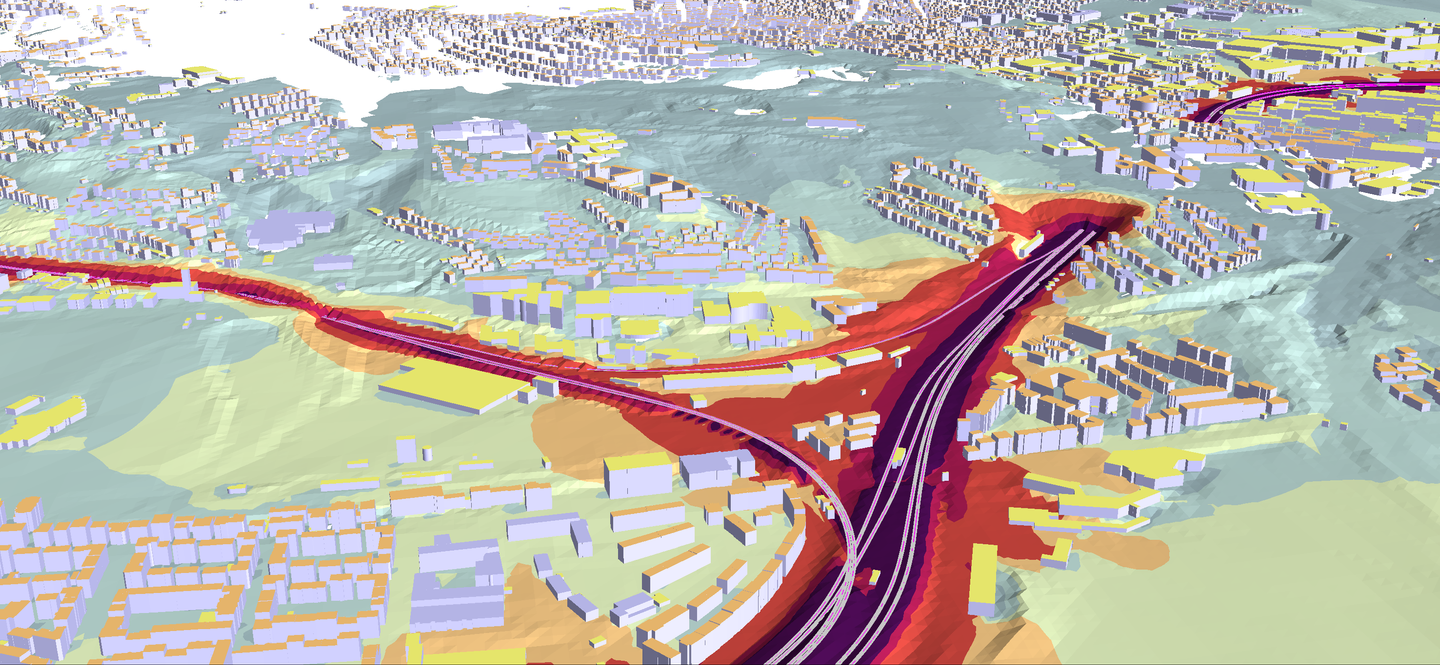
Using acoustic software, it is easy to create quick noise simulations, a variety of tabular outputs and informative noise maps. This means that foundries can assess the impact at different locations, show the loudest sources and assess the dispersion across the location.
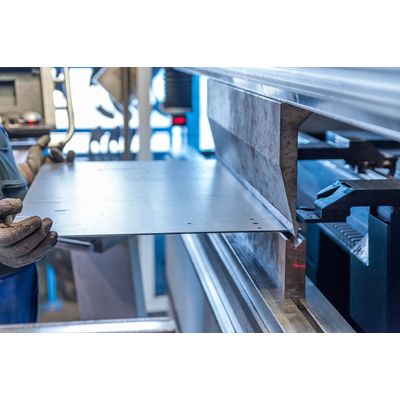
Just as cutting and forming metals is assisted using Computer Aided Design (CAD) and manufacturing (CAM), automation, and robotics; simulation software is available to control noise emissions. This can help ensure the optimisation of shop floor activity, building designs, and operational procedures. The simulation software is also used to minimise noise in the subsequent use of metals in civil engineering and construction projects and automotive sectors, for example.
Data is conveniently entered to create a noise map representing the infrastructure and the buildings involved. Each noise map is unique, according to project size, geography, objectives, the relevant noise sources, but most of all, the data that is available and which can be readily acquired to be imported and used. The data can come from multiple different sources, graphical information systems or other mapping services, , manufacturers’ source specifications, software libraries or any other source.
The impact of noise at work
Industrial noise can cause significant health issues for workers and the potential for litigation against any company not taking the necessary steps to protect their staff. It can also impact on environmental noise levels in public places. Industrial noise emissions come from a wide variety of sources. However, they cannot be categorised easily as every industrial situation is different. This makes evaluation and mitigation much more difficult compared to other noise sources, such as traffic.
Occupational-related hearing loss is one of the most common work-related illnesses worldwide. For example, in the United States, The Center for Disease Control (CDC) estimates that 22 million workers are exposed to potentially damaging noise at work each year.[vi] According to a World Health Organization (WHO) study, 28 million Brazilians have hearing problems, equating to 14% of the population[vii]. The regulatory limit set by countries for occupational noise tends to be 85 decibels (dB) for an 8-hour working day.[viii] Today, we assume that the danger of hearing loss is a given if people are exposed to a noise level of more than that. This risk increases with the magnitude and exposure time and the frequency of the noise; with higher frequencies doing more damage.
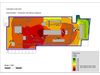
The main problem in noisy processes is finding and documenting where the noise reaches 85 dB. In areas where noise levels exceed 85 dB, workers must wear hearing protection. If areas with noise levels above 85 dB are not clearly marked, companies may be liable to fines. If a plant has areas that may be close to or above 85 dB, it is wise to invest in a noise study to define all areas where hearing protection is required.
Noise mitigation
The software also supports the assessment of different methods to mitigate noise. For example specifying quieter equipment and introducing noise control fixtures such as noise screens. It can also support how the placement of enclosures around loud machinery, and the rearrangement and careful planning of buildings and equipment, may work, including the placement of sound absorbers.
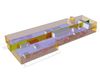
Several variants can be managed in an industrial building or a room, for example to compare different planned sound insulation concepts or the acoustic improvement by enclosing loud machines in a factory hall.
The technology gives you the option of developing ‘what-if scenarios’ so that the impact of developments or activities can be assessed in advance. Different options can be trialled and costed on the computer, rather than having to expensively retrofit noise mitigation measures. Future noise levels can be predicted, and pre-emptive steps taken to control it. With this approach, noise mitigation can be targeted in the most cost-efficient way.
A brighter future
Mechanisms need to be in place to ensure compliance with the tightening up of green policies and procedures. The consequences of not reducing our environmental footprint include increased noise and air pollution with the associated health, safety, and financial impacts.
Using low-noise and well-maintained equipment, or placing a barrier between the worker and noise source are relatively simple steps, but they can have a huge impact on people’s lives. Using noise mapping software gives you the knowledge to accurately identify the most appropriate changes and safeguard your workers, the local community and your business.
www.soundplan.eu
Qualifications of the authors:
Nome: Jochen Schaal
Cargo: Diretor geral da SoundPLAN GmbH
Graduação acadêmica: Diploma de engenharia - Dipl. Ing. (FH)
Nome: Miguel Ángel Mesa
Cargo: Diretor da SoundPLAN para a América Latina
Graduação Acadêmica: Engenheiro químico. M.Sc. em Gerência de Projetos
Contato para detalhes sobre SoundPLAN en Latinoamérica:
Miguel Angel Mesa; proyectos@egssolutions.com.co
References:
[i] (https://www.abifa.org.br/2021-marca-ano-impar-para-industria-de-fundicao-que-inicia-2022-otimista-com-a-amenizacao-dos-efeitos-da-pandemia-na-economia/)
[ii] https://www.globalcompliancenews.com/2021/11/28/brazil-federal-government-launches-green-growth-national-program-15112021/
[iii] https://www.gov.br/mma/pt-br/noticias/brasil-encerra-participacao-na-cupula-do-clima-com-resultados-historicos
[iv] https://www.nature.org/en-us/get-involved/how-to-help/places-we-protect/amazon-rainforest/
[v] World Health Organization ‘World Report on Hearing’ March 2021 https://www.who.int/publications/i/item/world-report-on-hearing
[vi]The Center for Disease Control: https://www.cdc.gov/niosh/topics/noise/default.html
[vii] Audiology Worldwide News https://www.audiology-worldnews.com/awareness/1007-brazilian-hearing-problems
[viii]ISO 1999:2013 https://www.iso.org/standard/45103.html and https://www.osha.gov/noise