


- Home
- Companies
- Ocean Global Non Wovens Pvt Ltd
- Articles
- Non-Woven Geotextile in Sarojini Nagar ...
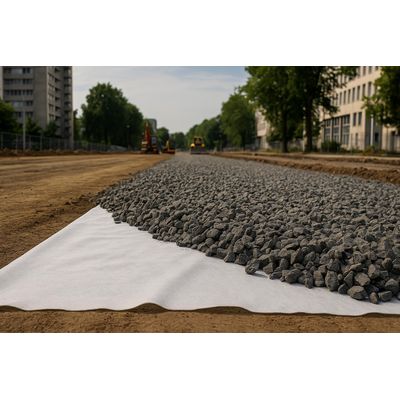
Non-Woven Geotextile in Sarojini Nagar Redevelopment Project
Urban redevelopment in constrained urban environments requires geosynthetics to stabilize soils, improve drainage, and support long-term infrastructure performance. Non woven geotextiles provide filtration, separation, and reinforcement within pavement systems and foundation layers. This case study examines the deployment of Ocean Non Woven Geotextile 150 GSM (Polyester) in the NBCC Sarojini Nagar Redevelopment Project in Delhi to enhance soil stability and drainage efficiency in a large-scale urban infrastructure program.
Project Overview
- Project Name: NBCC Sarojini Nagar Redevelopment
- Location: Sarojini Nagar, Delhi
- Product Supplied: Ocean Non Woven Geotextile 150 GSM (Polyester)
- Quantity Used: 36,000 SQM
The redevelopment required a reliable separation and filtration layer within pavement and foundation systems to improve soil performance and prevent long-term deterioration.
Role of Non Woven Geotextiles in Civil Engineering
Non woven geotextiles are engineered fabrics designed to perform multiple functions within infrastructure systems. They permit water passage while preventing soil particle migration between layers.
In urban projects, non woven geotextiles are commonly used for:
- Road and pavement construction
- Drainage filtration systems
- Foundation stabilization
- Landfill protection layers
By maintaining drainage efficiency and soil separation, geotextiles contribute to improved pavement performance and subgrade stability. The International Geosynthetics Society notes that geotextiles can increase pavement life by improving load distribution and preventing subgrade weakening caused by water infiltration.
Geosynthetics in Infrastructure Applications
Geosynthetics underpin modern infrastructure with applications including:
- Pavement reinforcement — distributed loads and reduced deformation
- Soil stabilization — improved bearing capacity of weak soils
- Erosion control — protection of slopes and embankments
- Drainage improvement — filtration with soil retention
- Environmental protection — protect groundwater and soil from contamination
The Indian Roads Congress (IRC SP 59) recommends geotextiles in road construction to improve pavement durability and reduce maintenance costs.
Site Challenges in Urban Construction
Urban redevelopment presents constrained working space, restricting heavy equipment movement and requiring efficient material placement. Urban soils commonly consist of mixed fill with varying strength; without proper separation layers, aggregates can intermix with subgrade, reducing load-bearing capacity. Monsoon seasons can intensify water infiltration, weakening the subgrade. Geotextiles address these challenges by creating a stable interface between soil and aggregate while preserving drainage performance.
Installation and Quality Control
Successful geotextile installation requires preparation and quality control, including:
- Preparing a smooth, compacted subgrade
- Rolling out the geotextile fabric without wrinkles
- Ensuring proper overlap between sheets
- Protecting the fabric during subsequent aggregate placement
Quality inspections verify the geotextile remains properly positioned and undamaged before subsequent construction layers are placed.
Long-Term Performance and Durability
Polyester non woven geotextiles offer high tensile strength, resistance to biological degradation, and long-term filtration stability. Laboratory studies indicate that geotextiles can maintain their filtration performance for several decades under normal operating conditions.
Maintenance and Lifecycle Benefits
Infrastructure systems incorporating geotextiles typically experience lower maintenance requirements, including:
- Reduced pavement rutting and cracking
- Improved drainage efficiency
- Lower repair and rehabilitation costs
By maintaining soil separation and filtration functions, geotextiles help extend the service life of infrastructure systems.
Conclusion
The NBCC Sarojini Nagar redevelopment project demonstrates how non woven geotextiles contribute to the stability and durability of modern urban infrastructure. By improving soil separation, drainage performance, and load distribution, geotextiles support long-term infrastructure reliability. Ocean Non Wovens continues to supply high-performance geosynthetic materials for major infrastructure projects across India. With manufacturing capability and deep expertise in geosynthetics applications, the company supports contractors, engineers, and developers in delivering durable and efficient infrastructure solutions.
Original: https://oceangeosynthetics.com/non-woven-geotextile-sarojini-nagar/