

OGI: The Foundation of Modern Optical Gas Imaging
OGI, short for Optical Gas Imaging, has become one of the most influential technologies in industrial gas detection. What started as a visual inspection method has evolved into a core capability for safety, emissions control, and regulatory compliance across multiple industries.
Today, OGI is no longer viewed as a standalone camera technique. It is increasingly embedded within broader monitoring architectures, often implemented through integrated ogi systems that combine imaging, analytics, and operational workflows. Understanding OGI at its core is essential to understanding how modern gas monitoring strategies are built.
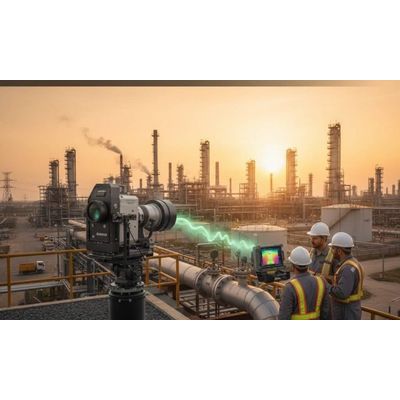
OGI is an optical imaging method that visualizes gas emissions by detecting how specific gases absorb infrared radiation. This allows otherwise invisible gas plumes to appear clearly on screen, enabling operators to locate leaks in real time without physical contact.
Unlike point sensors that measure concentration at a single location, OGI provides spatial awareness. Operators can see where a leak originates, how it moves, and how it interacts with surrounding equipment.
This visual context is one of the main reasons OGI has become a trusted tool in industrial environments.
Before OGI, leak detection relied heavily on handheld detectors, periodic surveys, and indirect measurements. These methods are often slow, labor intensive, and limited in coverage.
OGI introduced several key advantages:
- Non-contact detection from safe distances
- Rapid inspection of complex equipment
- Visual confirmation of emission sources
- Reduced dependence on manual probing
- Improved decision making in the field
These benefits transformed leak detection from a reactive task into a proactive process.
While early adoption focused on handheld cameras, OGI has increasingly been deployed as part of larger detection strategies. In many facilities, OGI now operates within structured ogi systems that support repeatability, documentation, and scale.
In these implementations, OGI imaging feeds data into centralized platforms where detections can be logged, reviewed, and correlated with maintenance and compliance processes. This shift allows organizations to move beyond individual inspections toward consistent monitoring programs.
Oil and Gas Operations
OGI is widely used to detect fugitive emissions from valves, flanges, compressors, and storage tanks. The ability to inspect equipment while it remains operational improves safety and efficiency.
Chemical and Petrochemical Facilities
In environments with hazardous gases, OGI enables remote inspections that reduce worker exposure and support process safety management.
Power Generation
OGI helps identify leaks in fuel systems and auxiliary equipment, supporting reliability and preventing unplanned downtime.
Manufacturing and Industrial Processing
Facilities using compressed or process gases rely on OGI to minimize losses and maintain stable operations.
When OGI is deployed within ogi systems, its value increases significantly. These systems typically combine imaging hardware with data analytics, storage, and reporting tools.
This integration enables:
- Consistent inspection protocols
- Time-stamped visual records
- Comparison of detections over time
- Improved prioritization of repairs
- Stronger audit and compliance support
Rather than functioning as an isolated tool, OGI becomes a continuous source of operational insight.
The effectiveness of OGI depends on several factors, including sensor quality, environmental conditions, and operator expertise. Modern implementations reduce uncertainty by combining imaging with analytics and standardized workflows.
Within ogi systems, automated processing can assist with interpretation, helping teams distinguish between true leaks and benign thermal effects. This improves confidence and reduces false positives.
OGI plays an increasingly important role in environmental and safety programs. Visual evidence produced through OGI inspections supports transparency, internal accountability, and regulatory readiness.
As methane and emissions regulations evolve, documented OGI workflows help organizations demonstrate responsible monitoring practices.
Despite advances in sensors, analytics, and automation, OGI remains the foundation of modern gas imaging. Its ability to make invisible emissions visible provides clarity that no other method fully replaces.
When combined with structured ogi systems, OGI moves beyond inspection and becomes a strategic capability. It supports safer operations, better decisions, and long-term environmental performance.