


- Home
- Companies
- Aimix Group Co., Ltd
- Articles
- PLC-Based Control Mechanism in Modern ...
PLC-Based Control Mechanism in Modern Workshop Overhead Cranes
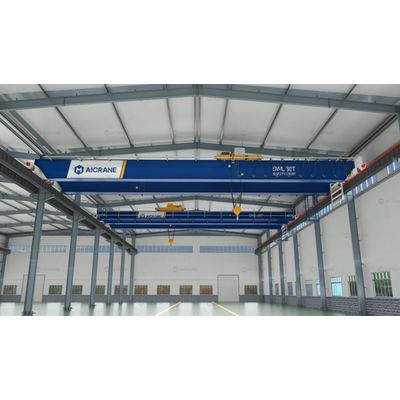
In modern industrial workshops, overhead cranes have become indispensable for the efficient and safe handling of heavy materials. These cranes, whether single girder or double girder types, rely on sophisticated control systems to achieve precise and reliable operation. Among the most advanced and widely adopted technologies in recent years is the Programmable Logic Controller (PLC)-based control mechanism. This article explores the working principle, components, advantages, applications, and future trends of PLC-based control in workshop overhead cranes.
Overview of PLC-Based Control Systems
A Programmable Logic Controller (PLC) is a digital computer designed for industrial automation. Unlike general-purpose computers, PLCs are built to operate reliably in harsh industrial environments with high levels of electrical noise, temperature fluctuations, and mechanical vibration. PLCs are programmed to execute specific control logic and sequence operations for machines, including overhead cranes.
In the context of overhead cranes, a PLC-based control system replaces traditional relay-based or analog control systems. It manages the crane’s main functions, such as hoisting, trolley movement, crane travel, and auxiliary operations, through digital signals and logic programming. This level of automation enhances operational accuracy, safety, and efficiency.
Key Components of a PLC-Based Overhead Crane Control System
A typical PLC-controlled workshop overhead crane system consists of the following core components:
PLC Unit:
The PLC serves as the brain of the crane. It receives inputs from sensors and operator commands, processes logic according to its programmed instructions, and sends output signals to actuators and motors to control crane motion. Modern PLCs often feature modular architectures, allowing easy expansion for additional functions.
Human-Machine Interface (HMI):
The HMI provides operators with a user-friendly interface to monitor and control crane operations. It displays vital information such as load weight, hoist height, trolley position, travel status, and diagnostic alerts. Operators can also input commands, adjust speed profiles, or initiate automated sequences via touchscreen or button panels.
Variable Frequency Drives (VFDs):
VFDs are used to control the speed of the crane’s motors. PLCs communicate with VFDs to regulate acceleration, deceleration, and overall speed of hoists, trolleys, and crane bridge travel. This precise motor control reduces mechanical stress, minimizes load swing, and improves energy efficiency.
Sensors and Feedback Devices:
Modern cranes utilize a range of sensors, including limit switches, encoders, load cells, proximity sensors, and inclinometers. These devices provide real-time feedback to the PLC about crane position, hook height, speed, and load weight, enabling precise control and safety monitoring.
Communication Networks:
PLCs often integrate with industrial communication protocols such as Modbus, Profibus, CANopen, or Ethernet/IP. This allows seamless data exchange between controllers, VFDs, HMIs, and remote monitoring systems, facilitating centralized control and predictive maintenance.
Working Principle of PLC-Based Control in Overhead Cranes
The operation of a PLC-based crane control system follows a logical sequence of sensing, processing, and actuation:
Input Acquisition:
The PLC continuously receives input signals from the HMI and field sensors. For instance, when an operator presses a “hoist up” button, the command is sent to the PLC. Simultaneously, feedback from the load cell or hoist encoder ensures the system knows the current hook position and load weight.
Logic Processing:
The PLC executes pre-programmed logic, which may include safety interlocks, speed ramps, collision avoidance, and load management algorithms. For example, the PLC can limit hoist speed if the load exceeds a certain threshold or prevent travel if the hook is above a maximum safe height.
Output Actuation:
Based on the logic, the PLC sends control signals to the VFDs, contactors, or servo drives that actuate the motors. The hoist motor lifts the load, the trolley motor moves it along the bridge, and the bridge motors travel the crane along the runway. The PLC adjusts motor speed dynamically to maintain smooth motion and minimize load swing.
Feedback and Monitoring:
As the crane operates, sensors continuously send feedback to the PLC, which dynamically adjusts control parameters. Any anomalies, such as overload, motor fault, or limit switch activation, trigger alarms and protective actions automatically.
Advantages of PLC-Based Overhead Crane Control
The transition from conventional relay-based systems to PLC-based control brings numerous benefits:
Precision and Smooth Operation:
PLCs enable fine speed control through VFDs, ensuring gradual acceleration and deceleration. This reduces load sway, prevents material damage, and improves operator confidence during complex maneuvers.
Enhanced Safety:
Safety interlocks, emergency stops, overload detection, and collision avoidance are easily implemented in PLC logic. PLCs can automatically prevent hazardous operations, reducing workplace accidents.
Flexibility and Programmability:
PLC programs can be modified to adapt to different operational requirements without changing the hardware. New features, such as multi-crane synchronization, automated material handling sequences, or remote operation, can be integrated through software upgrades.
Data Logging and Diagnostics:
PLCs can log operational data such as run hours, load cycles, faults, and maintenance schedules. This facilitates predictive maintenance, reduces downtime, and extends the crane’s service life.
Energy Efficiency:
Through precise motor control and load management, PLC systems optimize energy consumption. For example, regenerative braking can be integrated, allowing kinetic energy from lowering loads to be returned to the power system.
Remote Monitoring and Control:
Modern PLCs support networked connectivity, enabling operators or maintenance teams to monitor crane performance remotely. Cloud-based analytics can further enhance preventive maintenance and operational planning.
Applications in Modern Workshops
PLC-based electric overhead travelling cranes are employed in various industrial settings where precision, safety, and productivity are critical:
- Steel and Metal Fabrication Workshops: For handling heavy steel beams, coils, and fabricated structures with minimal human intervention.
- Automotive Manufacturing Plants: Where high-speed, synchronized crane operation is required for assembly line support.
- Precast Concrete Production: For lifting and transporting heavy concrete panels and molds with precise positioning.
- Shipbuilding Yards: To lift massive hull sections or ship components safely and efficiently.
- Power Generation Facilities: For handling turbines, generators, and heavy equipment during assembly and maintenance.
Challenges and Considerations
While PLC-based systems offer significant advantages, they also present challenges:
- Initial Investment: PLC-based systems are more expensive than conventional control systems, including costs for PLC units, HMIs, VFDs, and sensors.
- Programming Expertise: Skilled personnel are required to develop and maintain PLC programs. Improper programming can compromise safety and efficiency.
- Integration Complexity: Retrofitting an existing crane with PLC control requires careful planning and engineering, especially for older mechanical systems.
- Maintenance Requirements: Although PLCs reduce mechanical wear, electronic components still require periodic checks, firmware updates, and backup protocols.
Future Trends
The future of PLC-based control in overhead cranes is closely linked to Industry 4.0 and smart manufacturing:
- IoT Integration: Cranes equipped with PLCs and IoT sensors can transmit operational data to centralized platforms for real-time monitoring, predictive maintenance, and fleet management.
- AI-Assisted Operations: Artificial intelligence can be used alongside PLCs to optimize load paths, reduce cycle times, and predict component failures.
- Autonomous Cranes: Fully automated crane systems, guided by PLCs and machine vision, are becoming feasible in high-volume manufacturing and logistics facilities.
- Energy Recovery Systems: Advanced PLC algorithms will enable better energy recovery during load lowering and dynamic braking, contributing to sustainable operations.
Conclusion
PLC-based control mechanisms have revolutionized modern workshop overhead cranes by providing precise, safe, and flexible operation. From handling heavy industrial loads to integrating with smart factory networks, PLCs have proven to be essential for optimizing crane performance and enhancing workplace safety. Despite the higher initial investment and need for specialized programming, the long-term benefits—including reduced downtime, improved efficiency, and adaptability—make PLC-based systems the standard for modern industrial material handling. As technology advances, these systems are expected to become even smarter, more connected, and more capable, paving the way for autonomous and highly efficient overhead crane operations in the workshops of the future.