

- Home
- Companies
- Aimix Group Co., Ltd
- Articles
- Remote Control of Electric Mooring ...
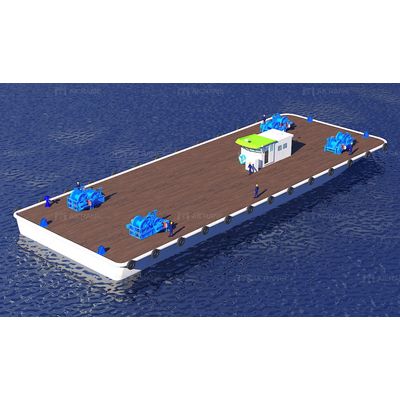
Remote Control of Electric Mooring Winches: Enhancing Efficiency and Safety
The maritime industry has witnessed significant advancements in technology and equipment aimed at improving safety, efficiency, and operational capabilities. One such innovation that has gained prominence is the ability to control electric mooring winches remotely. This feature offers numerous advantages for maritime operations, allowing for precision, safety, and ease of use. In this article, we will explore the capabilities and benefits of remote control for electric mooring winches and its impact on the maritime industry.
The Evolution of Remote Control in Maritime Operations
Remote control systems have become increasingly integral to maritime operations in recent years. Advancements in technology have allowed for the development of sophisticated remote control interfaces that enhance the efficiency and safety of various maritime equipment, including marine electric mooring winches.
The ability to control winches remotely provides operators with a higher level of precision, which is essential in tasks that require careful handling, such as mooring, anchoring, and cargo handling. Furthermore, remote control minimizes the need for manual labor in challenging or hazardous conditions, reducing the risk of accidents and injuries. These systems have the potential to revolutionize the way maritime operations are conducted and contribute to safer and more efficient practices.
Key Features of Remote Control for Electric Mooring Winches
Precision Control: Remote control systems for electric mooring winches offer precise control over the winch's operation, allowing operators to adjust tension, direction, and speed with accuracy. This level of control is essential for safely and effectively securing vessels during mooring and anchoring operations.
Enhanced Safety: Remote control eliminates the need for operators to be in close proximity to the winch, reducing the risk of accidents and injuries associated with manual handling. Operators can control the winch from a safe distance, improving safety in hazardous conditions.
Ease of Use: Remote control interfaces are designed to be user-friendly and intuitive. They typically feature touchscreens or joystick controls that are easy for operators to navigate, even in challenging weather conditions.
Multi-Functionality: Many remote control systems for electric mooring winches offer multi-functionality, allowing operators to control multiple winches or other equipment simultaneously. This streamlines operations and reduces the need for separate control stations.
Benefits of Remote Control for Electric Mooring Winches
Improved Safety: Safety is paramount in the maritime industry, and remote control systems for electric mooring winches play a significant role in enhancing safety. By reducing the need for personnel to be in close proximity to heavy loads and potentially hazardous areas, the risk of accidents and injuries is significantly reduced.
Precision and Control: Remote control systems offer a level of precision and control that is challenging to achieve with manual winch operation. Operators can make real-time adjustments to the winch's speed and direction, ensuring that mooring lines are secured precisely and efficiently.
Increased Efficiency: Efficiency is a key driver in the maritime industry, and remote control systems for electric mooring winches contribute to faster and more efficient operations. Vessels can be secured and released more quickly, leading to reduced turnaround times in ports and harbors.
Versatility: Remote control systems are adaptable and can be integrated with various winch configurations and types, including single-drum, double-drum, or multi-drum setups. This versatility ensures that they can be utilized in a wide range of maritime applications.
Improved Operator Comfort: Operators benefit from remote control systems by being able to perform tasks from a more comfortable and secure location. This can help reduce operator fatigue and enhance overall well-being.
Enhanced Environmental Responsibility: The reduced risk of accidents and the prevention of equipment damage associated with remote control contribute to environmental responsibility in the maritime sector. It helps prevent oil spills or other forms of pollution that can result from accidents during manual winch operation.
Applications of Remote Control for Electric Mooring Winches
Mooring Operations: Remote control is particularly valuable in mooring operations, where precision and safety are critical. Whether securing a vessel to a dock or a buoy, operators can control the winch remotely, ensuring the vessel is safely and securely anchored.
Anchor Handling: Remote control simplifies anchor handling operations, allowing operators to control the winch from the vessel's deck while monitoring the anchor's position and tension.
Cargo Handling: In cargo ships and ports, remote control systems enable operators to load and unload cargo more efficiently. The ability to precisely control winch operations is essential when handling heavy and sensitive cargo.
Salvage Operations: Remote control is a valuable asset in salvage operations, where equipment needs to be recovered or repositioned underwater. Operators can control the winch from the surface, improving the efficiency and safety of these challenging tasks.
Offshore Platforms: Remote control systems are used extensively in offshore platforms, where they enable operators to control winches for various tasks, such as lowering and raising equipment and securing vessels to the platform.
Challenges and Considerations
While remote control for electric mooring winches offers substantial benefits, there are some challenges and considerations to keep in mind:
Reliability: Remote control systems must be highly reliable to ensure the safety and efficiency of maritime operations. Adequate redundancy and backup systems are essential to address any potential system failures.
Cybersecurity: With the increasing use of digital interfaces and connectivity, the cybersecurity of remote control systems is a concern. Protecting these systems from potential cyber threats is crucial to maintaining the security of maritime operations.
Operator Training: Operators must receive proper training to use remote control systems effectively. Training should cover system operation, emergency procedures, and the ability to troubleshoot common issues.
Maintenance: Remote control systems, like any technology, require regular maintenance and periodic inspections to ensure their reliability and safety.
Conclusion
Remote control systems for electric mooring winches are a transformative technology in the maritime industry. They offer a wide range of benefits, including improved safety, precision, efficiency, and environmental responsibility. These systems have the potential to revolutionize the way maritime operations are conducted, from mooring and cargo handling to salvage and offshore platform tasks.
As technology continues to advance, remote control systems for electric mooring winches are likely to become more sophisticated and integrated with other aspects of vessel control and management. By embracing these advancements, the maritime industry can enhance its operational capabilities and contribute to a safer and more efficient maritime environment.