
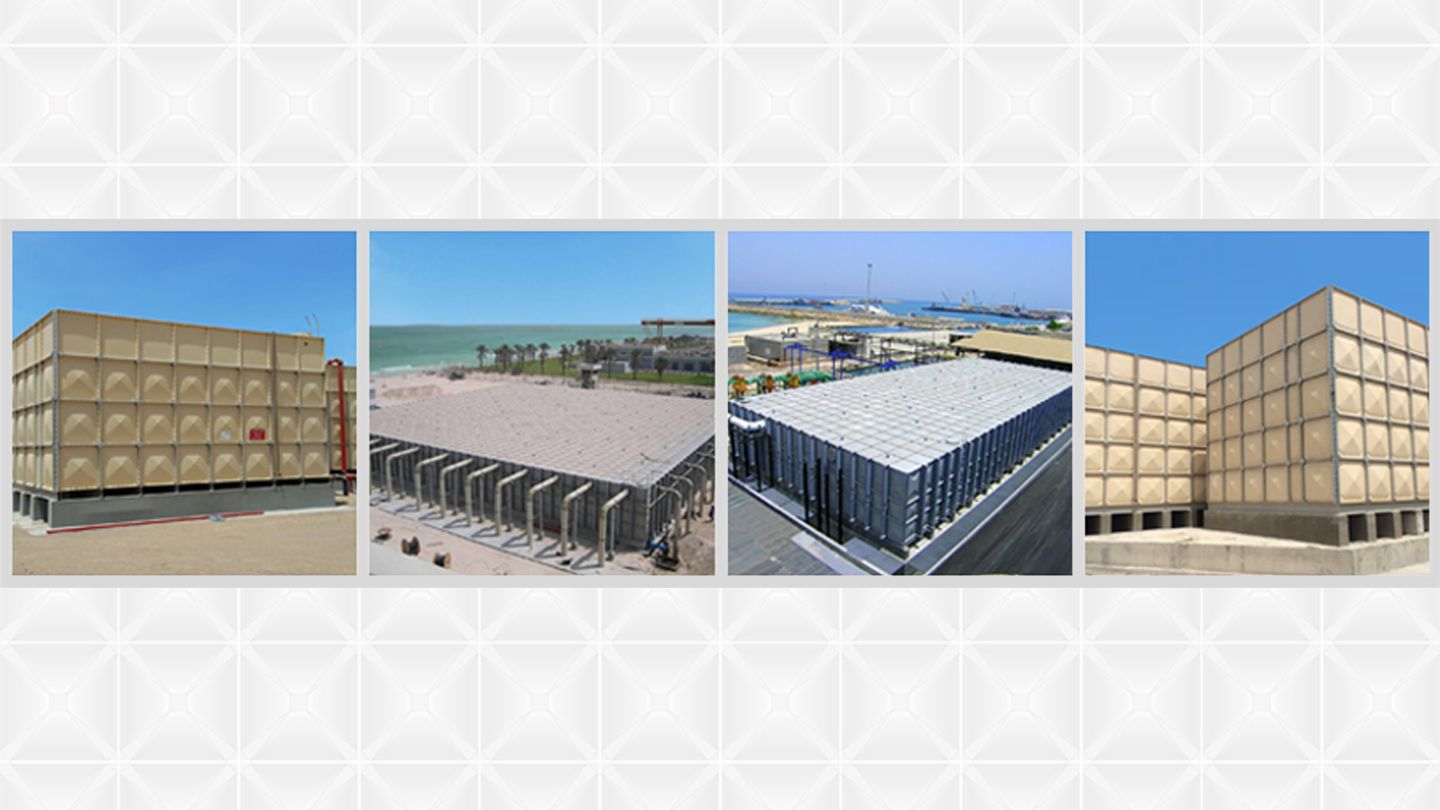

- Home
- Companies
- SOLICO TANKS
- Articles
- Revolutionizing Data Center Cooling: ...
Revolutionizing Data Center Cooling: Why GRP Panel Type Water Tanks Are the Ultimate Solution for Efficiency and Reliability
Introduction:
In the digital age, data centers form the backbone of global connectivity, housing critical infrastructure that supports everything from cloud storage to real-time communication. As these facilities expand in both size and capacity to meet escalating data demands, maintaining an optimal environment for servers becomes paramount.
Among various operational challenges, efficient cooling emerges as one of the most crucial. Without proper temperature control, data center equipment risks overheating, which can lead to hardware failures, downtime, and significant financial losses.
One solution that addresses these cooling challenges effectively is water-based cooling systems, supported by robust water storage solutions. In particular, GRP (Glass-Reinforced Plastic) panel-type water tanks have become essential for ensuring stable and efficient cooling in data centers.
These tanks are recognized for their durability, energy efficiency, and customizability, making them reliable partners in data center infrastructure. This article explores the role of GRP panel tanks in data center cooling solutions, delving into their technical advantages, operational benefits, and why they stand out as the ideal choice for modern data center environments.
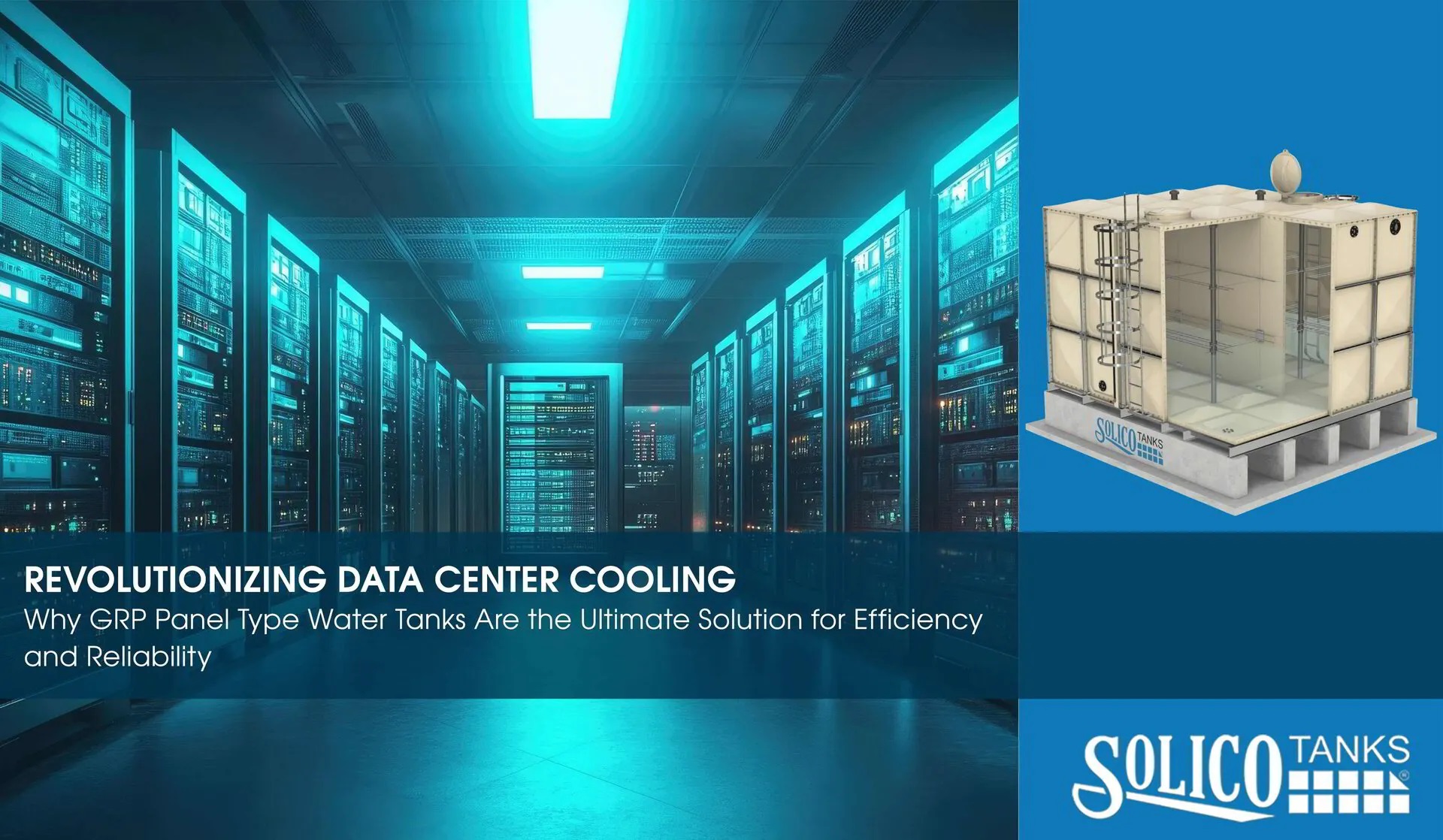
Data centers are complex facilities packed with servers, networking devices, storage systems, and other equipment, all of which produce significant heat during operation. As the data center industry evolves to accommodate large-scale cloud computing and AI workloads, these heat outputs are increasing. Without effective cooling mechanisms, temperatures inside data centers could reach levels that jeopardize equipment performance and longevity.
- Excessive heat poses a direct threat to data center components, leading to:
- Decreased Performance: Elevated temperatures slow down processing speeds and can cause software malfunctions.
- Increased Hardware Wear and Tear: Higher temperatures accelerate the degradation of electronic components, reducing their operational lifespan.
- Higher Risk of Downtime: Uncontrolled heat can result in server shutdowns, leading to costly downtime and loss of business continuity.
As the demand for data centers grows, so does the demand for cooling solutions that are both cost-effective and sustainable. Cooling systems are typically responsible for 30%–40% of a data center`s energy consumption, prompting the industry to adopt innovative solutions that minimize energy use.
Among the primary cooling trends, water-based cooling stands out for its ability to manage higher thermal loads with greater efficiency than traditional air cooling.
Water’s high thermal conductivity and specific heat capacity make it a highly effective medium for heat transfer. Unlike air cooling, water-based systems offer precise temperature control, are more energy-efficient, and can handle greater heat densities.
These factors have led to an increase in the use of water-based cooling solutions in data centers, including chilled water and liquid immersion cooling systems.
Conventional air cooling systems have limitations in large data centers where heat output is considerable. Air cooling requires substantial energy input to manage high-density data racks, and it often falls short of maintaining uniform temperatures throughout the facility. Moreover, as data centers expand, the limitations of air cooling become apparent, resulting in uneven cooling, higher operational costs, and increased environmental impact.
In this context, water-based cooling—backed by reliable water storage solutions such as GRP panel-type water tanks—has become a preferred alternative, offering consistent cooling performance and contributing to the overall energy efficiency of the data center.
Cooling systems are integral to data center operations, preventing overheating, optimizing performance, and reducing energy consumption. Data centers employ various cooling techniques, and the choice often depends on the facility`s size, location, and energy requirements.
- Air Cooling: Uses airflow to dissipate heat, usually involving Computer Room Air Conditioners (CRACs) or Computer Room Air Handlers (CRAHs). While air cooling has been a mainstay, it often lacks the efficiency needed for high-density data centers.
- Liquid Cooling: Involves transferring heat through liquid coolants, which can absorb and move heat more efficiently than air. This method has gained popularity for its efficiency and adaptability to modern, high-density server setups.
- Immersion Cooling: Submerges servers in non-conductive cooling liquids, offering direct heat dissipation without the need for airflow. Though highly effective, it’s generally used for specific applications due to the high setup costs.
Water-based cooling systems are highly effective in managing the thermal demands of large data centers. Using water as a cooling medium allows for:
- Higher Efficiency: Water has a higher heat transfer rate than air, enabling quicker and more effective cooling.
- Scalability: Suitable for both small and large-scale applications, adapting well to growing infrastructure.
- Lower Environmental Impact: Water cooling requires less energy and produces less waste heat compared to traditional air cooling methods.
Water tanks are crucial components in water-based cooling systems, serving as reservoirs for the water needed in various cooling processes. These tanks must be durable, efficient, and capable of maintaining water quality to ensure uninterrupted operation. This is where GRP panel-type water tanks excel, as they offer a reliable and flexible solution that aligns with the rigorous demands of data center cooling.
GRP (Glass-Reinforced Plastic) panel-type tanks are specially designed for water storage, providing a unique combination of durability, modularity, and water safety. Made from a composite material that combines fiberglass with a polymer matrix, GRP tanks offer advantages that are particularly beneficial in data center applications.
- Durability and Longevity: GRP tanks are resistant to corrosion, weather elements, and chemical degradation, making them suitable for long-term use in high-demand environments like data centers.
- Modularity and Scalability: GRP panel tanks are highly adaptable, with modular panels that allow customization to fit specific site dimensions and capacities. This scalability is essential in data centers, where cooling needs may grow alongside infrastructure expansion.
- Water Quality and Safety: The non-toxic and corrosion-resistant properties of GRP prevent contamination, ensuring the storage of clean water. This is crucial for maintaining consistent cooling performance and reducing risks related to bacterial growth.
- Thermal Insulation: GRP tanks offer excellent thermal insulation, which helps in maintaining the water at an optimal temperature and reduces energy requirements for cooling. This feature significantly contributes to lower operational costs and enhanced energy efficiency.
Data centers require water storage solutions that can integrate seamlessly with cooling systems, offering reliability and efficiency. GRP panel tanks meet these demands by delivering:
- Operational Efficiency: GRP tanks’ low maintenance requirements translate to fewer operational interruptions and reduced maintenance costs.
- High Load Capacity: These tanks are designed to withstand substantial internal and external pressures, making them suitable for large-scale data center applications.
- Eco-Friendly Solution: The materials used in GRP tanks are more sustainable than those in traditional water tanks, aligning with modern data centers’ environmental objectives.
Employing GRP panel-type water tanks in data center cooling solutions yields significant operational, environmental, and financial benefits:
1. Reduced Energy Consumption
- GRP tanks’ inherent thermal insulation reduces the need for energy-intensive cooling processes, resulting in lower energy costs.
- Insulated tanks help maintain stable water temperatures, enabling efficient heat transfer and reducing the load on cooling equipment.
2. Low Maintenance Requirements
- GRP tanks are designed to resist corrosion, scaling, and biofilm formation, which are common issues in traditional water tanks.
- The smooth internal surfaces of GRP tanks minimize buildup, reducing the need for frequent cleaning and maintenance.
3. Scalability and Flexibility
- The modular nature of GRP panel tanks allows for easy expansion and reconfiguration, adapting to changing cooling demands as data centers grow.
- GRP tanks can be relocated if necessary, offering unmatched flexibility for evolving infrastructure needs.
Real-world studies and industry reports indicate that using GRP tanks in cooling systems can improve efficiency by up to 30% compared to traditional water storage solutions, providing a compelling case for their adoption in high-demand environments.
When selecting a water storage solution for data center cooling, it’s essential to evaluate key performance factors, including durability, maintenance, and energy efficiency. Here’s how GRP tanks compare to conventional options:
In comparing GRP panel-type water tanks with traditional water storage options like steel, concrete, and plastic tanks, several critical factors highlight the advantages of GRP tanks, especially for data center cooling systems:
1. Durability: GRP tanks are highly resistant to corrosion and withstand various environmental stresses, making them ideal for long-term water storage. Steel tanks, by contrast, are prone to rust, especially in high-humidity environments, and concrete tanks can develop cracks due to weathering over time. Plastic tanks, although resistant to rust and corrosion, are susceptible to deformation and may not handle high temperatures or pressures as well as GRP tanks.
2. Maintenance: GRP tanks require minimal maintenance thanks to their corrosion-resistant surfaces, which prevent scaling and biofilm buildup. Steel tanks demand regular anti-rust treatments, while concrete tanks incur more costs with age, needing repairs to avoid leaks. Plastic tanks require less maintenance than steel or concrete, but their susceptibility to UV degradation means they may need replacements or repairs sooner than GRP tanks.
3. Energy Efficiency: GRP tanks offer excellent thermal insulation, keeping water temperatures stable and reducing the load on cooling systems. Steel tanks typically lack adequate insulation, leading to higher energy demands, while concrete tanks require thick walls for insulation, which increases costs. Plastic tanks provide moderate insulation but lack the structural stability needed for optimal performance in high-demand environments.
4. Environmental Impact: GRP tanks are manufactured with eco-friendly materials, resulting in a smaller carbon footprint than steel or concrete tanks, which have higher energy demands for production and installation. Plastic tanks are often recyclable, but their production and disposal have environmental drawbacks, especially due to plastic waste concerns.
In summary, GRP tanks offer a highly durable, low-maintenance, and environmentally conscious solution compared to steel, concrete, and plastic tanks, making them an excellent choice for data center cooling systems.
This comparison illustrates that GRP tanks provide a reliable, low-maintenance, and environmentally friendly water storage solution, making them an ideal choice for data center cooling systems.
GRP tanks emerge as the superior choice for data centers, providing a reliable, low-maintenance, and eco-friendly alternative that aligns with the sustainability goals of modern infrastructure.
Solico Tanks is a leader in the manufacture and supply of GRP panel-type water tanks, recognized for quality, innovation, and exceptional customer service. With extensive experience in providing customized water storage solutions for data centers, Solico Tanks ensures that every tank meets the highest standards of durability, safety, and efficiency.
- Commitment to Quality: Each Solico tank is crafted with precision and quality materials, ensuring reliable, long-lasting performance.
- -Tailored Solutions: Solico’s team works closely with clients to design tanks that meet the specific requirements of data center environments, whether for high-capacity cooling or restricted spaces.
- Unmatched Durability and Insulation: Solico GRP tanks are built to withstand extreme conditions, minimizing the need for maintenance while delivering optimal thermal efficiency.
With a proven track record in data center cooling applications, Solico Tanks is the trusted partner for infrastructure developers, contractors, and MEP engineers who seek efficient and durable water storage solutions.
In the quest to optimize data center cooling, GRP panel-type water tanks offer unmatched durability, efficiency, and adaptability. By choosing reliable water storage solutions like those provided by Solico Tanks, data centers can achieve stable, cost-effective, and sustainable cooling.
For data center infrastructure experts, contractors, consultants, and MEP engineers, partnering with Solico Tanks ensures a seamless integration of high-quality water storage solutions into your cooling systems. Contact Solico’s sales team today to discover how we can meet your data center cooling needs and support your infrastructure goals with top-tier GRP panel tanks.