


- Home
- Companies
- Senix – a division of BinMaster Sensors ...
- Articles
- Senix's Ultimate Ultrasonic Sensor ...
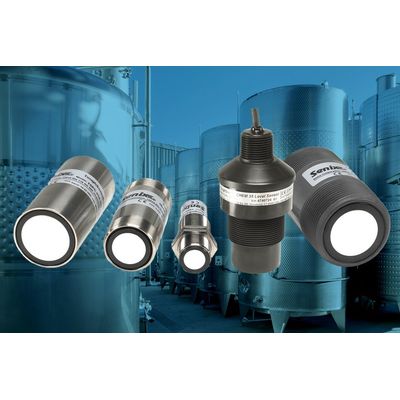
Senix's Ultimate Ultrasonic Sensor Selection Guide
Due to their unique operational characteristics, Senix ultrasonic distance measurement sensors find use in a wide range of industrial and scientific applications where measuring without making physical contact is critical. As a result, Senix produces several variations of sensors to meet different measurement requirements and restrictions.
While this broad selection makes it possible for customers to find a sensor that suits their unique application, it can also make it more difficult to determine which one is right. Fortunately, we're here to help!
Ultrasonic sensors measure the distance to a remote object through the air without physically touching it. They determine this value by emitting high-frequency soundwaves toward the object being measured, then receive the reflected wave and calculate the time between emission and reception.
The Senix sensor you choose for your application should fulfill the demands of your application: whether you need stainless-steel sensors for corrosive environment operations, cross-talk-resistant sensors for multi-sensor operations, or wireless-enabled sensors for remote operations.
Typical applications for Senix ultrasonic sensors include:
- Water Monitoring: Measures levels of water to facilitate irrigation, stream, river, canal and sea monitoring; used in flood and tsunami warning operations
- Tank Level Monitoring: Measures level of materials within a tank to calculate the current volume and indicate if—and when—the tank needs to be refilled
- Distance Ranging: Measures distance to an object for dimensioning, positioning, and object ranging operations
- Object Detection: Detects whether an object is present within a specific distance window, rather than the distance between them and an object
- Hydrofoil & Nautical: Calculates the flying height of hydrofoil and other types of boats
- Civil Engineering: Provides vehicle positioning, tank level measurements for road resurfacing, road surface irregularity detection; monitors structural integrity
In all of these applications, it is important to consider the chemical characteristics of the object being measured when choosing the sensor design and construction. For example, if water is being measured, a ToughSonic-100 general-purpose sensor may suffice.
On the other hand, if a strong chemical is being measured, a more chemical-resistant ToughSonic-200 model may be more appropriate.
If a sensor is too close to an object, it may not be able to measure the distance accurately. If a sensor is too far from an object, it may not detect the object at all. The sensor chosen for a distance measurement application must be properly rated for the expected minimum and maximum measurement distances.
Factors to consider when determining the useful operating range required (i.e., the material window) include:
- Material State: Liquids and solids behave differently when hit with soundwaves, which results in different interactions with ultrasonic sensors
- For liquid measurement applications, we recommend choosing a sensor with a range that is at least 25% greater than the expected maximum measurement distance
- For dry measurement applications, we recommend a sensor with a range that is at least 50% greater than the expected maximum measurement distance
- Size, Shape, and Orientation: The size, shape, and orientation of the material affect the maximum distance at which it can be detected
- Large, flat water surfaces are among the easiest to detect at a distance
- Curved or granular objects are harder to detect at a sensor’s maximum range
Senix sensors are available with a maximum measurement distance of about 50 feet. Different models offer different maximum measurement distance ranges—e.g., general-purpose (50 feet) and chemical (35 feet).
Sensor outputs are set based on the measurement reading or, in override conditions, the lack of a detected target or user-selected response algorithms. Senix ultrasonic sensors can provide one or more simultaneous outputs to various connected devices: computers, displays, programmable logical controllers, and similar devices.
The output options available are:
- Analog: Voltage or current output signals vary proportionally to the measured distance
- Switch/Relay: Switch outputs turn on or off at set distances to start and stop certain external actions or indicators at predetermined distances
- Serial Data: Output data is transmitted sequentially to a connected device
When choosing between these three output options, it is important to consider the type of system you are plugging the sensor into and the devices connected to the sensor.
Ultrasonic sensors can offer reliable distance measurement performance in a variety of industrial environments. However, they must be engineered to withstand the conditions found in that environment.
Some of the environmental factors to consider when choosing an ultrasonic sensor include:
- Temperature: The speed of sound varies depending on temperature, which can affect the accuracy of the distance measured between the sensor and the targeted object
- Weather: Ice, snow, dust, mud, and other environmental material buildup can block the sensor face, which can prevent the ultrasonic soundwaves from being transmitted or received
- ToughSonic sensor models are constructed with full epoxy potting, UV-shielded cables, and IP68 / NEMA-4X / NEMA-6P stainless steel or polymer housings to ensure durability in harsh outdoor environments
- Protected against dust and water ingress
- Pressure/Vacuum: Ultrasonic sensors are not designed for use in high-pressure or vacuum applications
- Ultrasonic Noise: Ultrasonic noise generated by nearby equipment can interfere with measurement operations
- I.e: Air nozzles, pneumatic valves, and ultrasonic welders
- Computable programmable models can be configured to ignore these effects
Senix specializes in designing, manufacturing, distributing, and supporting high-quality ultrasonic sensors.
We're equipped with over 35 years of experience supplying sensors to OEMs worldwide and have the expertise to help customers identify the right product for their needs.
Ultrasonic sensors play an essential role in a wide range of non-contact distance measurement applications. For sensors you can rely on in your most critical operations, turn to the experts at Senix.