
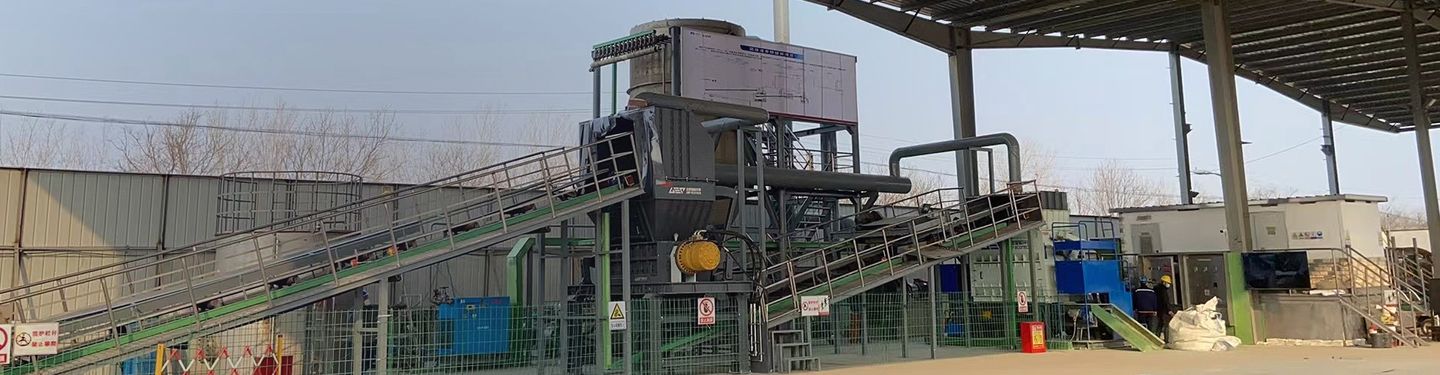

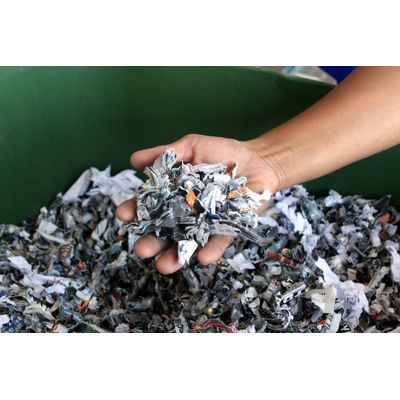
Solid Waste Shredders for Sale
Waste shredders are machines utilized in recycling and waste processing applications. They can reduce various waste materials that differ in dimensions, sort, weight and composition to uniform shape and size for more efficient processing, storing and transportation.
Solid Waste Shredder Application
Process multiple materials
Bulky waste, commercial and industrial waste, municipal solid waste, construction and demolition waste, biomass, wood, baled materials.
Diverse applications
Refuse-derived fuel (RDF) production, biomass processing, waste-to-energy plants (WtE), mechanical biological treatment plants (MBT).
Sizes and capacities range from small to large depending on the requirements.
Reduce the pre-processed waste to even more precise and uniform shape.
Reliable waste shredders for various materials and applications
Waste shredders are designed for processing different solid waste materials. Many are in use in applications such as refuse-derived fuel (RDF) production, biomass processing, waste-to-energy plants (WtE), and in mechanical biological treatment plants (MBT).
Waste shredders can reduce the size of multiple waste types such as bulky waste, commercial and industrial waste, municipal solid waste, construction and demolition waste, biomass, wood, as well as baled materials.
Waste shredders increase output and cut costs in many applications
Biomass power plants and biomass production
Biomass is an organic energy source that can be anything from forestry to agricultural residues. It is an attractive fuel for operators of incineration facilities who are keen to reduce their overall carbon emissions.
Waste shredders are commonly used to improve the quality of biomass – to make the organic fuel consistent and optimal in size and shape for maximal energy production.
Refuse-derived fuel production
Waste is a potential source of energy for various manufacturing and processing plants. Refuse-derived fuel (RDF) is a solid fuel that can be combusted to generate energy. RDF is made from mixed waste, and it is a common energy source for example in Waste-to-Energy plants (WtE), gasification plants and cement kilns.
Waste shredders are often utilized RDF production to reduce the mixed waste to a homogenous size and shape that improves combustion and maximizes the energy output from the waste fuel.
Waste-to-Energy plants
As the name suggests, Waste-to-Energy plants (WtE) use waste as the main energy source. The waste fuel can be produced from almost any type of waste like bulky waste, municipal solid waste, commercial and industrial waste, wood, construction and demolition waste, biomass, or baled materials like straw.
In WtE plants waste shredders are used to reduce the mixed waste to an optimal grain size and to generate a consistent flow for maximized energy output by incineration.
Recycling centres and transfer stations
Like most materials, waste is usually expensive to transport. By nature, residue, garbage and leavings are often awkwardly sized and heavy, which makes it difficult to pack the waste tightly. Bulky objects require more space and increase transportation costs. Due to this reason, recycling centres and transfer stations are normally located as close as waste collection points as it is regulatory possible.
Waste shredders are often used in these facilities to reduce the collected waste to a homogenous and manageable size. Smaller-sized waste can then be transported in larger volumes to other locations which makes relocating easier and reduces transportation costs.
Mechanical Biological Treatment
Mechanical Biological Treatment (MBT) facility is a waste processing plant that combines sorting and biological treatment like digestion and composting. Three most common outputs of an MBT plant are recyclables like plastics and metals, materials used for land reclamation, and waste fuels like refuse-derived fuel.
In MBT plants, waste shredders reduce the mixed waste to a homogenous and manageable size that is easier to sort, digest and compost. Thanks to shredding, both the mechanical and biological processes are more efficient, resulting in increased profitability.