
- Home
- Companies
- Ecological Laboratories, Inc. (ELI)
- Articles
- Successful Applications of ...
Successful Applications of Bioaugmentation for Reducing Sludge Output from Biological Wastewater Treatment Plants and Anaerobic Digestors Case Study
Abstract: One of the major costs associated with the operation of biological wastewater treatment is the handling and disposal of sludges generated primarily in the conversion of soluble organics as measured by BOD/COD into either carbon dioxide (aerobic) or methane (anaerobic), water and bacterial cells. Often times the sludge generated in either of these processes may be subsequently treated in a digestor to reduce the volatile suspended solids (VSS) volume for disposal. Bioaugmentation with certain microbial consortia has been shown to lower the generation of solids in both aerobic and anaerobic wastewater processes by reducing the yield coefficient (y), as well as enhancing the efficiency of digestors designed to reduce the volume of solids for disposal.
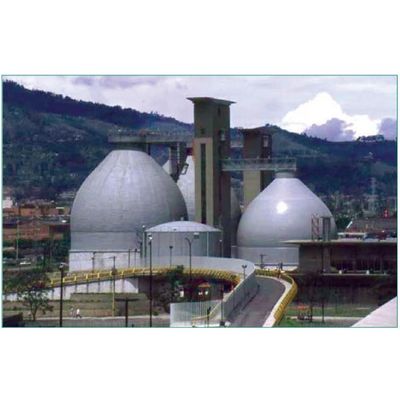
This paper will detail the use of MICROBE-LIFT®/IND, a liquid microbial product, which has been shown to reduce the generation of sludge in: aerobic biological wastewater systems in Austria and Holland; and, to improve the efficiency of anaerobic digestors in Korea, Israel and Colombia. Sludge reduction ranged from 15% to almost 40% and was observed in all applications. In some cases, the improved system efficiency allowed the system to handle additional loadings without physical expansion; while generating significant savings in handling, chemical usage and disposal costs over and above the cost for bioaugmentation. In addition to presenting the statistical data this paper will also propose biochemical mechanisms for how these results are achieved through an analysis of the biochemical processes involved in all of these systems.
Keywords: Aerobic biological treatment, anaerobic biological treatment, anaerobic digestor, bioaugmentation, sludge handling and disposal costs, and sludge reduction.
Background: Since the development of the activated sludge process, suspended growth biological wastewater treatment systems have become the predominant form of secondary treatment for removal of dissolved organics. The primary reason for this is that these systems are generally the most economical way to treat large quantities of polluted water with respect to organic removal.