

Tackling Water Infrastructure Challenges by Moving Towards Smart Water Networks
It might surprise you to hear, but there is one particular reason I’m grateful for limited travel this year. The move from in-person to virtual events afforded an opportunity to attend the SWAN 10th Annual Conference. This was my first experience participating in the well-known congress and it did not disappoint. I found many presentations that have enriched my work as a researcher in the field of water infrastructure engineering and I invite you to read my takeaways from the panellists’ practical experiences in the context of the digital water network.
My expertise is in developing optimisation models for solving real-world water distribution network problems. This is a nonlinear and complex challenge, where a singular global solution is inaccessible, however, near-optimal solutions are still obtainable for every problem. The Conference highlighted diverse water industry experts who shed new light on the aforementioned issue, and I am hopeful that by moving towards smart water networks we are closer than ever before to a global solution.
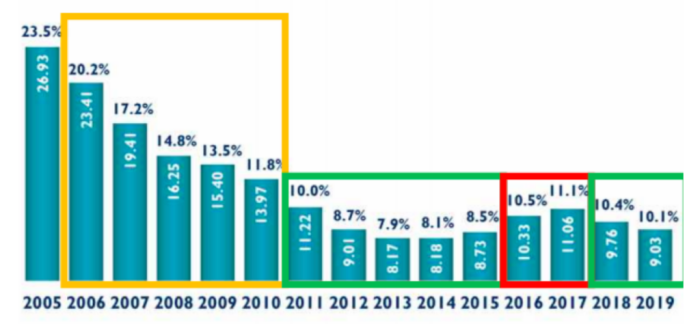
The panel “The Good, The Bad, and the Leaky” focused on leak detection management and offered sustainable and continuous solutions to control and investigate Non-Revenue Water (NRW) reduction. I understood how monitoring network performance data could effectively help identify critical sections of a large pipe network to cope with this challenge. For instance, by implementing mature and successful DMA network monitoring with support software, the utility can control active leaks and provide enhanced network management, improved resilience and greater diagnostics. Andrew Donnelly (Head of Leakage Management, EPAL) illustrated this by referencing research from 2005 to 2019 on District Metered Areas (DMA) and Temporary Monitoring Zones (TMZ).
Arik Mula (CEO, Mei Shikma) and Waseem Khan (Senior Engineer, PUB) shared their success with adopting new technologies for pipe leak monitoring and detection (e.g. acoustic sensors, micro-tunnelling, etc.), and shared their effectiveness, which begged the question of smart placement.
While common sense could be an answer, Pete Daykin’s (CEO, Wordnerds) presentation suggested the voice of customers as valid data for significantly helping operators identify and fix leaks. It turns out that using advanced metering infrastructure (AMI) is not only about the meter readings but also about analysing the data. Using text analysis software, Wordnerds was able to uncover the issues that caused the most damage to customer sentiments to help utilities improve the customer experience. This is further proof that the quantity and quality of data, with consequent analytics, should be the main driving force for change.
In the panel on “Next Generation Wastewater Management,” there was a key agreement on the power of digital transformations. Javier Garcia del Rio (Automation and Instrumentation Coordinator, Canal de Isabel II, S.A.) suggested that digital transformations enable optimisation by leading to greater efficiencies in the economy and better governance. This was supported by Perttu Saarinen (Automation Engineer, HSY) who introduced an integrated approach to using data to develop operations in a wastewater network and creating a comprehensive smart water platform to connect utility customers.
The benefits of automation were also discussed by Michelle Aguilar (CTO, VAPAR) and James Devereux (Drainage Strategy Analyst, United Utilities) who demonstrated a faulty detection in sewer pipelines from CCTV, and suggested that automation and AI-based models can supplement manual intervention to improve the system’s outcomes. This was emphasized by William Jeal (Business Manager, Veolia) who proposed the use of long-term data and real-time predictive models to optimise the CAPEX and OPEX of a wastewater treatment plant. While dealing with huge amounts of data is inextricably bound with smart water networks, the panel demonstrated the various types of data and insights one could gather.
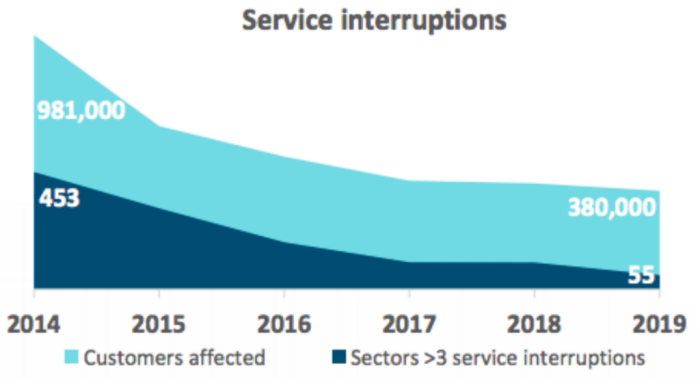
During the panel, “Overcoming Network Challenges,” the panellists shared challenges related to water infrastructure systems, such as water quality failure, service interruptions, and increases to NRW. Sebastian Otero (Network Manager, Essbio) noted that data-driven technologies, such as efficient valving and smart DMAs, can help acquire helpful network data and the ability to monitor this data in real-time can help with predictions. Based on a root cause analysis, the team at Essbio was able to deliver network adjustments which resulted in a 50% reduction in customer service interruptions over the past five years. This type of data-driven decision-making can help improve communication between operators, data providers, and customers, and takes us one step closer to a global solution based on smart water networks.
On the final day of the Conference, the panels focused on building a sustainable and resilient water future and defining a successful utility digital transformation. By creating policies and pursuing coordination among stakeholders, the panellists demonstrated how smart technologies can guarantee the resiliency of their wastewater and water networks.
In spite of the global challenges, diverse leaders from around the world shared their perspectives on how to adapt to the new normal. I was impressed by the panellists who shared how their data-driven approaches took effect and produced results. The final day of the Conference was also met with a global networking session which was a fun opportunity to meet the industry experts, engineers, business managers, advisors, and executives who shared their insights and vision on a global scale.
In the end, to me, the SWAN Conference was an unforgettable experience. During the congress, I managed to network with global leaders, which threw new light on my future professional life. I had interesting conversations with Prof. Dragan Savic (CEO, KWR) and Dr. Andrea Cominola (Chair of Smart Water Networks, TU, Berlin) using the Conference mobile application and engaged with others during the roundtable discussions. Now, I feel more confident in my field than before and believe that the journey towards smart water networks will eventually lead us to the best, most efficient system. To raise a common water industry quote, “the water industry has come a long way, and yet we still have so far to go”.