


- Home
- Companies
- Beston Group Co., Ltd.
- Articles
- TDU Unit Integration with Carbon Credit ...
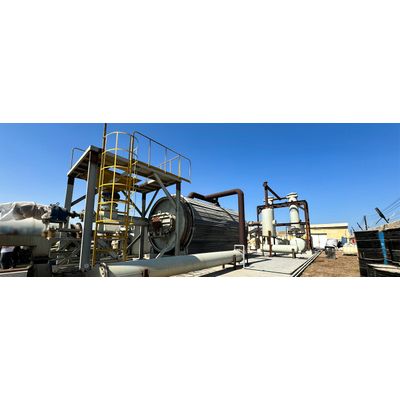
TDU Unit Integration with Carbon Credit Mechanisms
The global pursuit of decarbonization has intensified the demand for technologies that deliver verifiable emission reductions. Thermal desorption technology, deployed through a tdu unit, is increasingly recognized as a viable tool within carbon credit frameworks. By enabling the remediation of hydrocarbon-contaminated soils and residues, while simultaneously recovering usable energy, the technology intersects with both environmental restoration and climate finance.
Role of TDU in Emission Mitigation
A tdu unit functions by heating contaminated substrates under controlled conditions to volatilize hydrocarbons. This process not only neutralizes pollutants but also minimizes the uncontrolled release of greenhouse gases that would occur through conventional disposal methods such as landfilling or open incineration. The resulting emission reductions can be quantified, forming the basis for carbon credit issuance under internationally accepted measurement and verification standards.
Compatibility with Carbon Market Protocols
Integration with carbon credit systems requires strict adherence to methodologies that calculate avoided emissions or achieved sequestration. A tdu unit can demonstrate compliance by establishing baseline scenarios, documenting operational data, and verifying reductions through accredited third parties. The ability to capture, combust, or repurpose volatile compounds further enhances its eligibility within both voluntary and compliance-driven markets.
Economic Implications for Operators
Carbon credits represent an additional revenue stream for operators deploying thermal desorption systems. By monetizing emission reductions, companies offset capital expenditure on advanced remediation technologies. For industrial sectors facing regulatory pressure to decarbonize, credits earned through a tdu unit can serve as tradable instruments, providing flexibility in meeting corporate climate commitments. This financial dimension improves the investment case for deploying modern treatment infrastructure.
Alignment with Environmental Policy
Governments and multilateral institutions are aligning carbon credit mechanisms with broader environmental restoration goals. Soil decontamination, groundwater protection, and rehabilitation of industrial sites are policy priorities in many jurisdictions. A tdu unit directly contributes to these objectives while producing measurable climate co-benefits. Regulatory recognition of such dual outcomes increases the likelihood of policy support, including tax incentives and streamlined project approval.
Verification and Reporting Requirements
Robust monitoring systems are critical to ensure credibility in carbon markets. Operators of thermal desorption systems must deploy continuous emission monitoring equipment, maintain detailed logs of fuel consumption, and validate energy recovery outputs. The transparent reporting of these parameters ensures that credits associated with a tdu unit carry legitimacy in both domestic and international exchanges.
Future Prospects for Integration
As carbon markets mature, methodologies are expected to evolve to better capture the multifaceted benefits of industrial remediation technologies. Expansion of eligible project types, along with digital monitoring platforms, will simplify the integration process. With rising demand for high-integrity credits, a tdu unit is positioned to become an integral component of projects seeking to combine environmental restoration with climate finance.
Conclusion
The convergence of thermal desorption technology with carbon credit mechanisms underscores the growing interdependence of industrial innovation and climate economics. A tdu unit not only addresses contamination challenges but also generates quantifiable climate value. As regulatory frameworks and market structures expand, the role of such technology in delivering certified emission reductions will likely grow more pronounced, reinforcing its significance in the global transition to low-carbon systems.