

- Home
- Companies
- Earth Shield Environmental Co., Ltd.
- Articles
- The 10 Best HDPE Geomembranes Review ...
The 10 Best HDPE Geomembranes Review (2026 Industry Comparison Guide)
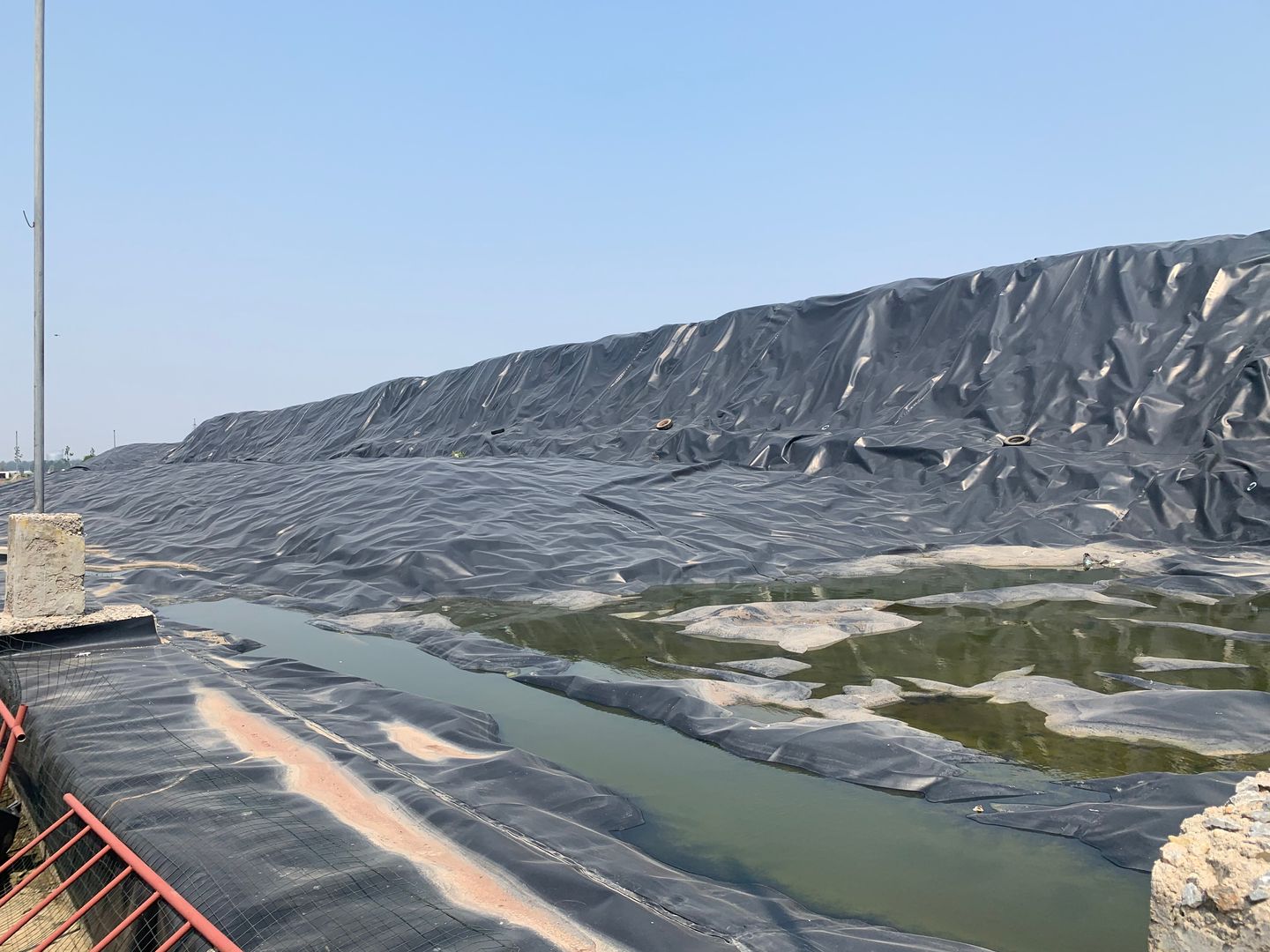
High-density polyethylene (HDPE) geomembranes remain one of the most critical materials used in modern containment engineering and waterwroof. From mining heap leach pads to landfill liners and aquaculture ponds, HDPE geomembranes are widely selected for their durability, chemical resistance, and long service life.
With dozens of manufacturers worldwide, choosing the right supplier can be challenging. This HDPE Geomembranes Review guide provides an objective industry overview of ten leading HDPE geomembrane manufacturers based on experience, product range, geomembrane certifications, global projects, and market reputation.
Note: This review is not a ranking. Companies are listed based on global recognition and industry presence.
To provide a fair comparison, we assessed suppliers using the following criteria:
Raw material quality and formulation control
Manufacturing experience and production capacity
Thickness range and customization ability
Compliance with international standards (GRI-GM13, ISO, CE)
Global project references
Technical support capability
Export experience
Price-performance balance
Different suppliers excel in different areas, depending on project scale and geographic region.
1. Solmax (Canada)
Solmax is widely recognized as one of the largest geomembrane manufacturers globally. The company supplies containment solutions for landfill, mining, water management, and environmental protection projects.
Strengths:
Strong global presence
Extensive landfill and mining references
Advanced manufacturing technology
Broad thickness range
Solmax products are commonly specified in large-scale EPC and government infrastructure projects.
2. AGRU (Austria)
AGRU is a European manufacturer known for high engineering standards and premium-quality geomembranes.
Strengths:
- Precision extrusion technology
- High-performance products
- Strong presence in Europe and North America
- Focus on long-term environmental protection systems
AGRU products are typically selected for technically demanding containment systems.
3. GSE Environmental (USA)
GSE Environmental has a long-standing reputation in landfill and mining containment applications.
Strengths:
- Extensive landfill liner portfolio
- Strong presence in North America
- Compliance with international standards
GSE geomembranes are often specified in municipal and hazardous waste facilities.
4. Atarfil (Spain)
Atarfil focuses on geomembrane production for environmental protection and mining.
Strengths:
- International project references
- Strong presence in Europe, Latin America, and Africa
- Textured geomembrane expertise
Atarfil is known for reliable quality and project-focused service.
5. Naue (Germany)
Naue is a German geosynthetics manufacturer offering a broad portfolio including geomembranes and geotextiles.
Strengths:
- Engineering-driven solutions
- Strong European market presence
- Emphasis on sustainability
Naue products are commonly selected for infrastructure and environmental engineering.
6. Layfield (Canada)
Layfield provides geomembrane materials along with fabrication and installation services.
Strengths:
- Custom fabrication capability
- North American engineering projects
- Design support services
Layfield is often chosen for projects requiring prefabricated panels.
7. Firestone Building Products (USA)
Firestone Building Products is widely recognized in the waterproofing and construction materials industry.
Strengths:
- Strong brand recognition
- Experience in roofing and waterproofing membranes
- High-performance polymer technologies
Their geomembrane solutions are often used in industrial and water containment applications.
8. EarthShield (China)
EarthShield is a China-based HDPE geomembrane manufacturer with over 20 years of production experience, supplying mining, landfill, aquaculture, and reservoir projects worldwide.
Strengths:
Competitive price-performance ratio
Thickness range from 0.5mm to 2.5mm
Export-focused production
ISO and CE certifications
Flexible MOQ (typically 2,000 sqm)
Strong presence in Africa, Southeast Asia, and Latin America
EarthShield is commonly selected by distributors, contractors, and mid-scale project developers seeking reliable quality with competitive pricing.
9. Major Regional Chinese Manufacturers
China has become a major global supplier of HDPE geomembranes. Several large-scale factories export to over 60 countries.
Strengths:
High production capacity
Competitive pricing
OEM and private-label support
Fast production cycles
Chinese manufacturers are increasingly used in mining and aquaculture projects across developing markets.
10. Specialized OEM Geomembrane Suppliers
In addition to global brands, specialized OEM suppliers provide customized geomembranes for niche applications such as biogas ponds, agricultural reservoirs, and secondary containment systems.
These suppliers typically focus on flexibility, customization, and regional distribution networks.
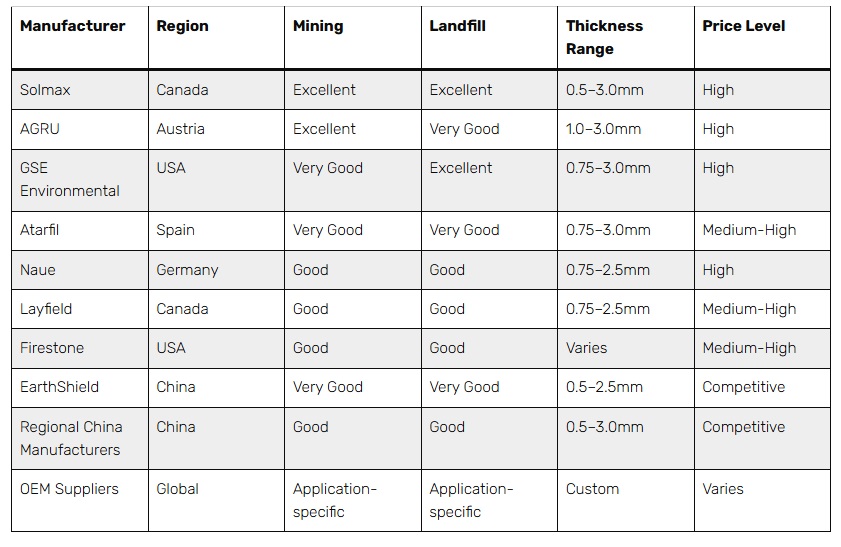
Choosing the best HDPE geomembrane manufacturer depends on:
Project size
Technical specifications
Budget
Local regulations
Delivery timeline
Required certifications
Large EPC and government infrastructure projects may prioritize internationally recognized brands.
Regional contractors and distributors may prioritize flexibility and cost-efficiency.
Mining projects often require textured geomembranes meeting GRI-GM13 standards.
There is no universal “best” manufacturer — only the most suitable supplier for your specific engineering requirements.
What thickness of HDPE geomembrane is most commonly used?
1.0mm, 1.5mm, and 2.0mm are widely used in landfill and mining projects. Thickness selection depends on environmental stress and regulatory requirements.
Are Chinese HDPE geomembranes reliable?
Many Chinese manufacturers meet international standards and export globally. Reliability depends on raw material control, production quality, and third-party testing compliance.
What certifications should HDPE geomembranes have?
Common standards include:
GRI-GM13
ISO 9001
CE marking
Third-party laboratory testing reports
How long does HDPE geomembrane last?
Properly installed HDPE geomembranes can last 20–50 years depending on environmental exposure and material quality.
The global HDPE geomembrane industry continues to evolve with increasing demand from mining, waste management, water conservation, and energy sectors.
Selecting a manufacturer should involve technical evaluation, project reference review, and compliance verification - not only price comparison.
By understanding the strengths of different suppliers, project owners and contractors can make informed decisions that ensure long-term containment performance.