
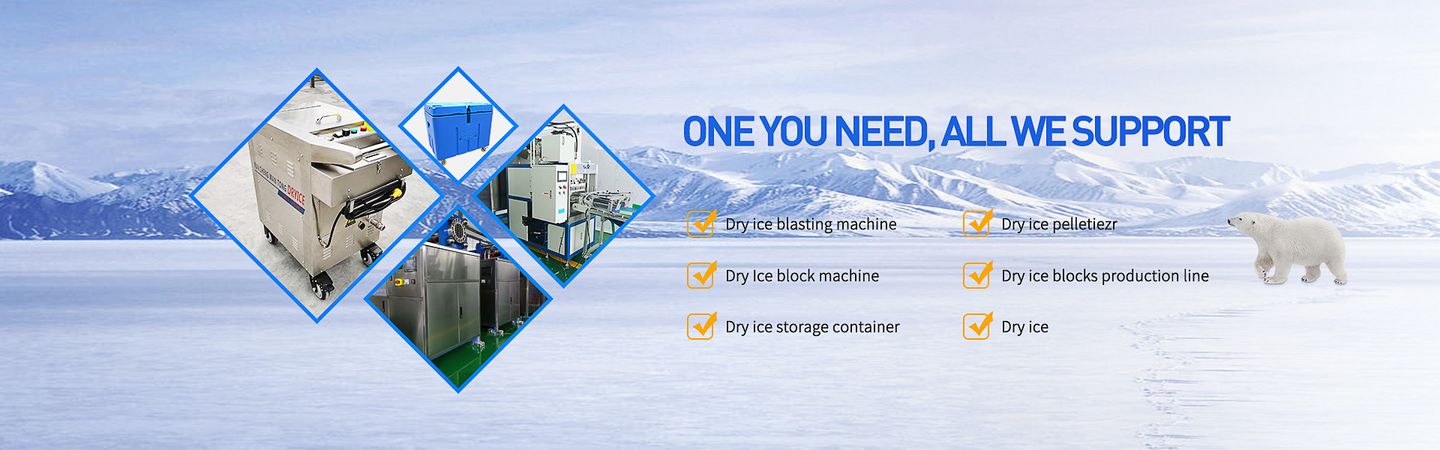

The power of dry ice
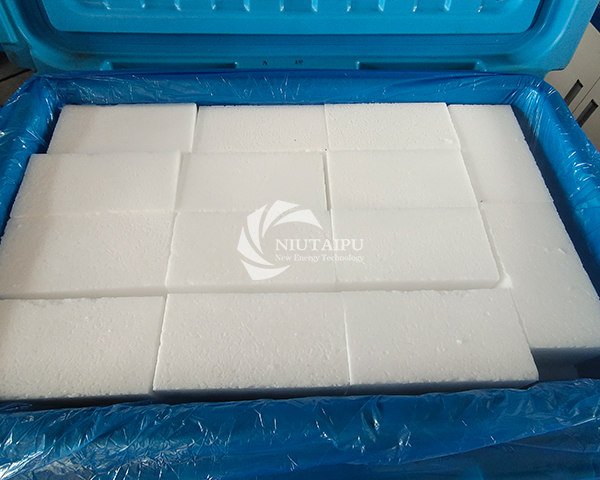
Dry ice is pure CO2, which is made by decompressing liquid CO2 to produce CO2 snow. The snow is then compacted and extruded through a die plate to form solid CO2 pellets. Dry ice is unstable above minus 78.6°C, but it will not melt into CO2 liquid, but directly sublimate into CO2 gas. It is this sublimation process that produces a cleaning effect when dry ice is used as a blasting medium. During the spraying process, compressed air is used to accelerate the particles to a speed of 200-300m/s. They rupture as they pass through the blasting system and reach the work surface with fast-moving needle-sized particles. The particles are embedded in the pores of any surface deposits and quickly sublimate into a larger amount of CO2 gas. The coefficient of expansion varies with temperature, but at least 500 times the volume of solid particles is generated in the surface deposits, which blows it away and breaks its bond with the base material.
If the substrate is strong enough to resist the influence of gas, it will not be damaged. This means that all metals and most composite or plastic materials are cleaned without wear.
CO2 is chemically inert and will not cause secondary reactions.
After cleaning, the blasting medium diffuses into the atmosphere, and the medium debris will not be removed.
There is no secondary impact that may cause damage to the surrounding area, which makes the process safe to use in an open environment, complex machinery, pneumatic or hydraulic control systems, instruments or tools installed in the molding machine.
If the substrate may be damaged by gas generation in its holes, the cleaning will not be wear-free. This situation occurs in some filled plastics, wood, plaster and similar fragile materials.
If the solid dry ice particles are difficult to penetrate the surface layer, the cleaning will be very slow, such as: enamel, sealant, etc.
Dry ice cleaning can be much slower than the grinding process and cannot produce any specific surface finish standards, for example, rust will be removed, but the steel surface below will remain sunken.
Noise in the dry ice cleaning process is unavoidable, and it is difficult to collect a small amount of debris generated by the removed material.
For general tasks that require only a short period of cleaning, such as plastic molding tools or hot aluminum die-casting molds, compressed air can be taken out of the factory`s annular main pipe, usually supplied by a standard 7 bar compressor. The system must be able to provide at least 3 m3/min of dry air flow without pressure loss, but for more demanding applications, it may be necessary to use higher capacity 7 bar air or upgrade to a high pressure/high capacity system. For applications that require longer cleaning times and need to keep time to a minimum, it is important to consider high-pressure options, as the additional capital expenditure for compressor upgrades can often be demonstrated by substantial savings in operator costs and downtime. If the factory system cannot provide enough air, mobile diesel-driven compressors can be used. Mobile compressors must always be equipped with an aftercooler and water separator or dryer pack to prevent the formation of water ice in the system, as this will first cause some wear and then stop the flow of dry ice.
It is suitable for on-site mold and tool cleaning of many products, including metal castings, food, plastics, rubber, composite materials, etc., as well as the maintenance of molding machines and surrounding areas.
Remove run-end deposits, process spills, air deposits, grease, etc. from production equipment or sensitive equipment.
Before welding, brazing, welding or adhesive application, prepare the joining process to remove dirt or moisture-resistant film. Also remove spatter from the process fixture and surrounding equipment.
Remove unnecessary surface coatings, including paint, glue, protective film, etc., and remove flux from PCB components.
Decontamination of components exposed to radiation, complex printing equipment, modification of old brickwork, hardwood beams, etc. and removal of smoke damage.