


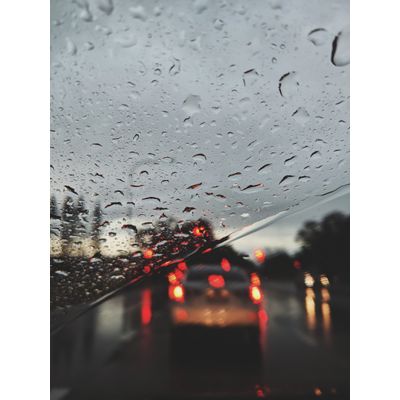
The power of weather sensors: Keeping motorists safe this winter
In August 2021, Highways England unveiled a £27.4 billion investment plan in the strategic road network across the UK. Of that, more than half of the money will be used to improve the quality, capacity and safety of the motorways and A roads that have helped to keep the country going throughout the pandemic.
The UK has already begun to return to normal and the number of vehicles on our roads is continuing to rise. With cold winter weather and reduced daylight hours on the horizon, the need to present accurate and timely information to both motorists and centralised control systems is now more important than ever.
Wherever you are in the world, the weather provides significant challenges to those organisations and individuals tasked with maintaining highways and road networks to ensure the safe and efficient flow of traffic. In winter especially, maintenance is costly both in terms of time, people, machines and materials.
And if the weather information on which the work is based does not reflect the local conditions or is badly timed, then the challenge is even greater.
Motorists expect very high levels of accuracy from roadside warnings, and rely on the timely gritting of roads prone to icing to maintain safety. The added expense of traffic congestion caused by bad weather and the associated accidents can only be minimised by proactive planning and management from the agencies responsible.
A versatile solution
Getting timely road traffic information in a format that makes the decision-making process easier requires accurate sensors in suitable locations.
These sensors are typically installed within three metres of the roadside and provide reliable weather information day and night, measuring conditions such as fog, snow, rain, spray and other related parameters. It then allows highway-managing companies to make decisions about spraying and gritting road surfaces, or switching road warning signs.
Weather sensors are especially well suited to this application, where a combination of serial and analogue interfaces allow both local signage control and direct connection to a wider network. By providing weather information, intelligent transport systems (ITS) can provide road users with the most accurate details in real-time.
The information provided is easy to understand and integrates into any control system - so it can switch a local warning sign via a relay or transmit the data via second output to an ITS regional control centre. For example, when a weather sensor identifies fog on a particular stretch of motorway, the information is sent to the local traffic control centre and it updates the nearest ITS so travelling motorists are made aware.
As a result, these sensors are used 24/7 on either single installations or multiple sensor networks worldwide as part of safety-critical transport projects on major roads, bridges and tunnels.
Sensors for every environment
Road tunnels also pose a unique set of challenges for highway engineers and management personnel, as they are affected by weather at either end of the tunnel as well as its own internal microclimate. Coupled with the added risk of pollution from stationary vehicles, or a fire after a crash, the need for specific sensors to accurately measure visibility and the causes of reduced visibility becomes more apparent.
Technology is now at such an advanced stage that sensors can be quickly installed to reduce lane closure requirements and their design enables maintenance to be undertaken only when needed.
Visibility sensors are also widely used in road tunnels to monitor pollution levels and ventilation systems, and can be a valuable tool in detecting fires due to their sensitivity to smoke particles.
In situations where visibility is reduced, relay outputs can even be used to trigger alarms and initiate warning signs at tunnel entrances to prevent further vehicles from entering.
Examples of advanced sensors typically measure air pressure, temperature and humidity, precipitation, wind speed and direction to UV radiation, with radiation used to forecast how quickly a road surface will warm up after a cold weather event.
Meteorological sensors are a crucial piece of equipment which play a key role in helping authorities maintain the country’s major road network throughout the year. The technology in sensors is only going to get more sophisticated, so the next few decades will undoubtedly open up more exciting opportunities to expand on its potential.