


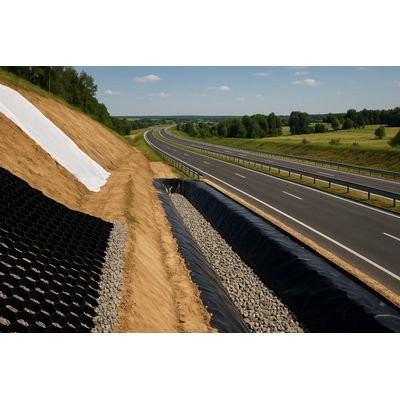
The Ultimate Guide to Geosynthetics in Infrastructure Projects in India
The Indian infrastructure sector is expanding rapidly, with highways, railways, industrial corridors, smart cities, and water-management systems driving demand for soil stabilization, drainage control, erosion prevention, and enhanced structural durability. Geosynthetics provide engineered polymeric solutions that address weak soils, heavy rainfall, environmental protection requirements, and increasing traffic loads, enabling durable performance and potential lifecycle cost benefits.
Geosynthetics overview
Geosynthetics are polymeric materials used in contact with soil or rock in civil engineering projects. They perform functions including reinforcement, separation, filtration, drainage, and containment. Typical materials include HDPE, PP, and PET, chosen for durability and chemical resistance in challenging environments.
The five primary functions are:
- Reinforcement
- Separation
- Filtration
- Drainage
- Containment
By combining these capabilities, geosynthetics enhance infrastructure stability and longevity.
Types of Geosynthetics Used in Infrastructure
- HDPE geomembranes: impermeable liners used for containment and waterproofing, with applications in industrial wastewater ponds, reservoirs, landfills, mining containment, and agricultural water storage. They offer very low permeability and strong chemical resistance. Research by the U.S. EPA identifies geomembranes as highly reliable containment systems for environmental protection.
- Geotextiles: permeable fabrics used to improve soil performance and drainage, categorized into non-woven (filtration/drainage) and woven (reinforcement). Applications include road construction, railway track stabilization, drainage systems, coastal protection, and erosion control. The Indian Roads Congress notes geotextiles can improve pavement performance by preventing subgrade/aggregate mixing.
- Geocells: three-dimensional honeycomb structures formed from HDPE strips; when filled, they provide a confinement system distributing loads over a wider area. Used for road base stabilization, industrial yard reinforcement, slope stabilization, railway embankments, and retaining walls. FHWA studies indicate geocells can increase load-bearing capacity of weak soils by up to 50%.
- Drainage geocomposites: combine geotextile layers with drainage cores to facilitate water movement. Used in highway drainage, retaining walls, landfill leachate collection, and subsurface drainage, reducing hydrostatic pressure and water-related damage.
- Geosynthetic Cementitious Composite Mats (GCCM): cement powder integrated with geosynthetic fabrics that hydrates to form a durable concrete layer. Applications include canal lining, slope protection, drainage channel lining, mining infrastructure, and railway drainage systems. GCCM enables faster installation and reduced formwork relative to traditional concrete.
Applications of Geosynthetics in Infrastructure
Road and Highway Construction
Geosynthetics improve subgrade stability, reduce pavement distress, and support drainage layers, contributing to longer pavement life and erosion control on embankments.
Railway Infrastructure
In rail applications, geosynthetics stabilize trackbeds, reinforce ballast, provide drainage, and protect slopes, mitigating track settlement and enhancing long-term performance.
Industrial Infrastructure
Industrial yards and logistics facilities require stable foundations for heavy equipment and traffic. Geosynthetics enhance soil strength, distribute loads, and support drainage and containment systems.
Water Management Systems
Geosynthetics support canal lining, reservoir waterproofing, stormwater channels, and irrigation networks, reducing seepage losses in lined canals (noted up to significant water savings in canal lining studies).
FAO reports canal lining can reduce water losses by up to 50 percent.
Environmental Protection
Containment solutions are essential for landfills, wastewater treatment, mining waste storage, and industrial containment. Geomembranes play a key role in preventing migration of hazardous liquids.
Challenges in Indian Infrastructure Projects
- Weak and variable soil conditions in many regions require stabilization to support design loads.
- Seasonal monsoon rainfall drives erosion and water ingress, necessitating effective drainage and erosion-control measures.
- Strict project timelines favor technologies with rapid installation and proven field performance.
Installation Considerations
- Subgrade preparation, material handling, and storage
- Proper anchoring, overlaps, and quality-control inspections
- Geomembrane welding quality and seam testing to prevent leaks
- Geotextile/geocell placement and compaction to achieve desired performance
Long-Term Performance and Durability
Geosynthetics are designed to withstand chemical exposure, UV radiation, biological degradation, and mechanical stress. When installed correctly, many systems remain functional for decades, contributing to durable infrastructure performance.
Lifecycle Cost Benefits
Despite higher initial construction costs, geosynthetics often reduce long-term maintenance requirements, extend service life, and lower lifecycle costs by mitigating repair needs and improving durability.
Future of Geosynthetics in India
- Public programs and policy initiatives drive demand for geosynthetic materials, including major infrastructure pipelines and city development programs.
- Key government initiatives such as the National Infrastructure Pipeline, Smart Cities Mission, highway expansion programs, and railway modernization projects are expanding adoption in engineering design.
- Standards and sustainability expectations are evolving, increasing the role of geosynthetics in resilient and sustainable infrastructure outcomes.
Conclusion
Geosynthetics enable soil stabilization, drainage management, erosion control, and environmental protection, contributing to improved structural performance and lifecycle economics in modern infrastructure. The sector continues to evolve with growth in India’s engineering projects and ongoing standards development.
Ocean Non Wovens manufactures and supplies geosynthetic materials for civil engineering applications in India.
Original: https://oceangeosynthetics.com/ultimate-guide-to-geosynthetics-in-infrastructure-projects-india/