


- Home
- Companies
- Xingaonai Heavy Industry Group Co., ...
- Articles
- Vibrating Screen Efficiency – Factors, ...
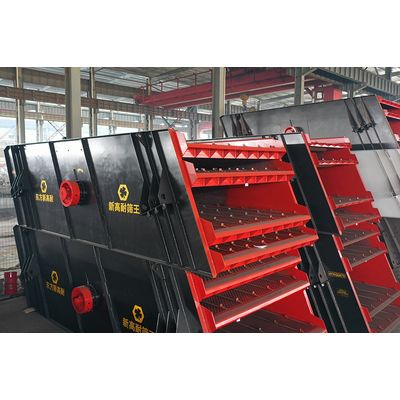
Vibrating Screen Efficiency – Factors, Calculation and Optimization
Vibrating screens are widely used in mining, quarrying, aggregate production, coal processing and construction waste recycling. They are used to classify materials by particle size, separate impurities and ensure qualified product output. Among all performance indicators, vibrating screen efficiency is the most important one that directly reflects screening performance, production capacity and overall economic benefits of the processing line.
High vibrating screen efficiency means stable classification, accurate particle size and high output. Low efficiency leads to material blockage, incomplete screening, increased energy consumption and reduced production efficiency. Understanding vibrating screen efficiency, its influencing factors and optimization methods is essential for operators, maintenance technicians and production managers. This article introduces the definition, key factors and practical solutions to improve vibrating screen efficiency for industrial applications.
What Is Vibrating Screen Efficiency
Vibrating screen efficiency refers to the ratio of the actual amount of qualified materials screened out to the theoretical amount of qualified materials in the feed material. It is usually expressed as a percentage and is the core standard to measure the working performance of a vibrating screen.
High efficiency means most qualified materials pass through the screen surface smoothly, while unqualified materials stay on the screen for further processing. Low efficiency indicates a large number of qualified materials remain in the oversize product, which reduces product quality and increases production costs.
Key Factors Affecting Vibrating Screen Efficiency
Many factors influence vibrating screen efficiency in actual operation. Mastering these factors helps to adjust parameters and optimize performance.
1. Vibration Parameters
Vibration amplitude and frequency directly determine the movement state of materials on the screen surface. Reasonable amplitude and frequency make materials bounce evenly and pass through the screen holes smoothly.
Inappropriate parameters cause materials to accumulate or move too fast, resulting in low screening efficiency.
2. Screen Mesh Condition
Screen mesh size, shape, wear and blockage are critical factors. Worn, deformed or blocked screen mesh reduces the passing rate of qualified materials.
Choosing the right screen mesh type and keeping it in good condition help improve vibrating screen efficiency.
3. Material Properties
Material moisture, viscosity, particle size distribution and hardness affect screening performance. High moisture or viscosity makes materials stick together and block screen holes.
Materials with uneven particle distribution also reduce screening efficiency significantly.
4. Feeding Uniformity
Uneven feeding, overloading or insufficient feeding disrupts material distribution on the screen surface.
Uniform and continuous feeding ensures materials spread evenly, which is beneficial for improving vibrating screen efficiency.
5. Screen Installation Angle
The installation angle of the screen surface affects material moving speed and retention time.
An overly large angle makes materials pass too fast, while a small angle causes accumulation. Both situations reduce screening efficiency.
6. Equipment Maintenance Status
Loose bolts, damaged springs, worn motors and poor lubrication cause unstable vibration and reduce efficiency.
Good maintenance keeps the vibrating screen in stable working condition and maintains high efficiency.
How to Improve Vibrating Screen Efficiency
Practical operation and maintenance methods can effectively improve vibrating screen efficiency and ensure stable production.
- Adjust vibration amplitude and frequency to match material characteristics and screening requirements.
- Keep the screen mesh clean and replace worn or damaged screen mesh in time.
- Control material moisture and remove oversized particles before feeding.
- Ensure uniform and continuous feeding with a matching vibrating feeder.
- Adjust the screen installation angle to reasonable range for optimal material movement.
- Perform regular inspection, tighten bolts, replace damaged parts and lubricate key components.
- Clean the screen surface and crushing chamber regularly to avoid material blockage.
Conclusion
Vibrating screen efficiency is a key indicator of screening equipment performance. It is affected by vibration parameters, screen condition, material properties, feeding mode and equipment maintenance.
By optimizing operating parameters, maintaining equipment in good condition and adopting scientific operation methods, users can significantly improve vibrating screen efficiency, reduce energy consumption, increase output and improve product quality.
For industrial screening applications, maintaining high vibrating screen efficiency is an effective way to reduce production costs and enhance the competitiveness of the whole processing line.