


Water Utilities in 2026: Risks, Technology, and Source Water Protection
Water utilities in 2026 face accelerating operational pressures driven by climate volatility, regulatory tightening, and aging freshwater infrastructure. Seasonal planning and reactive treatment are no longer sufficient; utilities managing reservoirs and large surface water systems must confront risks that have built up over years. A unified, proactive approach is required to preserve drinking water quality amid evolving stressors.
1. Harmful Algal Blooms Expanding Beyond Summer
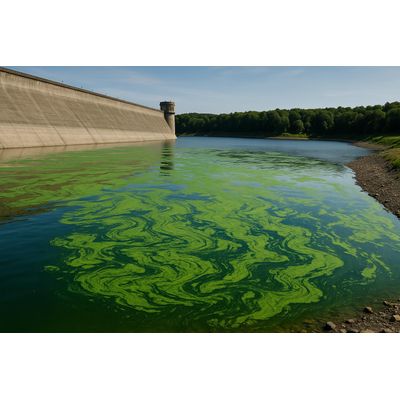
Research indicates warming water temperatures extend bloom windows into spring and autumn, with some toxic species potentially increasing in frequency by as much as 50% under continued warming. In freshwater reservoirs, cyanobacteria thrive as surface temperatures rise, stratification intensifies, and nutrient-rich runoff enters waterways after intense rainfall events. Legacy nutrient stocks in agricultural watersheds contribute to bloom conditions even when external inputs decline, as warming reduces oxygen at the sediment surface and phosphorus is released into the water column. Utilities relying on seasonal forecasts will require year-round monitoring and early warning systems capable of detecting multi-stressor events, not just warm-weather spikes. As bloom risk extends beyond traditional summer periods, utilities are increasingly implementing continuous water quality monitoring and predictive modeling to protect drinking water reservoirs.
2. Rising Pressure on Source Water Protection
Regulatory pressure is increasing from emerging contaminants such as PFAS and from biological threats like harmful algal blooms. The focus is shifting from reactive treatment to proactive source water management, with regulation driving the transition. In the United States, enforceable drinking water limits for PFOA and PFOS have been established at 4 parts per trillion under the Safe Drinking Water Act. In Europe, the recast Drinking Water Directive introduces PFAS monitoring and limit values that expand water quality surveillance obligations for member states. The strategic implication is consistent across regions: compliance cannot rely solely on end-of-pipe treatment. When contaminants originate in source water, end-of-pipe solutions become expensive and often insufficient. For surface water reservoirs, contaminant variability and biological activity can rapidly change raw water quality, and tightening regulation pushes toward a prevention-first model with source water protection, continuous monitoring, and early intervention replacing the detect-treat-report sequence. Utilities that integrate source water monitoring and biological threat detection with chemical contaminant tracking will be better positioned to manage these pressures efficiently.
3. AI and Digital Twins Move Into Operational Water Management
Artificial intelligence is moving from discussion to deployment. More than 60% of utilities report systems operating beyond their intended lifespan, prompting a shift toward predictive approaches that integrate real-time monitoring data with ecological modeling. In surface water utilities, this involves the deployment of biological digital twins that combine real-time sensor data, weather inputs, nutrient dynamics, and hydrodynamic models to simulate reservoir responses before a bloom becomes visible. This enables anticipatory ecological control rather than reactive treatment. Regulators increasingly expect data-driven management of water systems, driving investment in IoT-enabled sensors and continuous monitoring to support predictive modeling and early intervention.
4. Water Reuse Becomes a Planning Baseline for Stressed Freshwater Systems
The United States currently reuses approximately 6.4% of its wastewater, reflecting historical regulatory barriers and public perception challenges. As treatment technologies mature and confidence grows, reuse is increasingly viewed as a strategic component of long-term water supply planning. For utilities managing freshwater reservoirs under climate stress, drought cycles are intensifying and source water quality is less predictable; as treatment technologies improve, the cost gap between conventional supply expansion and advanced reuse narrows. Utilities that incorporate reuse planning into long-term capital programs in 2026 will gain greater flexibility when pressures rise.
5. Water Risk Moves Up the Executive Agenda for 2026
At the 2026 World Economic Forum Annual Meeting, water risk is framed as a systemic economic vulnerability affecting supply chains, food security, and energy production. For utilities managing drinking water reservoirs, water quality volatility is increasingly treated as a governance and investment risk, not solely an operational issue. Utilities that quantify and model biological and chemical risks in source waters will be better positioned in funding decisions, regulatory discussions, and long-term planning.
6. Workforce: The Constraint Technology Cannot Fully Solve
In many regions, 30–50% of operators are nearing retirement, and recruitment is not keeping pace. Technology can support operations, but it cannot replace experienced decision-making. Utilities investing in automation must also invest in training and workforce planning, treating talent management as a core risk management priority.
What This Means for Water Utilities in 2026
The trends shaping 2026 are interdependent. Bloom management requires real-time monitoring; monitoring requires trained operators; source water protection reduces treatment burdens under tightening regulations. Utilities are only beginning to build the data infrastructure required to support these systems. The overarching shift is from reactive treatment to proactive, data-driven water management. Utilities that treat this as an integrated system will be better positioned to meet regulatory, environmental, and financial pressures. Monitoring, digital modeling, early intervention, and source water protection must work together. The next step is not simply collecting more data but modeling ecological outcomes before they occur, enabling proactive ecological control rather than reactive response. These challenges will not be resolved overnight, but they will distinguish resilient utilities from those delaying action.
Original: https://www.lgsonic.com/insights-water-utilities-2026-trends/